
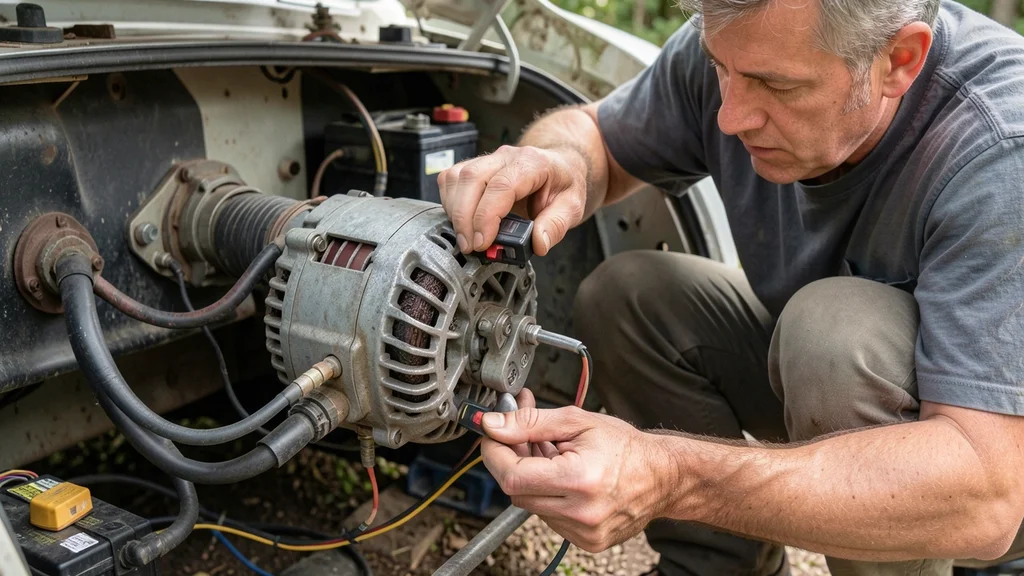
If you’ve ever wondered about using a car alternator as a backup power source, you’re not alone. Can you power a house with a car alternator is a common question among DIY enthusiasts and off-grid living advocates. While car alternators are designed to charge batteries and power a vehicle’s electrical system, repurposing one for home use comes with significant challenges.
This post explores whether it’s feasible, the technical hurdles, and practical alternatives for powering your home efficiently.
You cannot reliably power a house with a standard car alternator. Alternators are designed for 12V-14V DC output to charge batteries, not to supply continuous AC power for household appliances. They lack the capacity, voltage regulation, and efficiency needed for home use.
How Car Alternators Work
A car alternator converts mechanical energy from the engine into electrical energy to charge the battery and power the vehicle’s electrical system. It typically produces 12V to 14.5V DC (direct current) and is optimized for intermittent use, not continuous power delivery.
Unlike generators designed for home use, alternators are not built to handle the consistent, high-demand load of household appliances. They also require the engine to run continuously, which is impractical and inefficient for powering a home.
- Voltage Output: 12V-14.5V DC, insufficient for most household appliances that require 120V or 240V AC.
- Current Capacity: Usually 50-120 amps, but not sustained for long periods.
- Efficiency: Alternators are about 50-60% efficient, meaning a lot of energy is lost as heat.
- Cooling: Designed for short bursts, not continuous operation, leading to overheating risks.
- Regulation: Voltage fluctuates with engine RPM, which can damage sensitive electronics.
Important: Running a car engine solely to power an alternator for home use is highly inefficient. You’d consume more fuel than the electrical energy produced, making it cost-prohibitive.
Why a Car Alternator Falls Short for Home Power
While a car alternator can generate electricity, it’s not a viable solution for powering a house for several critical reasons. The primary issue is the mismatch between the alternator’s output and the power requirements of household appliances.
Most homes require alternating current (AC) at 120V or 240V, while alternators produce direct current (DC) at a much lower voltage. Converting DC to AC requires an inverter, but even then, the power output is insufficient for most home needs.
| Requirement | Car Alternator | Home Need |
|---|---|---|
| Voltage Type | 12V-14.5V DC | 120V-240V AC |
| Power Output | 500W-1.5kW (peak) | 5kW-30kW (average home) |
| Continuous Use | No (overheats) | Yes (required) |
| Efficiency | 50-60% | 80-90% (generators) |
The table above highlights the stark differences between what a car alternator can provide and what a home actually requires. The gap in power output alone makes it clear that an alternator is not a feasible primary or even backup power source for a household.
What You’d Need to Make It Work (Theoretically)
While not practical, it’s worth exploring what it would take to power a house with a car alternator in a controlled, small-scale scenario. This section outlines the theoretical steps, though we strongly advise against attempting this for safety and efficiency reasons.
To convert a car alternator’s output into usable household power, you’d need several key components. Even then, the system would be limited to powering only small, low-wattage devices for short periods.
- Battery Bank: A deep-cycle battery or series of batteries to store the DC power generated by the alternator. This helps stabilize the output and provides a buffer.
- Inverter: A high-quality power inverter to convert the 12V DC from the batteries into 120V AC for household use. The inverter must handle the peak load of your appliances.
- Voltage Regulator: To maintain a consistent voltage output from the alternator, as RPM fluctuations can cause damaging voltage spikes.
- Engine and Fuel Supply: A running engine to spin the alternator. This could be a car engine or a separate gas/diesel engine, but it must run continuously.
- Wiring and Safety Systems: Heavy-duty wiring, fuses, and circuit breakers to handle the current and prevent electrical fires.
- Cooling System: Alternators overheat quickly under continuous load. You’d need additional cooling mechanisms to prevent failure.
Warning: Attempting to power your home this way can damage your alternator, appliances, or even start a fire. It also violates electrical codes in most areas and voids warranties on equipment.
Power Output: What Could You Realistically Run
Assuming you’ve set up the system described above, what could you actually power with a car alternator? The answer is: very little. A typical car alternator produces around 500W to 1.5kW of power, but this is under ideal conditions with a high-output model.
For perspective, here’s what common household items require in terms of wattage. Note that starting wattages (surge power) are often 2-3 times higher than running wattages, which an alternator-based system would struggle to handle.
| Appliance | Running Watts | Starting Watts | Can Alternator Handle? |
|---|---|---|---|
| LED Light Bulb | 10W | 10W | Yes |
| Laptop | 50-100W | 100W | Yes (if high-output alternator) |
| Ceiling Fan | 100-200W | 200-300W | Maybe (if no other loads) |
| TV (50-inch) | 200-400W | 400-600W | No |
| Refrigerator | 600-800W | 1200-2000W | No |
| Microwave | 1000-1200W | 1500-2000W | No |
| Air Conditioner (Window) | 1000-1500W | 2000-3000W | No |
As the table shows, even a high-output car alternator (1.5kW) would struggle to power anything beyond small electronics. The starting wattage of many appliances exceeds the alternator’s capacity, making it impractical for most household needs.
Alternatives to Powering Your Home with a Car Alternator
If your goal is to have a backup or off-grid power source, there are far better alternatives than trying to power a house with a car alternator. These solutions are designed for continuous use, proper voltage regulation, and sufficient power output to handle household demands.
Portable Generators
Portable generators are a practical and reliable option for backup power. They run on gasoline, propane, or diesel and can provide 2kW to 10kW of power, enough for essential appliances during an outage.
- Pros: Affordable, easy to use, portable, sufficient for most emergency needs.
- Cons: Requires fuel, noisy, emissions, limited runtime per tank.
- Best For: Short-term power outages, camping, job sites.
Inverter Generators
Inverter generators are a quieter, more efficient version of portable generators. They use advanced electronics to produce clean, stable power suitable for sensitive devices like laptops and smartphones.
- Pros: Quiet operation, fuel-efficient, clean power output, portable.
- Cons: More expensive than conventional generators, lower power output.
- Best For: Powering electronics, small homes, RVs.
Solar Power Systems
Solar power systems convert sunlight into electricity using photovoltaic panels. They can be grid-tied or off-grid with battery storage, providing a sustainable and long-term power solution.
- Pros: Renewable, low maintenance, silent, scalable, eco-friendly.
- Cons: High upfront cost, weather-dependent, requires space.
- Best For: Off-grid living, long-term backup power, eco-conscious users.
Standby Generators
Standby generators are permanently installed and automatically start when the power goes out. They run on natural gas or propane and can power an entire home for days.
- Pros: Automatic operation, high power output, long runtime, quiet.
- Cons: Expensive, requires professional installation, permanent fixture.
- Best For: Whole-home backup power, areas with frequent outages.
Wind Turbines
Wind turbines harness wind energy to generate electricity. They can be a great supplement to solar power, especially in windy areas.
- Pros: Renewable, low operating costs, scalable.
- Cons: High upfront cost, requires consistent wind, noise, space requirements.
- Best For: Off-grid homes, rural areas with steady wind.
Tip: For most homeowners, a combination of solar power with battery storage and a backup generator offers the best balance of reliability, cost, and sustainability.
How to Calculate Your Home’s Power Needs
Before investing in any backup power solution, it’s essential to calculate your home’s power requirements. This ensures you choose a system that can handle your needs without unnecessary overspending.
Start by listing all the appliances and devices you want to power during an outage. Note their wattage (usually found on a label or in the manual). Add up the running wattage and the starting wattage (if applicable) to determine the total load your system must handle.
- List Essential Appliances: Identify which appliances are critical (e.g., refrigerator, lights, medical devices) and which are non-essential (e.g., entertainment systems).
- Find Wattage Ratings: Check the wattage of each appliance. For items with motors (like refrigerators or air conditioners), note both running and starting wattage.
- Calculate Total Wattage: Sum the running wattages of all appliances you plan to run simultaneously. Add the highest starting wattage to this total for the peak load.
- Add a Safety Margin: Increase the total by 20-25% to account for inefficiencies and future power needs.
- Choose a Power Source: Select a generator or alternative power system that can handle the total wattage, including the peak load.
| Appliance Category | Running Watts | Starting Watts |
|---|---|---|
| Lighting (10 LEDs) | 100W | 100W |
| Refrigerator | 700W | 2000W |
| Sump Pump | 800W | 2200W |
| Furnace Fan | 500W | 1500W |
| Laptop + Wi-Fi | 150W | 150W |
| Total Running Watts | 2250W | 5950W Peak |
In this example, the total running wattage is 2,250W, but the peak load (due to starting wattage) is 5,950W. Therefore, you’d need a generator or power system that can handle at least 6,000W to start all these appliances simultaneously.
Common Mistakes to Avoid
If you’re still considering experimenting with a car alternator for home power, be aware of these common pitfalls. Even if you’re exploring other backup power solutions, these mistakes can be costly or dangerous.
- Underestimating Power Needs: Many people calculate their power needs based only on running wattage, forgetting that appliances with motors require much more power to start. This can lead to system overloads.
- Ignoring Efficiency Losses: Power conversion (DC to AC) and transmission always involve some energy loss. Failing to account for this can leave you with insufficient power.
- Skipping Safety Measures: Electrical systems can be dangerous. Not using proper fuses, circuit breakers, or grounding can result in fires or electrocution.
- Overlooking Ventilation: Running an engine indoors or in a poorly ventilated area can lead to carbon monoxide poisoning, a silent and deadly risk.
- Using Incompatible Components: Mixing and matching batteries, inverters, and alternators without ensuring compatibility can damage equipment or create safety hazards.
- Neglecting Maintenance: Backup power systems require regular maintenance. Neglecting this can lead to failures when you need them most.
Warning: Carbon monoxide is odorless and colorless. Never run a gasoline or diesel engine indoors or in an enclosed space without proper ventilation. Install carbon monoxide detectors if using any fuel-based power source near your home.
DIY Car Alternator Power: A Step-by-Step Experiment (For Educational Purposes Only)
This section is for educational purposes only. We do not recommend attempting this, but if you’re curious about the process, here’s how one might theoretically set up a car alternator to power small devices. Remember, this is not a practical or safe solution for home power.
- Gather Components:
- High-output car alternator (100A or more)
- Deep-cycle battery (12V)
- Power inverter (12V DC to 120V AC, at least 1000W)
- Voltage regulator or charge controller
- Engine to spin the alternator (or a car with the alternator still installed)
- Heavy-duty wiring, fuses, and circuit breakers
- Multimeter to monitor voltage and current
- Set Up the Battery and Alternator:
Connect the alternator to the battery using heavy-duty cables. The alternator will charge the battery when the engine is running. Ensure all connections are secure and properly fused to prevent short circuits.
- Install the Voltage Regulator:
A voltage regulator ensures that the alternator doesn’t overcharge the battery, which can damage it or create a safety hazard. Some alternators have built-in regulators, but an external one may be needed for better control.
- Connect the Inverter:
Wire the inverter to the battery. The inverter will convert the 12V DC from the battery into 120V AC for your devices. Choose an inverter with a continuous wattage rating that matches your needs.
- Start the Engine:
Start the engine to spin the alternator. Monitor the battery voltage with a multimeter. It should rise to around 13.5V-14.5V when the alternator is charging the battery.
- Test with Small Devices:
Plug in a small device, like an LED light or a phone charger, into the inverter. Ensure it works without causing the voltage to drop excessively. Avoid high-wattage devices.
- Monitor and Troubleshoot:
Watch for signs of overheating in the alternator or inverter. If the voltage drops below 12V under load, your system doesn’t have enough capacity. Disconnect devices immediately if you notice any issues.
Important: This setup is highly inefficient. The energy required to run the engine will far exceed the electrical energy produced. It’s also not scalable or reliable for anything beyond tiny, short-term loads.
Frequently Asked Questions
Can a car alternator power a refrigerator?
A standard car alternator cannot power a refrigerator. Refrigerators require a high starting wattage (often 1200W-2000W) that exceeds an alternator’s capacity. Even if the running wattage is within range, the alternator would struggle to handle the initial surge.
How much power can a car alternator produce?
Most car alternators produce between 500W and 1.5kW (for high-output models). This is enough to charge a car battery and run the vehicle’s electrical systems but insufficient for household appliances. Output depends on the alternator’s amperage rating and the engine’s RPM.
Can I use multiple alternators to increase power?
Technically, you could connect multiple alternators in parallel to increase current output, but this is complex and requires precise synchronization to avoid damaging the alternators or creating safety hazards. It’s still not a practical solution for home power due to inefficiency and cost.
Is it legal to power my home with a car alternator?
In most areas, it’s not illegal to use a car alternator for home power, but it may violate electrical codes if not installed properly. Additionally, insurance policies may not cover damage or injuries resulting from unapproved electrical setups. Always check local regulations and consult a professional.
What’s the most efficient way to power a house with a car?
The most efficient way to use a car for home power is to install a vehicle power inverter that draws directly from the car’s battery (not the alternator) to power small devices. However, this will drain the car’s battery quickly and is only suitable for short-term, low-wattage needs. For anything more, a dedicated generator is a far better option.
Final Thoughts
While the idea of powering a house with a car alternator might seem creative, it’s not a feasible or practical solution. Alternators are designed for vehicles, not homes, and lack the capacity, efficiency, and safety features required for household power. Instead, consider proven alternatives like portable generators, solar power systems, or standby generators for reliable backup power.
These options are safer, more efficient, and better suited to meet your home’s energy needs.
Leave a Reply