
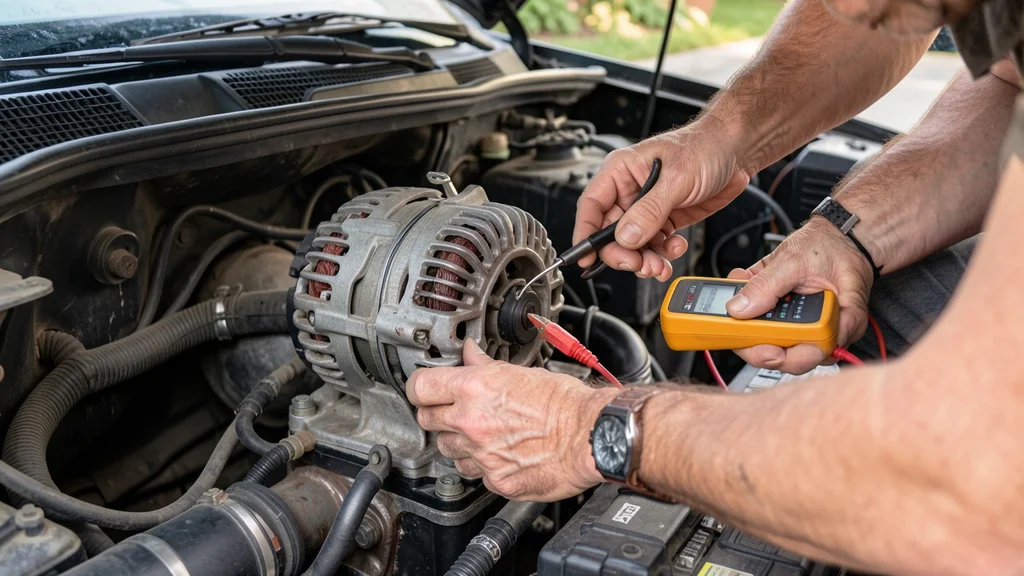
If your car’s battery light flickers or the engine struggles to start, can you test a bad alternator without pulling it apart? The good news is yes—you can diagnose a failing alternator right in your driveway with basic tools. This guide covers the simplest methods to check your alternator’s health, from voltage tests to visual inspections, so you can avoid costly repairs or breakdowns.
You can test a bad alternator using a multimeter, voltage test, or visual inspection. A healthy alternator should output 13.8-14.4V with the engine running. If readings drop below 13V or climb above 15V, your alternator is likely failing.
Signs Your Alternator Might Be Bad
Before diving into tests, watch for these red flags. They often point to alternator trouble before it leaves you stranded.
Dim or flickering headlights, especially at idle, are a classic sign. The alternator struggles to keep the electrical system powered, so lights dim when the engine isn’t spinning fast enough. You might also notice the battery warning light on your dashboard, which can mean the alternator isn’t charging the battery properly.
- Dead or weak battery – If your battery dies frequently, the alternator may not be recharging it.
- Strange noises – A whining or grinding sound often means a failing alternator bearing.
- Electrical failures – Power windows, radio, or AC may work poorly or cut out.
- Stalling or hard starts – The engine may crank slowly or stall if the alternator can’t supply enough power.
- Smell of burning rubber – A slipping serpentine belt can overheat and emit a burning odor.
Warning: If you smell burning wires, pull over immediately. This could indicate an electrical short in the alternator.
According to the National Institute for Automotive Service Excellence (ASE), alternator failure is one of the top 5 reasons for roadside breakdowns. Ignoring these signs can lead to a dead battery or even engine damage over time.
Tools You Need to Test an Alternator
Testing an alternator doesn’t require a professional setup. With a few basic tools, you can diagnose the issue yourself. Here’s what you’ll need:
| Tool | Purpose | Estimated Cost |
|---|---|---|
| Digital multimeter | Measures voltage output from the alternator | $15-$30 |
| Jumper cables | For jump-starting if the battery is dead | $20-$40 |
| Socket wrench set | To disconnect battery terminals safely | $25-$50 |
| Safety gloves and glasses | Protects against electrical sparks and acid | $10-$20 |
A digital multimeter is the most critical tool. It gives precise voltage readings, which are essential for diagnosing alternator health. If you don’t own one, they’re inexpensive and widely available at auto parts stores or online.
Tip: If you’re unsure about using a multimeter, many auto parts stores like AutoZone or O’Reilly offer free alternator testing. Just remove it and bring it in.
How to Test an Alternator with a Multimeter
A multimeter test is the most accurate way to check your alternator’s output. Follow these steps carefully for reliable results.
Step 1: Prepare Your Vehicle
Park your car on a flat surface and turn off the engine. Pop the hood and locate the battery. Ensure the battery terminals are clean and free of corrosion, as dirt or grime can affect readings.
Important: Always wear safety glasses when working near a car battery. Acid and electrical sparks can cause injury.
Step 2: Test the Battery Voltage (Engine Off)
Set your multimeter to DC voltage (20V range). Connect the red probe to the positive (+) battery terminal and the black probe to the negative (-) terminal. A fully charged battery should read 12.6V to 12.8V.
- If the reading is below 12.2V, your battery may be weak or dead.
- If it’s below 12.0V, charge the battery before testing the alternator.
Step 3: Test the Alternator Voltage (Engine Running)
Start the engine and let it idle. Keep the multimeter connected to the battery terminals. A healthy alternator should now show 13.8V to 14.4V.
- If the voltage is below 13.0V, the alternator isn’t charging the battery properly.
- If the voltage is above 15.0V, the alternator is overcharging, which can damage the battery and electrical system.
Step 4: Test Under Load
Turn on the headlights, heater, and radio to put a load on the alternator. The voltage should remain between 13.5V and 14.4V. If it drops significantly, the alternator may be failing under demand.
Step 5: Rev the Engine
Increase the engine RPM to around 2,000 and check the voltage again. It should stay stable or increase slightly. If the voltage drops, the alternator is likely weak.
| Scenario | Voltage Reading | Diagnosis |
|---|---|---|
| Engine off | 12.6V – 12.8V | Healthy battery |
| Engine running (idle) | 13.8V – 14.4V | Healthy alternator |
| Engine running (idle) | Below 13.0V | Faulty alternator |
| Engine running (idle) | Above 15.0V | Overcharging alternator |
According to AAA, nearly 30% of alternator failures are misdiagnosed as battery issues. Always test the alternator if your battery keeps dying.
Visual Inspection for Alternator Problems
Sometimes, you don’t even need tools to spot alternator trouble. A visual check can reveal obvious issues that a multimeter might miss.
Check the Serpentine Belt
The alternator is driven by the serpentine belt. If this belt is loose, cracked, or missing, the alternator won’t work. Look for:
- Fraying or cracks – Replace the belt if it’s damaged.
- Looseness – Press down on the belt. It should have about ½ inch of play.
- Glazing – A shiny, smooth belt indicates slippage.
- Missing belt – If it’s broken, the alternator won’t charge the battery.
Inspect the Alternator Itself
Look at the alternator for physical damage or wear. Common issues include:
- Corroded terminals – White or green crust on the connections can disrupt charging.
- Damaged wires – Frayed or broken wires need immediate replacement.
- Leaking fluid – Oil or coolant leaks can damage the alternator.
- Burn marks – Scorch marks suggest an electrical short.
Tip: If you see corrosion on the battery terminals, clean them with a mixture of baking soda and water before testing. This ensures accurate voltage readings.
Listen for Unusual Noises
Turn the engine off and listen carefully. Spin the alternator pulley by hand (if accessible). If you hear:
- Grinding or growling – This usually means a failing bearing.
- Whining – Could indicate a worn-out alternator.
- Clicking – Often points to a bad voltage regulator.
If the alternator makes noise, it’s best to replace it before it fails completely.
Alternative Methods to Test an Alternator
If you don’t have a multimeter, there are a couple of other ways to check your alternator. These methods aren’t as precise but can give you a general idea of its condition.
Jump-Start Test
If your car won’t start, try jump-starting it. Once the engine is running, disconnect the jumper cables. If the car stalls immediately, the alternator isn’t charging the battery.
If it keeps running, the alternator is likely fine, and the issue may be with the battery itself.
Warning: Never disconnect the battery while the engine is running. This can cause a voltage spike that damages the alternator or other electrical components.
Headlight Test
Start the engine and turn on the headlights. If the lights are dim at idle but brighten when you rev the engine, the alternator may be failing. This happens because the alternator produces more power at higher RPMs.
However, this test isn’t foolproof—modern cars have voltage regulators that can mask alternator issues.
Battery Disconnect Test (Not Recommended)
This is an old-school method, but it’s risky and can damage your car’s electrical system. If you still want to try it:
- Start the engine.
- Disconnect the negative battery terminal.
- If the engine stalls, the alternator isn’t working.
- If the engine keeps running, the alternator is likely fine.
Note: This test can cause voltage spikes that damage sensitive electronics, so use it as a last resort.
Common Mistakes When Testing an Alternator
Even experienced DIYers make mistakes when testing alternators. Avoid these pitfalls to get accurate results.
- Testing with a dead battery – Always ensure the battery is fully charged before testing the alternator. A dead battery can skew voltage readings.
- Using a cheap multimeter – Analog or low-quality digital multimeters may give inaccurate readings. Invest in a reliable digital multimeter for precise results.
- Ignoring the serpentine belt – A loose or damaged belt can cause the alternator to underperform. Always check the belt condition first.
- Not checking connections – Corroded or loose battery terminals can affect voltage readings. Clean and tighten all connections before testing.
- Testing with accessories off – Always test the alternator with some electrical load (e.g., headlights on) to simulate real-world conditions.
- Assuming the alternator is bad – Just because the battery light is on doesn’t always mean the alternator is faulty. It could be a bad voltage regulator, fuse, or wiring issue.
Important: If you’re unsure about your test results, have a professional mechanic inspect the alternator. Misdiagnosing the problem can lead to unnecessary replacements.
What to Do If Your Alternator Is Bad
If your tests confirm the alternator is failing, here’s what to do next.
Option 1: Replace the Alternator
Replacing the alternator is the most straightforward solution. You can do it yourself if you’re comfortable with basic car repairs, or take it to a mechanic.
- Cost – A new alternator typically costs between $100 and $350, depending on your vehicle’s make and model.
- Labor – If you’re not DIY-savvy, expect to pay an additional $80-$200 for labor.
- Warranty – Many auto parts stores offer warranties on alternators. Keep your receipt in case it fails prematurely.
Option 2: Rebuild the Alternator
If you’re on a budget, you can rebuild the alternator yourself. This involves replacing the brushes, bearings, and voltage regulator. However, this option requires some mechanical skill and isn’t always cost-effective.
| Part | Estimated Cost | Difficulty |
|---|---|---|
| Brushes | $10-$20 | Easy |
| Bearings | $15-$30 | Moderate |
| Voltage regulator | $20-$40 | Moderate |
Option 3: Temporary Fixes
If you’re in a bind and need to get your car running temporarily, you can try these short-term solutions:
- Jump-start the car – If the battery is dead, a jump-start can get you to a repair shop.
- Disconnect non-essential electronics – Turn off the radio, AC, and other accessories to reduce the electrical load on the alternator.
- Drive to a mechanic immediately – If the alternator is failing, it won’t charge the battery while driving. Get it fixed as soon as possible.
Warning: Driving with a bad alternator can cause the battery to die completely, leaving you stranded. Only do this as a last resort.
How Long Does an Alternator Last
The lifespan of an alternator depends on several factors, including driving habits, vehicle type, and electrical demands. On average, an alternator lasts between 80,000 and 150,000 miles, or about 7 to 10 years. However, extreme conditions can shorten its life.
Factors That Affect Alternator Lifespan
- Driving conditions – Frequent short trips or stop-and-go driving can wear out the alternator faster.
- Electrical load – Modern cars with high-power stereos, GPS systems, and other electronics put more strain on the alternator.
- Heat and moisture – Alternators in hot or humid climates tend to fail sooner due to corrosion and overheating.
- Quality of the alternator – OEM (Original Equipment Manufacturer) alternators generally last longer than aftermarket parts.
- Battery health – A weak or old battery can force the alternator to work harder, reducing its lifespan.
How to Extend Your Alternator’s Life
With proper care, you can maximize your alternator’s lifespan. Here’s how:
- Keep the battery in good condition – A healthy battery reduces stress on the alternator.
- Avoid overloading the electrical system – Don’t run too many accessories at once, especially when the engine is off.
- Check the serpentine belt regularly – Replace it if it’s worn or damaged.
- Clean corrosion off terminals – Corrosion increases resistance, making the alternator work harder.
- Drive regularly – Letting your car sit for long periods can lead to battery drain and alternator strain.
According to a study by Consumer Reports, vehicles driven in urban areas with frequent stop-and-go traffic have a 20% higher alternator failure rate than those driven primarily on highways.
Frequently Asked Questions
Can I test an alternator without a multimeter?
Yes, you can use the jump-start or headlight test as a rough check. However, these methods aren’t as accurate as a multimeter test. If you suspect alternator trouble, it’s best to get a proper voltage reading with a multimeter.
What happens if I drive with a bad alternator?
Driving with a bad alternator will eventually drain your battery, leaving you stranded. Once the battery dies, the car will stall and won’t restart. Additionally, a failing alternator can cause voltage spikes that damage sensitive electronics like the ECU or stereo.
How much does it cost to replace an alternator?
The cost varies by vehicle, but you can expect to pay between $200 and $550 for parts and labor. Luxury or imported vehicles may cost more. If you replace it yourself, you’ll only pay for the part, which ranges from $100 to $350.
Can a bad alternator kill a new battery?
Yes, a failing alternator can overcharge or undercharge a battery, shortening its lifespan. If the alternator isn’t charging the battery properly, the battery will eventually die. Conversely, if the alternator is overcharging, it can cause the battery to overheat and fail prematurely.
How do I know if it’s the alternator or the battery?
If your car doesn’t start, the issue could be either the battery or the alternator. A simple test is to jump-start the car. If it starts but dies when you remove the jumper cables, the alternator is likely bad.
If it starts and keeps running, the problem is probably the battery.
Final Thoughts
Testing a bad alternator is straightforward with the right tools and knowledge. A multimeter is your best friend for accurate diagnosis, but visual inspections and simple tests can also reveal issues. If you confirm the alternator is failing, replace it promptly to avoid being stranded.
Regular maintenance, like checking the serpentine belt and keeping the battery in good condition, can extend your alternator’s life and save you from unexpected breakdowns.
Leave a Reply