
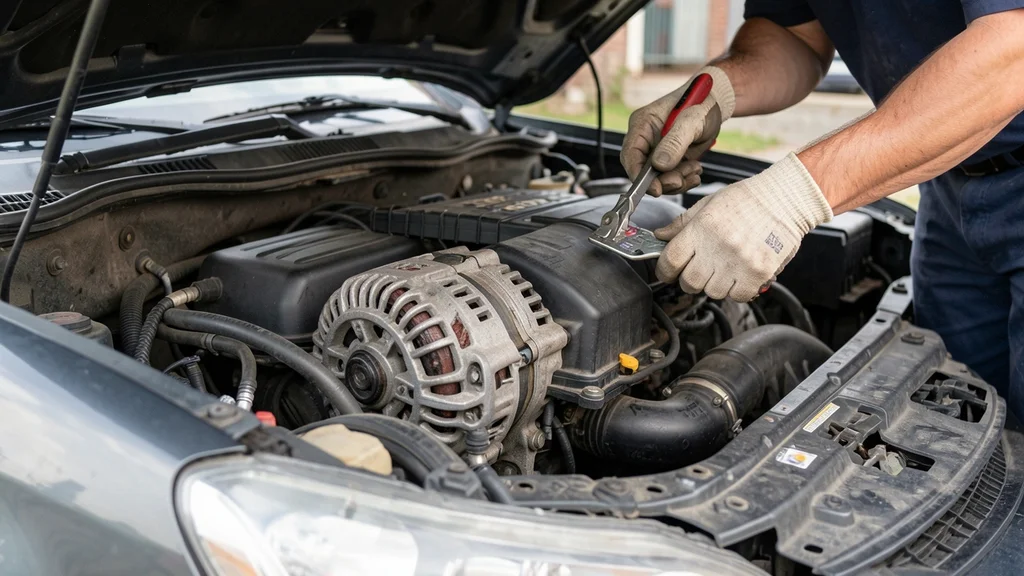
If your car won’t start and you suspect electrical issues, you might wonder can you test the alternator with a bad battery. Testing the alternator while the battery is dead or weak can give misleading results, so it’s important to know the right approach. This guide explains how to properly diagnose alternator problems, even when the battery is in poor condition, so you can avoid unnecessary repairs.
You can test the alternator with a bad battery by first jump-starting the vehicle or using a battery charger to provide stable voltage. Without sufficient power, the alternator may not function properly, leading to inaccurate test results.
Why a Bad Battery Affects Alternator Testing
The alternator and battery work together to power your vehicle’s electrical system. The battery provides the initial power to start the engine, while the alternator recharges the battery and supplies electricity to the car’s systems once the engine is running. If the battery is weak or dead, it can’t provide the stable voltage needed for an accurate alternator test.
- Voltage instability: A bad battery may not hold a charge, causing voltage fluctuations that make it hard to gauge alternator performance.
- False readings: Testing the alternator with a dead battery can lead to incorrect voltage readings, making it seem like the alternator is faulty when it’s not.
- Insufficient load: The alternator needs a functional battery to test its output under load. Without it, the test may show low or no output.
- Potential damage: Attempting to test the alternator without proper voltage support can strain the electrical system.
Tip: Always check the battery’s health first. A simple voltage test with a multimeter can reveal if the battery is the issue before testing the alternator.
The battery should read around 12.6 volts when the engine is off and between 13.8 to 14.4 volts when the engine is running. If the battery voltage is below 12 volts, it’s likely weak or dead, and you’ll need to address that before testing the alternator.
How to Test the Alternator with a Bad Battery
Testing the alternator when the battery is bad requires a few extra steps to ensure accuracy. Below is a step-by-step guide to help you get reliable results.
- Jump-start the vehicle: Use jumper cables connected to a good battery or a portable jump starter to provide power. This ensures the alternator has the voltage it needs to function.
- Start the engine: Once the car is running, disconnect the jumper cables. The alternator should now be supplying power to the vehicle.
- Use a multimeter: Set the multimeter to DC voltage and connect the red probe to the positive battery terminal and the black probe to the negative terminal.
- Check the voltage: With the engine running, the voltage should read between 13.8 and 14.4 volts. If it’s outside this range, the alternator may be faulty.
- Test under load: Turn on the headlights, air conditioning, and other electrical accessories to see if the voltage remains stable. A significant drop indicates a weak alternator.
| Test Step | Expected Voltage | What It Means |
|---|---|---|
| Engine Off | 12.6V | Normal battery voltage |
| Engine On, No Load | 13.8-14.4V | Alternator charging properly |
| Engine On, Load Applied | 13.5-14.2V | Alternator handling load well |
| Engine On, Voltage Drops Below 13V | Below 13V | Alternator may be failing |
If the voltage remains low or fluctuates wildly, the alternator may not be functioning correctly. However, if the battery is completely dead, even a good alternator won’t be able to charge it properly without an initial power source.
Signs Your Alternator Might Be Failing
A failing alternator can cause a variety of symptoms, some of which may overlap with a bad battery. Knowing the signs can help you pinpoint the issue before testing.
- Dim or flickering lights: The alternator powers the electrical system while the engine runs. If the headlights or dashboard lights dim or flicker, it could indicate a failing alternator.
- Warning light on the dashboard: Most modern vehicles have a battery or alternator warning light that illuminates when there’s an issue with the charging system.
- Weak or dead battery: If your battery keeps dying, even after jump-starting or replacing it, the alternator may not be charging it properly.
- Strange noises: A failing alternator can produce a whining or grinding noise, often due to worn-out bearings.
- Electrical accessories not working: If the radio, power windows, or other accessories are slow or not working, it could be due to insufficient power from the alternator.
- Engine stalling or difficulty starting: A weak alternator may not provide enough power to keep the engine running, leading to stalling or hard starts.
According to the Car Care Council, electrical issues are one of the top reasons for vehicle breakdowns, with alternator failure being a common culprit. If you notice any of these symptoms, it’s important to test both the battery and alternator to identify the root cause.
Tools You Need to Test the Alternator
To accurately test the alternator, especially with a bad battery, you’ll need a few essential tools. Having the right equipment ensures you get precise readings and avoid damaging your vehicle’s electrical system.
- Multimeter: A digital multimeter is the most important tool for testing voltage. It allows you to measure the battery and alternator output accurately.
- Jumper cables: If the battery is dead, you’ll need jumper cables to provide an initial power source from another vehicle or a jump starter.
- Portable jump starter: A portable jump starter can be a convenient alternative to jumper cables, especially if you don’t have access to another vehicle.
- Battery charger: A battery charger can help bring a weak battery back to a usable state before testing the alternator.
- Safety gloves and goggles: Working with car batteries involves handling corrosive materials and electrical currents, so protective gear is essential.
Important: Always ensure the engine is off when connecting or disconnecting jumper cables or a battery charger to avoid electrical surges.
If you don’t have these tools, many auto parts stores offer free battery and alternator testing. This can be a quick and reliable way to diagnose the issue without purchasing equipment.
Step-by-Step Alternator Test with a Dead Battery
If your battery is completely dead, follow these steps to test the alternator safely and accurately. This method ensures you get a proper reading without damaging your vehicle’s electrical system.
1. Jump-Start the Vehicle
Connect the jumper cables to the dead battery and a good battery (or portable jump starter). Start the engine and let it run for a few minutes to allow the alternator to begin charging the battery.
- Connect the red (positive) clamp to the dead battery’s positive terminal.
- Connect the other red clamp to the good battery’s positive terminal.
- Connect the black (negative) clamp to the good battery’s negative terminal.
- Connect the last black clamp to an unpainted metal surface on the dead battery’s vehicle (not the negative terminal).
2. Remove the Jumper Cables
Once the engine is running, carefully disconnect the jumper cables in the reverse order of how you connected them. This prevents electrical surges and ensures a clean test.
3. Check Voltage with a Multimeter
Set your multimeter to DC voltage and connect the probes to the battery terminals. With the engine running, the voltage should read between 13.8 and 14.4 volts. If it’s lower, the alternator may not be charging properly.
4. Test Under Load
Turn on the headlights, air conditioning, and other electrical accessories to put a load on the alternator. The voltage should remain stable within the 13.8-14.4V range. A significant drop indicates a weak alternator.
5. Inspect the Alternator Belt
While the engine is running, visually inspect the alternator belt for wear or damage. A loose or worn belt can cause the alternator to function poorly, even if it’s in good condition.
6. Listen for Unusual Noises
Pay attention to any unusual noises coming from the alternator, such as whining or grinding. These sounds can indicate internal issues that require professional attention.
7. Final Check
If the voltage remains stable under load and there are no unusual noises, the alternator is likely functioning properly. If not, it may need to be replaced.
Common Mistakes to Avoid When Testing the Alternator
Testing the alternator with a bad battery can be tricky, and there are several common mistakes that can lead to inaccurate results or even damage to your vehicle.
- Testing without a power source: Attempting to test the alternator with a completely dead battery can lead to false readings. Always ensure there’s a stable power source, either through jump-starting or using a battery charger.
- Ignoring safety precautions: Failing to wear protective gear or follow proper procedures when handling batteries and jumper cables can result in injury or electrical damage.
- Using a faulty multimeter: A multimeter that isn’t calibrated or has dead batteries can give incorrect readings. Always check your multimeter before testing.
- Not testing under load: Testing the alternator without applying a load (e.g., turning on electrical accessories) can miss issues that only appear when the alternator is working harder.
- Misinterpreting voltage readings: Not understanding the expected voltage ranges can lead to incorrect conclusions about the alternator’s health.
Warning: Never connect the negative jumper cable to the dead battery’s negative terminal when jump-starting. This can cause electrical sparks and damage to the battery.
To avoid these mistakes, take your time and follow each step carefully. If you’re unsure, consider having a professional mechanic perform the test.
When to Replace the Alternator vs. the Battery
Determining whether to replace the alternator or the battery can be challenging, especially when both components show signs of wear. Here’s how to decide which one needs attention.
| Issue | Likely Cause | Solution |
|---|---|---|
| Car won’t start, no power | Dead battery | Jump-start or replace battery |
| Car starts but dies quickly | Faulty alternator | Replace alternator |
| Lights dim with engine running | Weak alternator | Test alternator, replace if faulty |
| Battery warning light on | Alternator or battery issue | Test both components |
| Battery keeps dying | Alternator not charging | Replace alternator |
If the battery is old (typically over 4-5 years) and struggles to hold a charge, it may be time for a replacement. On the other hand, if the battery is relatively new but the car still has electrical issues, the alternator is likely the culprit. According to RepairPal, the average lifespan of an alternator is about 7 years or 100,000 to 150,000 miles, but this can vary based on driving conditions and vehicle maintenance.
Professional Alternator Testing Options
If you’re not comfortable testing the alternator yourself, there are several professional options available. Many auto parts stores and repair shops offer free or low-cost alternator and battery testing.
- Auto parts stores: Chains like AutoZone, O’Reilly Auto Parts, and Advance Auto Parts offer free battery and alternator testing. They use specialized equipment to provide accurate diagnostics.
- Dealerships: If your vehicle is still under warranty, the dealership can perform a comprehensive electrical system check, often at no cost.
- Independent repair shops: Local mechanics can test the alternator and battery as part of a broader electrical system inspection. This is a good option if you suspect other issues.
- Mobile mechanics: Services like YourMechanic or Wrench offer on-site diagnostics, which can be convenient if you’re unable to drive your vehicle.
Tip: If you’re unsure about the results of your own testing, a professional diagnosis can provide peace of mind and ensure accuracy.
Professional testing often includes a load test, which checks how the alternator performs under high electrical demand. This can reveal issues that a simple voltage test might miss.
Frequently Asked Questions
Can a bad battery damage the alternator?
A bad battery can cause the alternator to work harder to recharge it, potentially leading to premature wear. However, a dead battery alone won’t usually damage the alternator unless there’s an underlying issue with the charging system.
How long does it take to test an alternator?
Testing an alternator with a multimeter takes about 10-15 minutes, including setup and load testing. Professional testing at an auto parts store may take slightly longer but is often completed within 30 minutes.
Can I test the alternator without jump-starting the car?
If the battery is completely dead, you’ll need to jump-start the vehicle or use a battery charger to provide power. Without a stable voltage source, the alternator won’t function properly, and the test results will be unreliable.
What voltage should the alternator output?
The alternator should output between 13.8 and 14.4 volts with the engine running. If the voltage is below 13 volts, the alternator may not be charging the battery properly.
Is it safe to drive with a bad alternator?
Driving with a bad alternator is risky because the battery will eventually drain, leaving you stranded. Additionally, a failing alternator can cause electrical issues that may affect other components, such as the power steering or brakes in modern vehicles.
Final Thoughts
Testing the alternator with a bad battery is possible, but it requires extra steps to ensure accuracy. Always start by jump-starting the vehicle or using a battery charger to provide a stable power source. Use a multimeter to check the voltage under load, and watch for signs of a failing alternator, such as dim lights or unusual noises. If you’re unsure, professional testing is a reliable option. Addressing electrical issues early can prevent costly repairs and keep your vehicle running smoothly.
Leave a Reply