
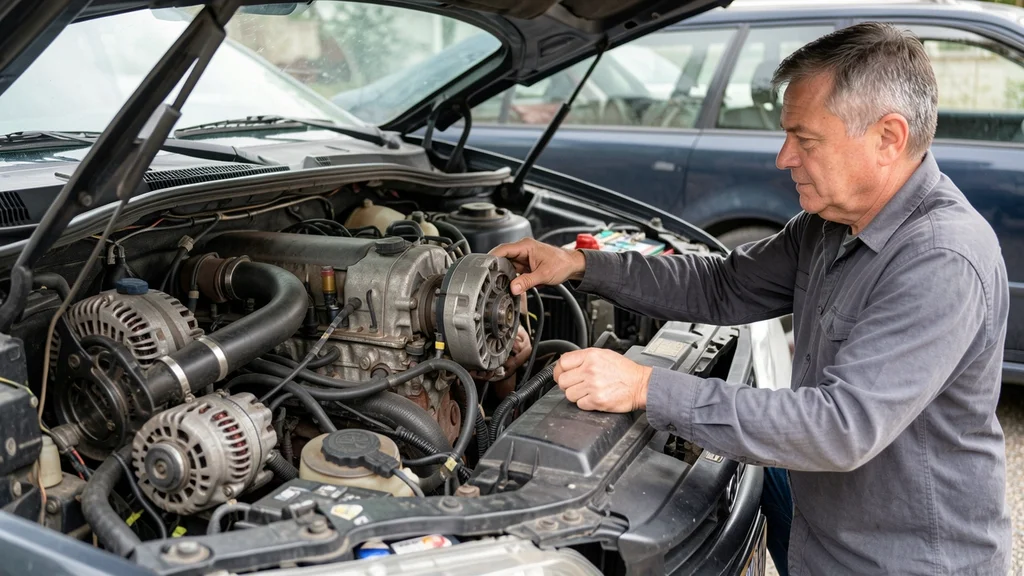
If your car’s battery light flickers or the engine sputters, you may wonder how long can you drive with a failing alternator. A failing alternator cannot recharge the battery, and once the battery drains, your vehicle will stall. This guide explains the warning signs, how long you can safely drive, and what to do next to avoid being stranded.
You can typically drive 30 minutes to 2 hours with a failing alternator, depending on battery health and electrical load. Once the battery is depleted, the car will shut off and may not restart without a jump or replacement.
Signs Your Alternator Is Failing
A failing alternator often gives clear warning signs before it leaves you stranded. The most common indicator is a lit battery warning light on your dashboard. However, this light can also appear for other electrical issues, so it’s essential to look for additional symptoms.
Dim or flickering headlights are another red flag. The alternator powers your car’s electrical system while the engine runs, so if it’s failing, your lights may dim or pulse, especially at night or when idling. You might also notice weaker performance from other electrical components, such as slow power windows, a dim dashboard display, or a struggling radio.
Other symptoms include:
- Strange noises like whining or grinding from the engine bay, indicating a worn-out alternator bearing
- A dead battery that needs frequent jump-starts, even after being charged
- An odd smell, similar to burning rubber, caused by a slipping alternator belt
- Stalling or difficulty starting the engine, particularly when using electrical accessories like air conditioning or headlights
- Electrical failures in multiple systems, such as power steering or braking assistance
Warning: Ignoring these signs can lead to a complete electrical failure, leaving you stranded. If you notice multiple symptoms, have your alternator tested immediately.
How Long Can You Drive With a Failing Alternator
The exact distance you can drive with a failing alternator depends on several factors, including battery health, electrical load, and driving conditions. A healthy battery can provide power for 30 minutes to 2 hours of driving, but this time frame shrinks if you’re using high-drain accessories like headlights, air conditioning, or heated seats.
If your battery is already weak or old, the car may stall within minutes of the alternator failing. Conversely, a new, fully charged battery might give you up to 2 hours of driving time, though this is rare. Driving at higher speeds can help extend this time slightly, as the engine runs more efficiently, reducing the strain on the battery.
Here’s a general breakdown of what to expect:
| Battery Condition | Electrical Load | Estimated Drive Time |
|---|---|---|
| New, fully charged | Low (no AC, minimal lights) | 1.5–2 hours |
| New, fully charged | High (AC, headlights, radio) | 30–60 minutes |
| Old or weak | Low | 15–30 minutes |
| Old or weak | High | 5–15 minutes |
Keep in mind that these are rough estimates. The only way to know for sure is to monitor your car’s electrical system closely and act quickly if you suspect a problem.
What Happens When the Alternator Fails Completely
When the alternator fails completely, your car’s battery will eventually drain, and the vehicle will lose all electrical power. This process can happen gradually or suddenly, depending on the battery’s condition and the electrical load.
Here’s what you can expect when the alternator stops working:
- Initial Warning Signs: The battery light on your dashboard will illuminate, and you may notice dimming headlights or other electrical issues.
- Loss of Non-Essential Systems: As the battery drains, non-essential systems like the radio, power windows, and air conditioning will start to fail or operate weakly.
- Engine Stalling: The engine requires electrical power to keep running, especially in modern fuel-injected vehicles. Once the battery is depleted, the engine will stall and may not restart without a jump-start.
- Complete Electrical Failure: If you continue to drive without addressing the issue, the battery will drain completely, leaving you with no power for the starter, lights, or any other systems. At this point, you’ll need a tow or a jump-start to get moving again.
Important: If your car stalls due to alternator failure, do not attempt to restart it repeatedly. This can drain the battery further and make it harder to jump-start later.
How to Extend Drive Time With a Failing Alternator
If you suspect your alternator is failing but need to drive a short distance to reach a repair shop or a safe location, there are steps you can take to extend your drive time. The goal is to minimize the electrical load on the battery to buy yourself more time.
Here’s what you can do:
- Turn Off Non-Essential Electrical Systems: Shut off the air conditioning, radio, heated seats, and any other accessories that draw power. Even small loads can add up quickly when the alternator isn’t charging the battery.
- Use Headlights Sparingly: If it’s daytime, avoid using your headlights. At night, use them only when absolutely necessary, and consider using parking lights or fog lights if they’re less power-hungry.
- Avoid Stop-and-Go Traffic: Frequent starting and stopping puts additional strain on the battery. Try to drive at a steady speed to reduce the electrical load.
- Disconnect Aftermarket Electronics: If your car has aftermarket electronics like a sound system or GPS, unplug or turn them off to conserve power.
- Drive Directly to a Repair Shop: Avoid unnecessary detours or stops. Head straight to a mechanic or auto parts store where you can get the alternator tested or replaced.
According to AAA, electrical system failures are one of the top reasons for roadside assistance calls. Taking these steps can help you avoid becoming another statistic.
Can You Jump-Start a Car With a Failing Alternator
Jump-starting a car with a failing alternator can be tricky. A jump-start will provide the initial power needed to start the engine, but if the alternator isn’t working, the battery won’t recharge once the jump cables are removed. This means your car may run for a short time but will likely stall again once the battery drains.
If you attempt a jump-start, follow these steps carefully:
- Connect the Jump Cables: Attach the red (positive) clamp to the dead battery’s positive terminal, then the other red clamp to the donor battery’s positive terminal. Connect the black (negative) clamp to the donor battery’s negative terminal, then the other black clamp to an unpainted metal surface on your car, away from the battery and moving parts.
- Start the Donor Vehicle: Let it run for a few minutes to build up a charge.
- Start Your Car: If it starts, let it run for a few minutes to allow the battery to charge slightly.
- Disconnect the Cables: Remove the black clamp from your car first, then the black clamp from the donor battery. Next, remove the red clamp from the donor battery, followed by the red clamp from your battery.
- Drive Immediately to a Repair Shop: Do not turn off the engine, as you may not be able to restart it. Head straight to a mechanic to diagnose and fix the alternator issue.
Tip: If your car stalls shortly after a jump-start, it’s a clear sign that the alternator is not charging the battery. In this case, you’ll need to have the alternator replaced or repaired.
How to Test Your Alternator
If you’re unsure whether your alternator is failing, you can perform a few simple tests to diagnose the issue. These tests can help you determine whether the problem lies with the alternator, battery, or another component of the electrical system.
Here are three methods to test your alternator:
Method 1: Use a Multimeter
A multimeter is a handy tool for testing electrical systems in your car. To test the alternator:
- Start your car and let it run for a few minutes to warm up.
- Turn off all electrical accessories, including the radio, air conditioning, and headlights.
- Set your multimeter to DC voltage (20V range).
- Connect the red probe to the positive battery terminal and the black probe to the negative terminal.
- With the engine running, a healthy alternator should produce between 13.8 and 14.4 volts. If the voltage is below 13.0 volts, the alternator may not be charging the battery properly.
Method 2: Inspect the Alternator Belt
A loose or worn alternator belt can prevent the alternator from functioning correctly. To inspect the belt:
- Turn off the engine and open the hood.
- Locate the alternator belt (refer to your owner’s manual if needed).
- Check for signs of wear, such as cracks, fraying, or glazing (a shiny, hardened surface).
- Test the belt’s tension by pressing down on it with your finger. It should have a slight give but not be loose. If the belt is too loose or shows signs of wear, it may need to be replaced.
Method 3: Perform a Load Test
A load test can help you determine whether the alternator is capable of handling the electrical load of your car. To perform a load test:
- Start your car and let it run for a few minutes.
- Turn on all electrical accessories, including the headlights, air conditioning, and radio.
- Use your multimeter to measure the voltage at the battery terminals. If the voltage drops below 13.0 volts with the accessories on, the alternator may not be able to handle the load.
| Test Method | Tools Needed | Expected Voltage |
|---|---|---|
| Multimeter Test | Multimeter | 13.8–14.4V |
| Belt Inspection | Flashlight, Owner’s Manual | N/A |
| Load Test | Multimeter | Above 13.0V |
If any of these tests indicate a problem with the alternator, it’s best to have it inspected by a professional mechanic for a definitive diagnosis.
Alternator Replacement Cost and Process
If your alternator is failing, the only permanent solution is to replace it. The cost of replacing an alternator can vary widely depending on the make and model of your vehicle, as well as whether you choose to do the work yourself or hire a professional.
Here’s a breakdown of what you can expect:
Cost of Replacement
The cost of replacing an alternator typically includes two components: the cost of the part itself and the cost of labor. According to RepairPal, the average cost for alternator replacement is between $500 and $1,000, with parts ranging from $300 to $700 and labor from $200 to $300. However, these costs can be higher for luxury or imported vehicles.
| Vehicle Type | Alternator Cost | Labor Cost | Total Cost |
|---|---|---|---|
| Domestic (e.g., Ford, Chevrolet) | $250–$500 | $150–$250 | $400–$750 |
| Import (e.g., Toyota, Honda) | $350–$600 | $200–$300 | $550–$900 |
| Luxury (e.g., BMW, Mercedes) | $500–$800 | $250–$400 | $750–$1,200 |
Note that these are average costs, and prices can vary based on your location and the specific model of your car. Additionally, some vehicles may require additional parts or repairs, such as a new alternator belt or tensioner, which can add to the total cost.
DIY vs. Professional Replacement
Replacing an alternator can be a DIY project if you have some mechanical experience and the right tools. However, it’s important to weigh the pros and cons of doing it yourself versus hiring a professional.
DIY Replacement
- Pros: Saves on labor costs, which can be significant. Gives you a sense of accomplishment and control over the quality of the work.
- Cons: Requires tools and mechanical knowledge. Can be time-consuming, especially if you encounter difficulties. Mistakes during installation can lead to further damage or electrical issues.
Professional Replacement
- Pros: Ensures the job is done correctly and efficiently. Often comes with a warranty on parts and labor. Saves you time and effort.
- Cons: More expensive due to labor costs. You’ll need to schedule an appointment and potentially arrange transportation to and from the repair shop.
If you decide to replace the alternator yourself, make sure you have a repair manual or access to reliable online tutorials for your specific vehicle. The process generally involves disconnecting the battery, removing the old alternator, installing the new one, and reconnecting all electrical connections and belts.
Common Mistakes to Avoid
When dealing with a failing alternator, there are several common mistakes that can make the situation worse or even cause additional damage to your vehicle. Being aware of these pitfalls can help you avoid costly errors.
Here are some mistakes to steer clear of:
- Ignoring the Warning Signs: Many drivers dismiss the battery light or other electrical issues as minor problems. Ignoring these signs can lead to a complete alternator failure, leaving you stranded.
- Continuing to Drive With Electrical Issues: If you notice symptoms of a failing alternator, it’s crucial to address the problem as soon as possible. Driving with a failing alternator can drain the battery and cause the engine to stall, potentially in a dangerous location.
- Jump-Starting Without Checking the Alternator: Jump-starting a car with a dead battery is a common practice, but if the alternator is the root cause, a jump-start will only provide temporary relief. Always test the alternator after a jump-start to ensure it’s charging the battery.
- Using the Wrong Alternator: When replacing the alternator, it’s essential to use a part that is compatible with your vehicle’s make, model, and year. Using the wrong alternator can lead to electrical issues, poor performance, or even damage to other components.
- Not Testing the Battery: A weak or dead battery can mimic the symptoms of a failing alternator. Before replacing the alternator, have the battery tested to ensure it’s in good condition. If the battery is old or weak, it may not hold a charge even with a new alternator.
- Disconnecting the Battery While the Engine Is Running: In older vehicles, this was a common test for alternator function. However, in modern cars, disconnecting the battery while the engine is running can cause electrical spikes that damage sensitive electronics, such as the engine control unit (ECU).
Warning: Disconnecting the battery while the engine is running in a modern vehicle can cause serious and expensive damage. Never attempt this test.
Frequently Asked Questions
Can a car run on battery only?
Yes, a car can run on battery power alone, but only for a short time. Once the alternator fails, the battery will provide power to the electrical system and engine, but it will drain quickly. Most cars will run for 30 minutes to 2 hours on battery power alone, depending on the battery’s health and the electrical load.
Will a failing alternator damage the battery?
A failing alternator can indirectly damage the battery by causing it to drain completely. When the battery is repeatedly drained and not properly recharged, it can lead to sulfation, a condition where sulfur builds up on the battery plates, reducing its ability to hold a charge. Over time, this can shorten the battery’s lifespan.
How do I know if it’s the alternator or the battery?
The best way to determine whether the issue is with the alternator or the battery is to perform a voltage test. With the engine off, a fully charged battery should read around 12.6 volts. With the engine running, the voltage should increase to between 13.8 and 14.4 volts if the alternator is working correctly.
If the voltage stays the same or drops, the alternator may be failing.
Can I drive with a failing alternator if I keep the battery charged?
No, driving with a failing alternator is not a viable long-term solution, even if you keep the battery charged. The alternator is responsible for powering the electrical system while the engine is running. Without a functioning alternator, the battery will eventually drain, and the car will stall.
Additionally, relying on a battery alone can lead to frequent jump-starts and potential damage to the battery.
How often should I replace my alternator?
Alternators typically last between 80,000 and 150,000 miles, or about 7–10 years, depending on driving conditions and vehicle maintenance. However, extreme temperatures, frequent short trips, and excessive electrical load can shorten the alternator’s lifespan. If you notice any signs of alternator failure, have it inspected by a professional mechanic to determine if replacement is necessary.
Final Thoughts
Driving with a failing alternator is risky and can leave you stranded at any moment. While you might get 30 minutes to 2 hours of drive time, the safest course of action is to address the issue immediately. Watch for warning signs like dim lights or a battery warning, and test your alternator if you suspect a problem.
Replacing a failing alternator is far cheaper than dealing with the consequences of a sudden breakdown.
Leave a Reply