
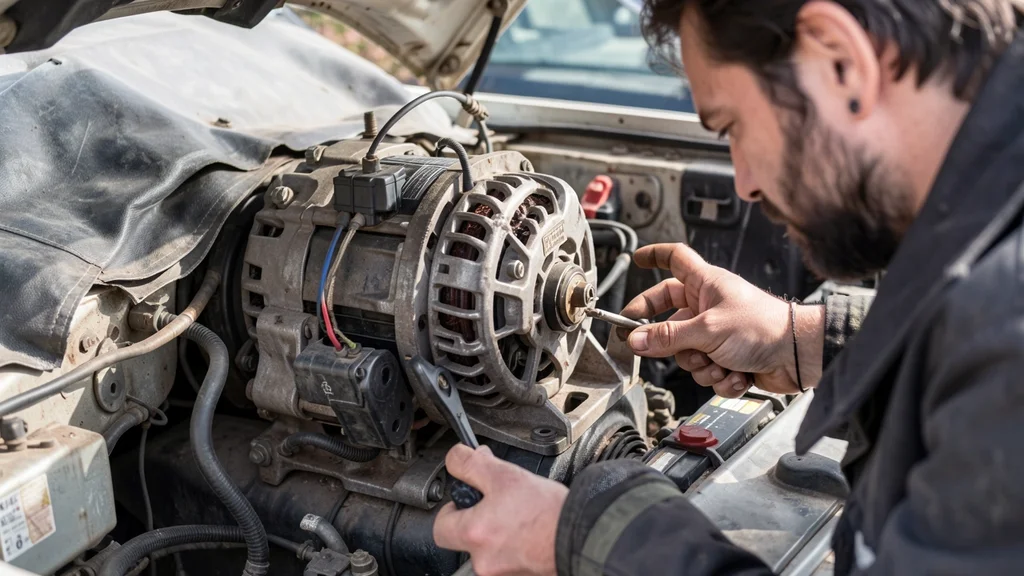
A faulty alternator can leave you stranded if not addressed promptly. Knowing how long can you drive with a faulty alternator helps you avoid unexpected breakdowns and costly repairs. This guide covers the signs of a failing alternator, how far you can safely drive, and the risks of ignoring the problem.
Whether you’re noticing dim lights or a dead battery, understanding these details can save you time and stress.
You can typically drive 20-30 miles with a faulty alternator once the battery is fully charged, but this varies by vehicle and battery condition. After that, the battery drains completely, leaving you stranded.
Signs Your Alternator Is Failing
Your car often gives clear warnings before an alternator fails completely. Ignoring these signs can lead to a sudden breakdown. Here are the most common symptoms to watch for:
Dim or flickering headlights are one of the first indicators. The alternator powers your car’s electrical system, so when it weakens, lights often dim, especially at idle. You may also notice the interior dome light or dashboard lights behaving erratically.
- Warning Lights: The battery-shaped warning light on your dashboard is a direct signal. Modern vehicles also trigger the check engine light for alternator issues.
- Weak or Dead Battery: A dead battery that won’t hold a charge often points to a faulty alternator. Jump-starting the car may work temporarily, but if the battery dies again quickly, the alternator is likely the culprit.
- Electrical Accessory Failures: Power windows moving slowly, a weak radio signal, or malfunctioning power seats indicate the alternator isn’t providing enough power.
- Strange Noises: A whining or grinding noise from under the hood often comes from a failing alternator bearing or internal components.
- Burning Smell: An overheating alternator can produce a burning rubber or electrical odor. This requires immediate attention.
- Stalling or Starting Issues: A failing alternator may cause the engine to stall or struggle to start, as the battery drains without being recharged.
Warning: If you notice multiple symptoms, especially the battery light and dim lights together, pull over safely and turn off non-essential electronics to conserve battery power.
How Long Can You Drive With a Faulty Alternator
The exact distance you can drive depends on several factors, including battery health, electrical load, and driving conditions. A fully charged battery typically provides 20-30 miles of driving with a dead alternator. However, this range can shrink quickly if you use high-power accessories like headlights, air conditioning, or the radio.
In city driving with frequent stops, the battery drains faster because the alternator isn’t spinning enough to recharge it. Highway driving at steady speeds may extend your range slightly, but only if the battery has a strong initial charge. Older batteries or those already weakened by age will deplete much sooner.
| Factor | Effect on Driving Range |
|---|---|
| Battery Age | Older batteries hold less charge, reducing range |
| Electrical Load | High usage (lights, AC, radio) drains battery faster |
| Driving Conditions | Stop-and-go traffic drains battery quicker than highway driving |
| Alternator Condition | Partially failing alternator may provide some charge, extending range slightly |
According to AAA, a typical car battery can provide about 30 minutes of runtime without the alternator, but this assumes minimal electrical load. In real-world conditions, you’ll likely get far less. If your alternator fails at night with headlights on, expect your range to drop to 10-15 miles or less.
What Happens When You Drive With a Bad Alternator
Driving with a faulty alternator puts immense strain on your battery and electrical system. The battery, designed to start the engine and provide short-term power, isn’t built for sustained use. When the alternator fails, the battery takes over all electrical demands, leading to rapid depletion.
As the battery drains, you’ll first notice electrical accessories failing. The radio may cut out, power windows will slow or stop working, and dashboard lights may flicker. Eventually, critical systems like power steering and brakes (in modern vehicles) may lose power assist, making the car harder to control.
- Initial Phase: Battery begins supplying all electrical power. Warning lights appear, and non-essential accessories may fail.
- Intermediate Phase: Dim lights, weak power windows, and erratic gauge behavior. Engine may run rough as the ECU loses power.
- Critical Phase: Battery voltage drops below 10 volts. Engine stalls as the ECU and fuel system lose power. You’ll be unable to restart the car without a jump or replacement.
Important: Modern vehicles rely heavily on electronics. A dead battery can cause the engine to stall even while driving, creating a dangerous situation, especially at highway speeds.
How to Extend Your Range With a Failing Alternator
If you suspect your alternator is failing, there are steps you can take to maximize your remaining driving range. The goal is to reduce electrical load on the battery as much as possible. Start by turning off all non-essential systems.
Turn off the air conditioning, radio, and any aftermarket electronics. Roll down windows instead of using power windows. At night, use headlights only when absolutely necessary, and switch to parking lights if possible.
Avoid using the horn, as it draws significant power.
- Minimize Lighting: Use headlights only when legally required. Parking lights draw less power.
- Disable Climate Control: Turn off AC and heating systems, as they place heavy loads on the electrical system.
- Avoid Short Trips: Frequent starting and stopping drains the battery faster than steady driving.
- Drive at Steady Speeds: Maintain a constant speed (preferably on highways) to reduce the need for battery power.
- Unplug Devices: Disconnect phone chargers, GPS units, and any other plugged-in accessories.
- Use Manual Controls: If your car has manual seats or windows, use them instead of power options.
If you must drive at night, consider pulling over periodically to let the battery rest. However, this is a temporary solution. The only permanent fix is to replace or repair the alternator.
Can You Jump Start a Car With a Bad Alternator
Jump-starting a car with a bad alternator is possible, but it’s only a temporary fix. The jump will provide enough power to start the engine, but once the jump cables are removed, the battery will begin draining again. If the alternator is completely dead, the battery won’t recharge while driving.
Here’s how to do it safely: Connect the jump cables to a running donor vehicle, start your car, and then disconnect the cables. Drive immediately to a repair shop. Avoid turning off the engine, as you may not be able to restart it.
| Step | Action |
|---|---|
| 1 | Park donor car close enough for cables to reach |
| 2 | Connect red clamp to dead battery’s positive terminal |
| 3 | Connect other red clamp to donor battery’s positive terminal |
| 4 | Connect black clamp to donor battery’s negative terminal |
| 5 | Connect last black clamp to unpainted metal on your car |
| 6 | Start your car and immediately disconnect cables in reverse order |
Tip: If your car starts but the battery light remains on, drive directly to a repair shop. Do not turn off the engine until you reach your destination.
How to Test Your Alternator
Testing your alternator is straightforward and can be done with a few basic tools. A multimeter is the most accurate way to check alternator output. You can also perform a simple visual inspection and listen for unusual noises.
Start with a visual check. Look for loose or corroded connections at the alternator and battery. Check the alternator belt for wear, cracks, or proper tension.
A loose or damaged belt can prevent the alternator from charging properly.
- Engine Off Test: With the engine off, use a multimeter to test the battery voltage. A fully charged battery should read 12.6 volts. If it’s below 12.4, the battery may not have enough charge to start the test.
- Engine On Test: Start the engine and rev it to about 2000 RPM. The voltage should rise to between 13.8 and 14.4 volts. If it stays below 13.5, the alternator isn’t charging properly. If it exceeds 14.5, the alternator may be overcharging.
- Load Test: Turn on the headlights, AC, and radio. The voltage should remain stable (above 13.5 volts). If it drops significantly, the alternator can’t handle the load.
- Noise Check: Listen for grinding or whining noises from the alternator. These sounds often indicate bearing failure.
- Belt Inspection: Check the serpentine belt for wear and proper tension. A loose or slipping belt can cause charging issues.
Many auto parts stores offer free alternator testing. If you’re unsure about performing these tests yourself, a professional can do it quickly and accurately. According to AutoZone, over 30% of alternator-related issues are actually caused by battery or connection problems, so a thorough test is essential.
Alternator Replacement Cost and Process
If your alternator is confirmed faulty, replacement is the only long-term solution. The cost varies depending on your vehicle make and model, labor rates, and whether you choose OEM or aftermarket parts. On average, expect to pay between $400 and $800 for parts and labor.
Labor costs typically range from $100 to $200, while the alternator itself costs between $200 and $600. Luxury or European vehicles may cost significantly more. Some vehicles have alternators that are more accessible, reducing labor time, while others require extensive disassembly.
| Component | Average Cost | Notes |
|---|---|---|
| Aftermarket Alternator | $150 – $400 | Warranty varies by brand (1-3 years) |
| OEM Alternator | $300 – $600 | Exact fit, longer warranty |
| Labor | $100 – $200 | Varies by vehicle complexity |
| Serpentine Belt | $20 – $50 | Often replaced with alternator |
The replacement process generally takes 1-2 hours. A mechanic will disconnect the battery, remove the serpentine belt, unbolt the alternator, and install the new unit. They’ll also test the charging system to ensure proper operation.
If you’re experienced with car repairs, you can replace the alternator yourself, but be cautious with electrical connections.
Important: Always disconnect the battery before replacing the alternator to prevent electrical shorts. Some vehicles require specific procedures to avoid triggering the airbag system.
Common Mistakes to Avoid With Alternator Issues
Many drivers make critical errors when dealing with alternator problems, often worsening the situation or causing additional damage. Being aware of these mistakes can help you avoid costly repairs and ensure your safety.
One of the most common mistakes is ignoring the warning signs. Many drivers continue driving with the battery light on, assuming it’s a minor issue. This can lead to a complete electrical failure, leaving you stranded.
Another mistake is repeatedly jump-starting the car without addressing the root cause. Each jump puts stress on the battery and electrical system.
- Ignoring Warning Lights: The battery light is a direct warning of charging system issues. Address it immediately.
- Repeated Jump Starts: Jump-starting without fixing the alternator drains the donor battery and stresses your electrical system.
- Using Low-Quality Parts: Cheap alternators may fail prematurely. Invest in a quality part with a good warranty.
- Not Testing the Battery: A weak battery can mimic alternator symptoms. Always test both components.
- Driving With Dead Alternator: Continuing to drive after the battery light appears can damage the battery and other electrical components.
- Improper Installation: Incorrectly installing a new alternator can cause charging issues or electrical shorts.
- Neglecting Belt Inspection: A worn serpentine belt can cause alternator failure. Replace it if it shows signs of wear.
Another critical mistake is not having the charging system tested after replacement. Even a new alternator can have issues if the battery is weak or connections are corroded. Always have the entire system checked to ensure proper operation.
Frequently Asked Questions
Can I drive my car with a bad alternator?
You can drive for a short distance (20-30 miles) with a bad alternator, but it’s risky. The battery will drain quickly, and you may get stranded. It’s safer to have the car towed to a repair shop.
How do I know if it’s the alternator or the battery?
If your car starts but the battery light comes on and stays on, it’s likely the alternator. If the car doesn’t start and you hear a clicking noise, it’s probably the battery. A professional test can confirm the issue.
Can a bad alternator ruin a new battery?
Yes, a faulty alternator can overcharge or undercharge a battery, damaging it over time. If the alternator fails completely, the battery will drain completely, potentially ruining it.
What happens if I ignore a bad alternator?
Ignoring a bad alternator will eventually leave you stranded. The battery will drain completely, and the car will stall. In modern vehicles, critical systems like power steering and brakes may also fail.
How long does it take to replace an alternator?
Replacing an alternator typically takes 1-2 hours, depending on the vehicle. Some models require more disassembly, while others have easily accessible alternators. A professional mechanic can usually complete the job quickly.
Final Thoughts
Driving with a faulty alternator is a gamble that often ends with a dead battery and a stranded vehicle. Knowing how long can you drive with a faulty alternator helps you make smart decisions to avoid breakdowns. Pay attention to warning signs, reduce electrical load if you must drive, and get the alternator replaced as soon as possible.
Regular maintenance and prompt attention to charging system issues can save you from costly repairs and inconvenient situations.
Leave a Reply