
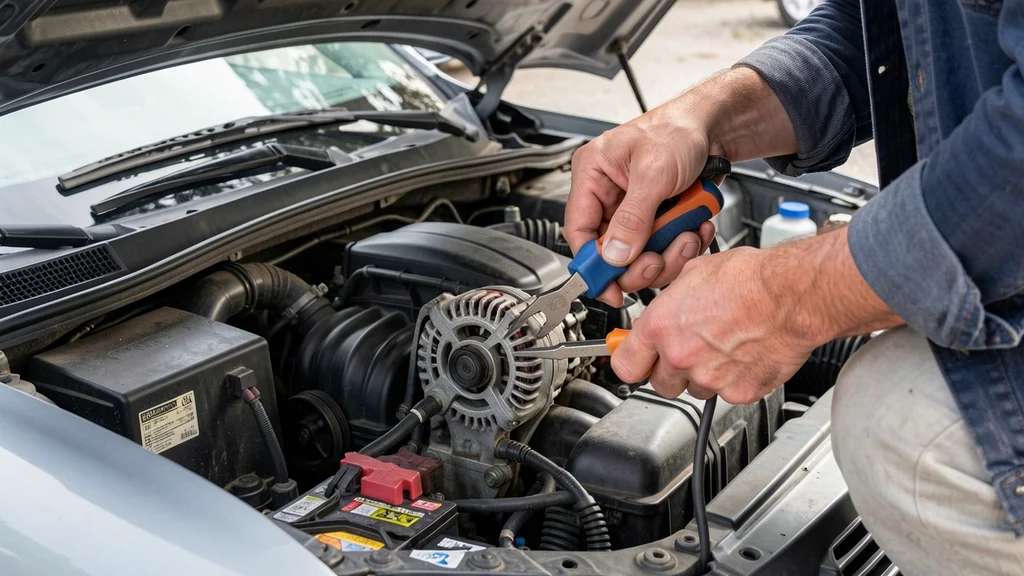
If your car’s battery light flickers or the engine struggles to start, how can you tell if your alternator is charging the battery properly? A failing alternator can leave you stranded, but a few simple checks can confirm its status. This post covers the signs, tools, and steps to test your alternator’s charging ability without guesswork.
The easiest way is to check the battery voltage with the engine running. A healthy alternator should show 13.8 to 14.4 volts. Anything below 13.5 volts means it’s not charging properly.
Signs Your Alternator Is Not Charging
Your car often gives early warnings before the alternator fails completely. Ignoring these signs can lead to a dead battery or even engine stalling.
Here are the most common symptoms to watch for:
- Battery Warning Light: The most obvious sign is the battery-shaped warning light on your dashboard. This light can indicate a problem with the charging system, including the alternator.
- Dim or Flickering Lights: If your headlights or interior lights appear dimmer than usual or flicker while the engine runs, the alternator may not be supplying enough power.
- Weak or Dead Battery: A battery that frequently dies or struggles to start the car—even after a jump-start—often points to an alternator issue, as the battery isn’t being recharged.
- Strange Noises: A whining or grinding noise from the alternator area can signal a failing bearing or internal component.
- Electrical Malfunctions: Issues like power windows moving slowly, a weak radio signal, or dashboard gauges behaving erratically can all stem from low voltage due to alternator failure.
- Stalling or Poor Engine Performance: The alternator powers the spark plugs and fuel injectors. If it fails, the engine may stall or run poorly.
- Smell of Burning Rubber: A failing alternator can overheat, producing a burning smell due to slipping belts or overheating components.
Warning: If you notice multiple symptoms, address the issue immediately. Driving with a failing alternator can lead to a complete breakdown, leaving you stranded.
Tools You Need to Test the Alternator
Testing your alternator’s charging ability requires a few basic tools. While some methods can be done without tools, having the right equipment ensures accuracy.
Here’s what you’ll need:
| Tool | Purpose | Cost Estimate |
|---|---|---|
| Multimeter (Digital) | Measures voltage output from the alternator | $15 – $50 |
| Jumper Cables | For jump-starting if the battery is dead | $20 – $40 |
| Battery Tester | Tests battery health and alternator charging | $30 – $100 |
| Socket Wrench Set | For removing alternator connections if needed | $20 – $60 |
| Safety Gloves | Protects hands during testing | $5 – $15 |
A multimeter is the most essential tool for this job. If you don’t own one, consider borrowing or buying a basic model, as it’s a versatile tool for many automotive and household tasks. According to a Consumer Reports study, 68% of alternator failures are misdiagnosed as battery issues, which is why precise testing is critical.
Step by Step How to Test Alternator Charging
Testing your alternator’s charging output is straightforward if you follow these steps carefully. Always prioritize safety: ensure the engine is off when connecting or disconnecting tools, and avoid touching moving parts.
- Park and Prepare
Park your car in a safe, flat area and engage the parking brake. Turn off the engine and open the hood. Locate the battery and alternator—you’ll find the alternator near the engine, connected by belts.
- Set Up the Multimeter
Turn your multimeter to the DC voltage setting (usually marked as “20V DC” or similar). The multimeter has two probes: red (positive) and black (negative).
- Test Battery Voltage with Engine Off
Connect the red probe to the battery’s positive (+) terminal and the black probe to the negative (-) terminal. A healthy battery should read between 12.2 and 12.6 volts. If it’s below 12 volts, the battery may be weak or discharged.
Important: If the battery voltage is very low (below 11.8V), charge it fully before proceeding, as a dead battery can skew your alternator test results.
- Start the Engine
Start the car and let it idle. Keep all electrical accessories (lights, radio, AC) turned off for an accurate reading.
- Test Voltage with Engine Running
With the engine running, reconnect the multimeter to the battery terminals. A properly functioning alternator should produce between 13.8 and 14.4 volts. If the reading is below 13.5V, the alternator is not charging the battery effectively.
- Test Under Load
Turn on the headlights, radio, and air conditioning. The voltage should remain stable between 13.8V and 14.4V. If the voltage drops below 13.5V, the alternator is struggling under load.
- Rev the Engine
Gently rev the engine to around 2,000 RPM. The voltage should increase slightly but stay within the 13.8V–14.4V range. If the voltage spikes above 15V, the alternator’s voltage regulator may be faulty.
If your readings fall outside these ranges, the alternator likely needs replacement. According to AAA, alternators typically last 7–10 years, but extreme temperatures and electrical demands can shorten their lifespan.
How to Check Alternator Without a Multimeter
Don’t have a multimeter? You can still perform a few basic checks to assess your alternator’s health, though these methods are less precise.
Method 1: The Headlight Test
- Start the engine and turn on the headlights.
- Rev the engine to about 2,000 RPM.
- Observe the headlights. If they brighten significantly when you rev the engine, the alternator is likely charging. If they stay dim or flicker, the alternator may be failing.
Method 2: The Battery Disconnect Test (Advanced)
Warning: This method carries risks. Only attempt it if you’re experienced, as it can damage electrical components or cause sparks. Modern vehicles with sensitive electronics (ECU, computers) can be damaged by this test.
- Start the engine and let it idle.
- Disconnect the negative (-) battery terminal while the engine runs.
- If the engine continues running smoothly, the alternator is likely charging. If the engine stalls or sputters, the alternator is not producing enough power.
- Reconnect the battery terminal immediately after testing.
Method 3: Listen for Unusual Noises
Turn off the radio and listen for a whining or grinding noise coming from the alternator area. A failing bearing or misaligned belt can produce these sounds, indicating alternator issues.
Common Alternator Problems and Causes
Alternators can fail for several reasons, and understanding the root cause can help you prevent future issues. Here are the most common problems:
| Problem | Cause | Solution |
|---|---|---|
| Worn Carbon Brushes | Normal wear and tear over time | Replace brushes or alternator |
| Faulty Voltage Regulator | Electrical surge or age | Replace regulator or alternator |
| Slipped or Broken Drive Belt | Wear, misalignment, or tension issues | Replace or adjust belt |
| Bad Diodes | Electrical overload or heat damage | Replace alternator |
| Corroded Connections | Exposure to moisture or dirt | Clean or replace connections |
| Overheating | Excessive electrical load or poor cooling | Check cooling system, reduce load |
According to J.D. Power, the average cost to replace an alternator ranges from $500 to $1,000, including parts and labor. Preventative maintenance, such as checking belt tension and electrical connections, can extend your alternator’s life.
Alternator vs Battery: How to Tell Which Is the Problem
Since a dead battery and a failing alternator share similar symptoms, it’s easy to confuse the two. Here’s how to tell them apart:
| Issue | Likely Cause: Battery | Likely Cause: Alternator |
|---|---|---|
| Car won’t start | Battery is dead or weak | Battery isn’t being charged |
| Lights dim when idling | Battery voltage is low | Alternator isn’t producing enough power |
| Engine stalls while driving | Unlikely (battery only starts the car) | Alternator failure cuts power to spark plugs |
| Jump-start works but car dies again | Battery may hold a charge temporarily | Alternator isn’t recharging the battery |
| Clicking noise when turning the key | Battery lacks power to turn the starter | Unlikely (alternator doesn’t affect starting directly) |
A simple way to confirm is to test the battery voltage with the engine off (should be 12.2–12.6V) and then with the engine running (should be 13.8–14.4V). If the voltage is low in both cases, the battery is likely the issue. If it’s low only when the engine is off but doesn’t increase when running, the alternator is the culprit.
How to Extend Your Alternator’s Lifespan
While alternators do wear out over time, proper maintenance can help them last longer. Here are some practical tips to keep yours in top shape:
- Check Belt Tension Regularly: A loose or worn serpentine belt can reduce the alternator’s efficiency. Inspect the belt for cracks, fraying, or glaze, and replace it if it’s damaged. Most belts last 60,000–100,000 miles.
- Avoid Short Trips: Frequent short drives don’t give the alternator enough time to fully recharge the battery. If you mostly drive short distances, consider using a battery maintainer.
- Keep Electrical Connections Clean: Corrosion on battery terminals or alternator connections can disrupt the charging process. Clean them periodically with a wire brush and apply dielectric grease to prevent future corrosion.
- Limit Electrical Load: Running high-power accessories (like aftermarket stereos, lights, or inverters) for extended periods can strain the alternator. Upgrade to a higher-output alternator if you frequently use these.
- Inspect for Fluid Leaks: Coolant or oil leaks can damage the alternator over time. If you notice leaks near the alternator, address them promptly.
- Test Your Battery: A weak battery forces the alternator to work harder, shortening its lifespan. Test your battery every 6 months and replace it if it’s weak.
- Drive Regularly: If your car sits unused for long periods, the battery can drain, and the alternator may not get enough runtime to stay healthy. Aim to drive at least once a week for 20–30 minutes.
Tip: If you frequently jump-start your car, it’s a sign of an underlying issue—either the battery or alternator. Address it sooner rather than later to avoid unexpected breakdowns.
When to Call a Professional
While DIY testing is helpful, some situations require a professional mechanic’s expertise. Here’s when to seek help:
- Inconsistent Readings: If your voltage readings fluctuate wildly or don’t make sense, a mechanic can perform a load test or use diagnostic tools to pinpoint the issue.
- Electrical System Issues: If you experience multiple electrical problems (e.g., power windows failing, dashboard lights flickering), a professional can check the entire charging system, including fuses and wiring.
- Alternator Replacement: Replacing an alternator involves disconnecting the battery, removing belts, and handling electrical connections. If you’re not comfortable with these steps, leave it to a pro.
- Warranty Coverage: If your car is still under warranty, a dealership or certified mechanic can perform the work at no cost to you.
- Unusual Noises or Smells: Grinding, whining, or burning smells coming from the alternator area should be checked immediately, as they may indicate serious damage.
According to the National Institute for Automotive Service Excellence (ASE), alternator-related repairs account for nearly 15% of all electrical system failures in vehicles. A professional can also check for other potential issues, such as a faulty voltage regulator or wiring problems.
Frequently Asked Questions
Can I drive with a bad alternator?
You can drive for a short distance, but it’s risky. A bad alternator won’t recharge the battery, so once the battery drains, the car will stall. If the battery warning light is on, drive directly to a repair shop or safe location.
How long does an alternator last?
Most alternators last between 7 and 10 years or 100,000 to 150,000 miles. However, extreme temperatures, frequent short trips, and high electrical demands can shorten their lifespan.
Can a bad alternator ruin a new battery?
Yes. If the alternator isn’t charging the battery properly, the battery will constantly drain and never fully recharge. Over time, this can damage the battery, reducing its lifespan.
Why does my alternator keep failing?
Common reasons include excessive electrical load (e.g., aftermarket accessories), fluid leaks damaging the alternator, poor belt tension, or a failing voltage regulator. Regular maintenance can help prevent premature failure.
How much does it cost to replace an alternator?
The cost varies depending on the vehicle make and model. On average, expect to pay between $500 and $1,000 for parts and labor. Luxury or European vehicles may cost more due to higher part prices.
Final Thoughts
Knowing how can you tell if your alternator is charging can save you from unexpected breakdowns and costly repairs. Start with simple checks like voltage testing and observing warning signs, then take action if you notice any issues. Regular maintenance, such as checking belt tension and electrical connections, can extend your alternator’s life.
When in doubt, consult a professional mechanic to ensure your car’s electrical system stays in top shape.
Leave a Reply