
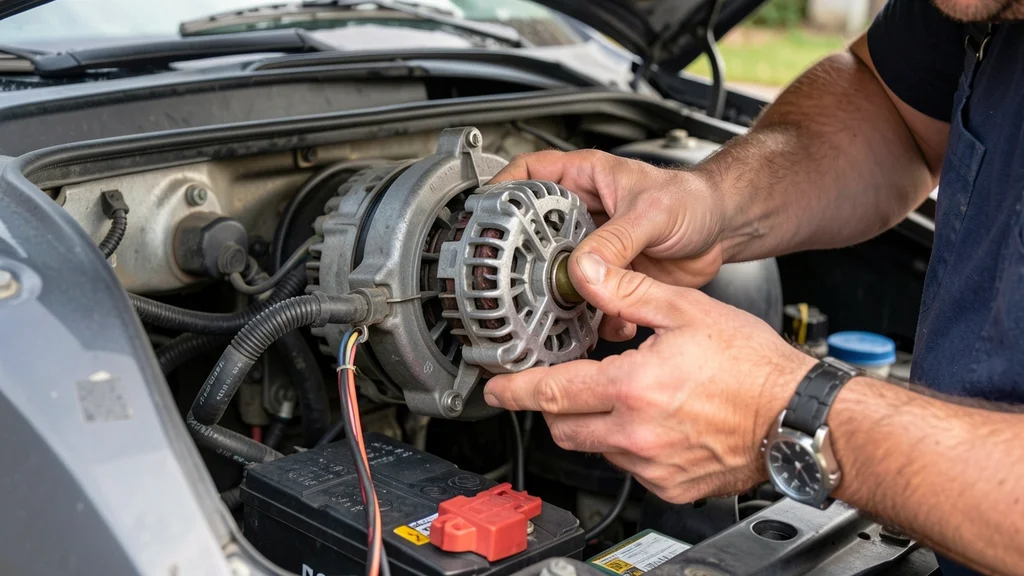
If your car’s electrical system seems off, how can you tell your alternator is going bad is likely the first question on your mind. The alternator keeps your battery charged and powers essential components like lights and the radio. Recognizing early warning signs can save you from a breakdown.
From dim headlights to strange noises, these symptoms often point to a failing alternator.
You can tell your alternator is going bad by watching for dim or flickering lights, a dead battery, whining noises, or warning lights on the dashboard. These signs often appear before total failure.
Dim or Flickering Lights
The alternator powers your vehicle’s electrical system, including headlights and interior lights. When it starts to fail, you may notice your headlights dimming or flickering, especially at night or when idling. This happens because the alternator can’t maintain a consistent voltage output.
Dim lights are often the first visible sign of trouble. If your dashboard lights also appear dimmer than usual, it’s a strong indicator of alternator issues. Pay attention to how your lights behave when you rev the engine—brightening temporarily can confirm the problem.
- Headlights flicker or dim at idle
- Interior lights appear weaker than normal
- Dashboard lights fluctuate in brightness
- Lights brighten when you accelerate
- Turn signals blink faster or slower than usual
Warning: Ignoring dim lights can lead to a complete electrical failure, leaving you stranded. Address the issue as soon as you notice it.
Dead Battery or Frequent Jump Starts
A dead battery is one of the most common signs of a failing alternator. The alternator charges the battery while the engine runs, so if it’s not working, your battery won’t hold a charge. You might need frequent jump starts, even after replacing the battery.
If your car starts fine but dies shortly after, the alternator is likely the culprit. The battery alone can’t power your vehicle’s electrical systems for long without the alternator’s support. Testing both the battery and alternator can help pinpoint the issue.
| Symptom | Likely Cause |
|---|---|
| Car won’t start | Dead battery or failed alternator |
| Frequent jump starts needed | Alternator not charging battery |
| Battery warning light on | Alternator failure |
If you’re repeatedly jump-starting your car, have both the battery and alternator tested by a professional to identify the root cause.
Whining or Grinding Noises
Unusual noises from under the hood can signal alternator trouble. A failing alternator may produce a whining or grinding sound due to worn bearings or internal components. This noise often gets louder as the engine runs and may change pitch when you accelerate.
These sounds can also indicate other issues, like a failing power steering pump or AC compressor. However, if the noise is accompanied by electrical problems, the alternator is likely the source. Listen carefully to the pitch and location of the noise to help diagnose the problem.
- High-pitched whining noise
- Grinding sound when engine is running
- Noise changes with engine speed
- Comes from the front of the engine
- Accompanied by electrical issues
Tip: If you hear unusual noises, turn off accessories like the radio to better isolate the sound. This can help you determine if it’s coming from the alternator.
Warning Lights on the Dashboard
Modern vehicles are equipped with warning lights to alert you to potential problems. The most common light associated with alternator issues is the battery or charging system warning light. This light may appear as a battery symbol or the words “ALT” or “GEN.”
When this light comes on, it usually means the alternator isn’t charging the battery properly. Other warning lights, like the check engine light, can also indicate alternator problems. Don’t ignore these warnings—addressing them early can prevent more serious issues.
| Warning Light | Meaning |
|---|---|
| Battery Light | Alternator not charging battery |
| ALT or GEN Light | Alternator failure |
| Check Engine Light | Possible alternator or electrical issue |
If a warning light appears, have your vehicle checked by a mechanic to diagnose the issue before it leads to a breakdown.
Electrical Accessories Not Working Properly
Your alternator powers all the electrical accessories in your car, from the radio to the power windows. If the alternator is failing, you may notice these accessories not working as they should. The radio may cut in and out, or the power windows might move more slowly than usual.
In some cases, accessories may stop working entirely. This is because the alternator isn’t providing enough power to keep everything running. If you notice multiple electrical issues at once, it’s a strong sign that the alternator is to blame.
- Radio cuts in and out or stops working
- Power windows move slowly or not at all
- Air conditioning blows weaker than usual
- Heated seats don’t work properly
- Power locks fail to engage
Important: If multiple electrical accessories fail at once, it’s likely an alternator issue. Have it checked immediately to avoid further damage.
Smell of Burning Rubber or Wires
A failing alternator can overheat, causing a burning smell under the hood. This smell may resemble burning rubber or wires and is often accompanied by other symptoms like dim lights or warning lights. The alternator’s belts or internal components may be overheating due to excessive friction or electrical resistance.
If you notice a burning smell, pull over safely and turn off the engine. Continuing to drive with an overheating alternator can cause further damage or even a fire. Have your vehicle towed to a mechanic for inspection.
- Burning rubber smell from the engine bay
- Burning wire or electrical smell
- Smell gets stronger when using electrical accessories
- Accompanied by other alternator symptoms
- May see smoke in severe cases
How to Test Your Alternator
If you suspect your alternator is failing, you can perform a few simple tests to confirm. The easiest way is to use a multimeter to check the voltage output. With the engine off, the battery should read around 12.6 volts.
With the engine running, the voltage should be between 13.8 and 14.4 volts.
Another method is to start the car and disconnect the positive battery terminal. If the engine continues running, the alternator is likely fine. If the engine stalls, the alternator isn’t charging the battery.
However, this test can be risky and may damage sensitive electronics, so it’s best to use a multimeter instead.
- Park the car and turn off the engine
- Connect the multimeter to the battery terminals
- Check the voltage with the engine off (should be ~12.6V)
- Start the engine and check the voltage again (should be 13.8-14.4V)
- If voltage is outside these ranges, the alternator may be failing
| Test | Expected Result | What It Means |
|---|---|---|
| Voltage with engine off | ~12.6V | Battery is charged |
| Voltage with engine on | 13.8-14.4V | Alternator is charging |
| Voltage outside ranges | N/A | Alternator may be failing |
If your tests indicate a problem, have the alternator inspected by a professional mechanic for a definitive diagnosis.
Common Mistakes to Avoid
When diagnosing alternator issues, it’s easy to make mistakes that can lead to misdiagnosis or further damage. One common mistake is assuming a dead battery means the battery itself is bad. Often, the alternator is the real culprit.
Another mistake is ignoring warning lights or other symptoms until it’s too late.
Avoid jumping to conclusions without proper testing. For example, dim lights can also be caused by a bad battery or wiring issues. Always perform thorough tests to confirm the root cause of the problem.
- Assuming a dead battery means the battery is bad
- Ignoring warning lights on the dashboard
- Not testing the alternator properly
- Continuing to drive with known alternator issues
- Attempting DIY repairs without proper knowledge
- Using incompatible parts when replacing the alternator
Warning: Driving with a failing alternator can cause your battery to die completely, leaving you stranded. It can also damage other electrical components in your vehicle.
Frequently Asked Questions
Can I drive my car with a bad alternator?
No, you should not drive your car with a bad alternator. The alternator charges the battery and powers the electrical system while the engine runs. Without a functioning alternator, your battery will quickly drain, and your car may stall, leaving you stranded.
Additionally, driving with a bad alternator can cause damage to other electrical components.
How long can a car run with a bad alternator?
The length of time your car can run with a bad alternator depends on the charge of your battery and the electrical load. In most cases, you may have anywhere from a few minutes to an hour before the battery is completely drained. If you notice alternator symptoms, it’s best to address the issue immediately.
What causes an alternator to go bad?
Alternators can fail for several reasons, including age, wear and tear, or electrical issues. Common causes include a faulty voltage regulator, worn bearings, or a broken alternator belt. Exposure to heat and moisture can also contribute to alternator failure over time.
Is it the battery or the alternator?
To determine whether it’s the battery or the alternator, you can perform a simple test. If your car won’t start but the lights and accessories work, the battery may be dead. If your car starts but dies shortly after, or if you notice electrical issues while driving, the alternator is likely the problem.
Testing both components with a multimeter can provide a definitive answer.
How much does it cost to replace an alternator?
The cost to replace an alternator varies depending on the make and model of your vehicle. On average, you can expect to pay between $400 and $800 for parts and labor. Luxury or high-performance vehicles may cost more.
It’s best to get a quote from a trusted mechanic for an accurate estimate.
Final Thoughts
Recognizing the signs of a failing alternator can save you from unexpected breakdowns and costly repairs. Watch for dim lights, dead batteries, unusual noises, and warning lights on your dashboard. If you notice any of these symptoms, have your alternator tested and replaced if necessary.
Addressing the issue early ensures your vehicle remains reliable and safe on the road.
Leave a Reply