
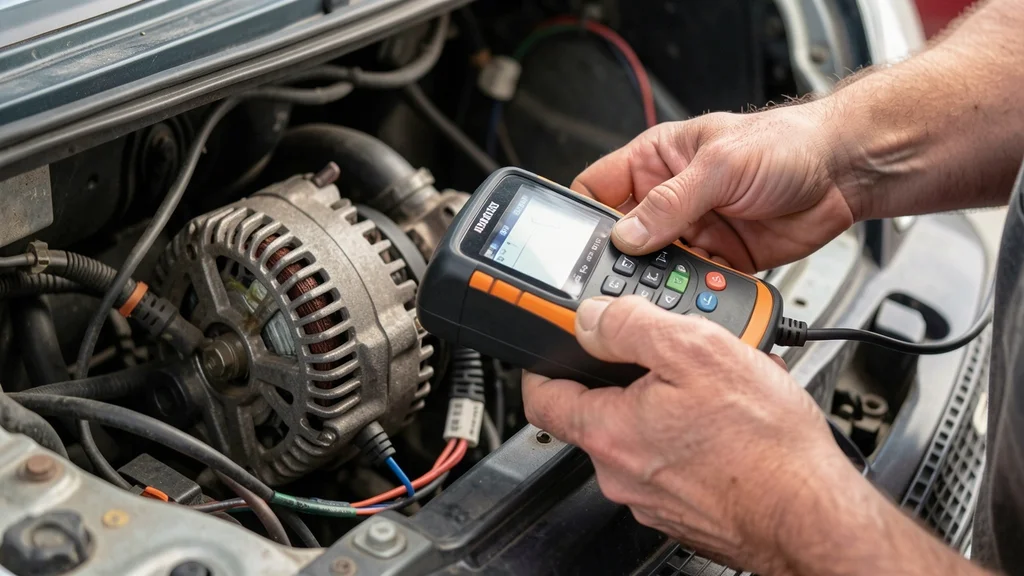
If your car shows signs of electrical trouble, you may wonder can you check for bad alternator with diagnostic tool. The good news is that modern diagnostic tools make it straightforward to test your alternator’s health without guesswork. This guide explains how to use an OBD-II scanner or multimeter to confirm whether your alternator is failing or if another issue is draining your battery.
Yes you can check for a bad alternator with a diagnostic tool. Plug an OBD-II scanner into your car’s port and look for alternator-related trouble codes like P0562 or P0563. Alternatively use a multimeter to test voltage output at the battery with the engine running.
Signs Your Alternator Might Be Failing
Your alternator keeps the battery charged while the engine runs. When it starts to fail, you’ll notice warning signs that shouldn’t be ignored. The most common symptom is a lit battery warning light on your dashboard.
This light often looks like a battery or says “ALT” or “GEN.”
Dim or flickering headlights are another red flag. The alternator powers your car’s electrical system, so if it’s weak, lights may brighten and dim as the engine revs. You might also experience slow or erratic power window operation, a weak radio signal, or difficulty starting the engine after it’s been running.
Other symptoms include:
- Dead battery that keeps coming back even after jumps
- Strange smells like burning rubber from the alternator belt
- Grinding or whining noises from the engine bay
- Electrical accessories like heated seats or A/C working poorly
- Stalling or rough idling due to inconsistent voltage
According to AAA, alternator failures account for nearly 20% of all roadside assistance calls related to battery or charging system issues. Catching these signs early can save you from being stranded.
Warning: Ignoring alternator warnings can lead to a completely dead battery and leave you stranded. If you see the battery light, get it checked immediately.
Types of Diagnostic Tools for Alternator Testing
Not all diagnostic tools are created equal when it comes to alternator testing. The most common types include OBD-II scanners, multimeters, and dedicated alternator testers. Each has its strengths depending on your technical comfort level and the information you need.
OBD-II scanners plug into your car’s diagnostic port and can read trouble codes related to the charging system. These are the most user-friendly for beginners. Multimeters require manual testing but give precise voltage readings.
Dedicated alternator testers are professional-grade tools that provide comprehensive analysis.
| Tool Type | Ease of Use | Accuracy | Cost |
|---|---|---|---|
| OBD-II Scanner | Very Easy | Good | $20-$100 |
| Multimeter | Moderate | Excellent | $10-$50 |
| Dedicated Alternator Tester | Moderate | Professional | $50-$200 |
The table above shows that for most DIYers, an OBD-II scanner offers the best balance of ease and cost. Professionals might prefer dedicated testers for their precision.
Using an OBD-II Scanner to Test Your Alternator
OBD-II scanners are the most straightforward way to check for alternator problems. These devices plug into your car’s diagnostic port, usually located under the steering column. Once connected, they can read trouble codes that indicate charging system issues.
Here’s how to use one:
- Locate the OBD-II port – It’s typically under the dashboard on the driver’s side, within reach of the steering wheel.
- Plug in the scanner – Connect the scanner to the port and turn your ignition to the “on” position (don’t start the engine).
- Read the codes – Follow your scanner’s instructions to read trouble codes. Look for codes in the P0560-P0563 range, which are alternator-specific.
- Clear codes and retest – After addressing any issues, clear the codes and drive the car to see if they return.
Common alternator-related codes include:
- P0562 – Low Voltage
- P0563 – High Voltage
- P0561 – Charging System Malfunction
- P2503 – Charging System Overvoltage
Important: Some scanners can also show live data like battery voltage. A healthy alternator should show 13.8-14.4 volts with the engine running.
Testing with a Multimeter Step by Step
A multimeter gives you precise voltage readings to assess alternator health. This method requires a bit more technical skill but provides clear results. You’ll need a digital multimeter, which you can find at any auto parts store for under $20.
Here’s the step-by-step process:
- Set your multimeter – Turn it to DC voltage (usually marked as 20V DC).
- Test the battery with the engine off – Connect the red probe to the positive (+) terminal and the black probe to the negative (-) terminal. A fully charged battery should read 12.6 volts.
- Start the engine – Keep the multimeter connected and start the car.
- Check the voltage – With the engine running, the voltage should jump to between 13.8 and 14.4 volts. If it stays below 13.5 or goes above 14.5, your alternator may be failing.
- Test under load – Turn on headlights, A/C, and other accessories. Voltage should stay above 13.8. If it drops significantly, your alternator can’t keep up with demand.
- Rev the engine – Have someone rev the engine to 2000 RPM while you watch the multimeter. Voltage should remain stable in the 13.8-14.4 range.
| Test Condition | Expected Voltage | What It Means |
|---|---|---|
| Engine Off | 12.6V | Normal battery charge |
| Engine Idling | 13.8-14.4V | Healthy alternator |
| With Accessories On | Above 13.8V | Alternator handling load |
| Below 13.5V or Above 14.5V | N/A | Faulty alternator |
The voltage readings above are based on industry standards from automotive experts like Bosch and Delphi. Consistently low or high readings indicate alternator problems.
Common Mistakes When Testing an Alternator
Even with the right tools, it’s easy to make mistakes that lead to incorrect conclusions about your alternator’s health. One of the most common errors is testing with a weak or dead battery. Your alternator needs a good battery to function properly, so always start with a fully charged battery.
Another frequent mistake is not checking connections. Corroded or loose battery terminals can give false voltage readings. Always clean the terminals before testing and ensure all connections are tight.
Also, avoid testing with accessories off—your alternator should maintain voltage even with electrical loads like headlights and A/C running.
Here are the most common mistakes to avoid:
- Testing with a dead battery – Charge or replace the battery first to get accurate results.
- Ignoring belt condition – A loose or worn serpentine belt can cause alternator issues. Check belt tension and condition.
- Not revving the engine – Some alternators only show problems under load. Rev the engine to 2000 RPM during testing.
- Using a cheap multimeter – Inaccurate meters can give false readings. Invest in a quality digital multimeter.
- Forgetting to check fuses – A blown alternator fuse can mimic alternator failure. Check your car’s fuse box.
- Testing immediately after a jump start – Wait at least 30 minutes after a jump to let the battery stabilize.
Tip: If your alternator tests fine but you still have electrical issues, check for parasitic draws. Some components may be draining your battery when the car is off.
How to Interpret Your Test Results
Understanding your test results is crucial for accurate diagnosis. With an OBD-II scanner, alternator-related codes are straightforward: if you see P0562 (low voltage) or P0563 (high voltage), your alternator is likely the culprit. However, other codes might indicate wiring or computer issues that need professional attention.
For multimeter testing, the results are just as clear. Voltage between 13.8 and 14.4 with the engine running means your alternator is working correctly. Readings below 13.5 suggest it’s not charging properly, while anything above 14.5 indicates overcharging, which can damage your battery and electrical system.
| Scenario | Likely Issue | Recommended Action |
|---|---|---|
| Voltage below 13.5V with engine running | Faulty alternator or loose belt | Test belt tension, replace alternator if needed |
| Voltage above 14.5V | Overcharging alternator | Replace voltage regulator or alternator |
| Voltage drops with accessories on | Weak alternator | Replace alternator |
| No codes but electrical issues persist | Wiring or computer issue | Professional diagnosis recommended |
If your test results are inconclusive, consider that modern vehicles have complex electrical systems. According to a study by the Automotive Service Association, about 15% of alternator replacements are unnecessary because the real issue was elsewhere in the charging system.
When to Replace vs Repair Your Alternator
Once you’ve confirmed your alternator is bad, the next decision is whether to repair or replace it. Most alternators can be rebuilt, but in many cases, replacement is the better option. The average alternator lasts between 80,000 and 150,000 miles, but this varies based on driving conditions and electrical demands.
Consider repair if:
- The alternator is relatively new (under 50,000 miles)
- Only one component (like the voltage regulator or diode) has failed
- You have access to a reputable auto electric shop
- Your vehicle has a high-value alternator (common in luxury or hybrid vehicles)
Opt for replacement if:
- The alternator is old or has high mileage
- Multiple components have failed
- The cost of repair is more than 50% of a new alternator
- You need a quick, reliable solution
| Option | Pros | Cons | Cost |
|---|---|---|---|
| Rebuild Alternator |
|
|
$100-$300 |
| New Alternator |
|
|
$300-$800 |
For most drivers, replacing the alternator with a new or remanufactured unit is the most cost-effective long-term solution. Remanufactured alternators, which are rebuilt to factory specifications, offer a good balance between cost and reliability.
Frequently Asked Questions
Can I test my alternator without any tools?
While not as accurate, you can do a quick check by starting your car and then disconnecting the positive battery terminal. If the engine stalls, your alternator isn’t charging properly. However, this method can damage sensitive electronics in modern vehicles, so it’s not recommended.
Using a diagnostic tool is safer and more reliable.
How long does an alternator last?
The average alternator lasts between 80,000 and 150,000 miles, but this can vary widely based on driving conditions, electrical load, and vehicle make. Harsh conditions like extreme heat or frequent short trips can shorten its lifespan. Regular electrical system checks can help extend its life.
What happens if I drive with a bad alternator?
Driving with a failing alternator will eventually drain your battery completely, leaving you stranded. As the alternator fails, your car will rely more on the battery, which can’t power everything alone. You might experience dim lights, electrical failures, and eventually, the engine will stall when the battery dies.
Can a bad alternator cause a check engine light?
Yes, a failing alternator can trigger the check engine light. This typically happens when the voltage drops below or rises above normal levels, causing the engine control unit to detect a problem with the charging system. Codes like P0562 or P0563 will often appear.
How much does it cost to replace an alternator?
The cost varies by vehicle, but you can expect to pay between $300 and $800 for parts and labor. The alternator itself typically costs $100 to $400, while labor usually runs $100 to $200. Luxury or hybrid vehicles may cost more due to specialized parts.
Some auto parts stores offer free testing and can help you find the right replacement.
Final Thoughts
Testing your alternator with a diagnostic tool is a straightforward process that can save you from unexpected breakdowns. Whether you use an OBD-II scanner or a multimeter, these methods provide clear answers about your alternator’s health. Remember that a bad alternator won’t just leave you stranded—it can also damage your battery and other electrical components over time.
Regular checks of your charging system, especially before long trips, can prevent inconvenient failures. And if you’re unsure about the results, don’t hesitate to consult a professional mechanic for a second opinion.
Leave a Reply