
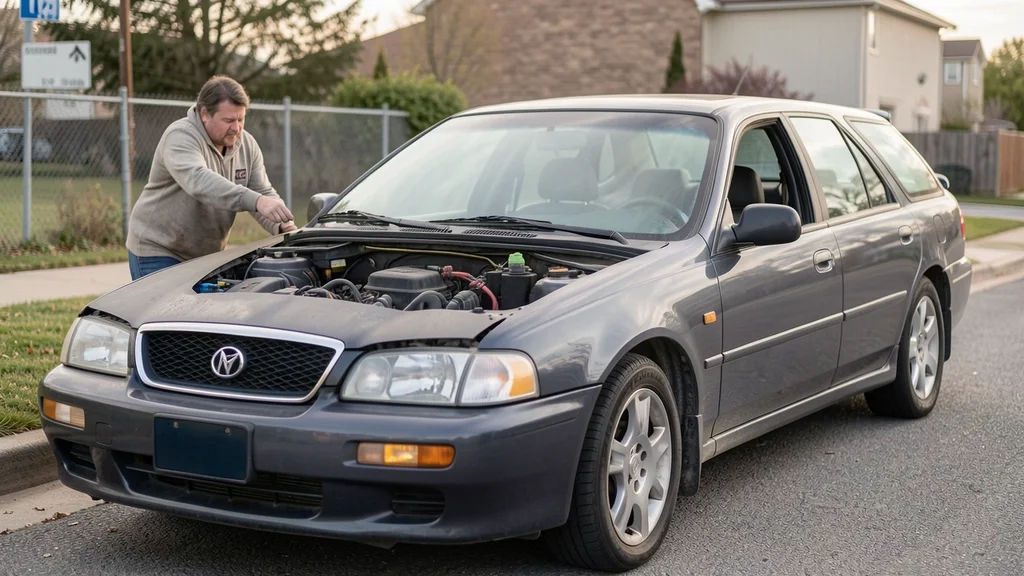
If your car’s battery light flickers or the headlights dim unexpectedly, can you drive a car if the alternator is bad is likely your first thought. The alternator charges the battery and powers electrical systems while the engine runs, so a failure can leave you stranded. Driving with a bad alternator is risky and can cause sudden stalls or electrical failures.
You can drive a car with a bad alternator for a short distance but only until the battery drains completely. Once the battery is dead, the engine will stall and all electrical systems will fail. Expect 30 minutes to an hour of runtime depending on battery health and electrical load.
How the Alternator Affects Your Car
The alternator is a critical component that converts mechanical energy from the engine into electrical energy to charge the battery and power accessories. Without it, the battery alone cannot sustain the car’s electrical needs for long.
When the alternator fails, the battery takes over temporarily. However, modern vehicles rely heavily on electronics, and even basic functions like ignition and fuel injection depend on a steady power supply. This means the car will run until the battery is fully depleted.
- Battery Drain: The battery will lose charge quickly, especially with headlights, radio, or HVAC running.
- Electrical System Failure: Lights dim, power windows slow down, and the dashboard may display warning lights.
- Engine Stall: Once the battery is dead, the engine will stop running as the spark plugs and fuel system lose power.
- Stranded Risk: You may be left without power steering or brakes, making it dangerous to continue driving.
- Potential Damage: A dead alternator can cause voltage spikes that damage sensitive electronics like the ECU or infotainment system.
Warning: Driving with a failing alternator can cause sudden loss of power, leaving you unable to control the vehicle safely. Pull over immediately if you notice warning signs.
Signs Your Alternator Is Failing
Recognizing the early signs of a bad alternator can prevent you from being stranded. These symptoms often start subtly but worsen over time if ignored.
The alternator is connected to the battery and electrical system, so issues here will affect multiple components. If you notice one or more of these signs, have your alternator tested as soon as possible.
- Battery Warning Light: The most obvious sign is the battery or charging system warning light on the dashboard. This light often looks like a battery symbol and indicates a problem with the charging system.
- Dim or Flickering Lights: Headlights, interior lights, or dashboard lights that dim or flicker, especially when idling or at low RPMs, suggest the alternator isn’t providing enough power.
- Weak or Dead Battery: If your battery frequently dies or struggles to start the car, it may be due to the alternator not charging it properly. Jump-starting the car may work temporarily, but the battery will drain again quickly.
- Strange Noises: A failing alternator can produce a whining or grinding noise caused by worn bearings or a failing pulley. This noise may get louder as the alternator deteriorates.
- Electrical Accessory Issues: Power windows, seat heaters, or the radio may work intermittently or fail altogether due to inconsistent power supply.
- Smell of Burning Rubber: A burning smell, often like rubber, can indicate the alternator’s drive belt is slipping or overheating due to excessive friction.
- Engine Stalling: In severe cases, the engine may stall or run rough because the alternator isn’t supplying enough power to the spark plugs and fuel injection system.
| Symptom | Likely Cause | Severity |
|---|---|---|
| Battery Light On | Alternator not charging battery | High |
| Dim Headlights | Low voltage output from alternator | Medium |
| Whining Noise | Worn alternator bearings | High |
| Frequent Battery Death | Alternator not maintaining charge | High |
| Burning Smell | Overheating alternator or belt | High |
If you notice any of these symptoms, it’s best to address the issue immediately to avoid being stranded or causing further damage to your vehicle’s electrical system.
What Happens If You Keep Driving With a Bad Alternator
Driving with a failing alternator is like running a marathon on a single breath—you won’t get far. The battery will drain quickly, and once it’s depleted, your car will lose all electrical power, including critical systems needed to keep the engine running.
Here’s what you can expect if you ignore the problem:
- Loss of Power Steering: Most modern cars rely on electric power steering. Without the alternator, the power steering assist will fail, making the steering wheel extremely difficult to turn, especially at low speeds.
- Brake System Failure: Many vehicles use vacuum-assisted or electric brakes. A dead alternator can lead to a loss of brake assist, making braking harder and increasing stopping distances.
- Engine Shutdown: The engine requires electricity to run the fuel pump, ignition system, and other critical components. Once the battery is drained, the engine will stall and refuse to restart.
- Electrical System Damage: Voltage fluctuations from a failing alternator can damage sensitive electronics, including the engine control unit (ECU), radio, and other onboard computers.
- Stranded on the Road: If the battery dies while driving, you’ll lose all electrical power, including headlights and hazard lights, leaving you stranded in a potentially dangerous situation.
- Costly Repairs: Ignoring the problem can lead to damage to other components, such as the battery, starter, or electronics, resulting in more expensive repairs down the line.
Tip: If your alternator fails while driving, turn off all non-essential electrical accessories (radio, AC, lights) to conserve battery power and get to a safe location or repair shop as quickly as possible.
How Far Can You Drive With a Bad Alternator
The distance you can drive with a bad alternator depends on several factors, including the health of your battery, the electrical load on the vehicle, and driving conditions. In most cases, you’ll have between 30 minutes to an hour of driving time before the battery is completely drained.
Here’s a breakdown of what affects your driving range:
| Factor | Impact on Driving Range |
|---|---|
| Battery Health | A new, fully charged battery provides more time (up to 1 hour). An old or weak battery may die within 15-30 minutes. |
| Electrical Load | Using headlights, AC, radio, or heated seats drains the battery faster. Minimal electrical use can extend driving time. |
| Driving Conditions | Stop-and-go traffic or idling drains the battery faster than highway driving at steady RPMs. |
| Alternator Output | A partially failing alternator may still produce some power, slightly extending driving time. A completely dead alternator offers no assistance. |
To maximize your driving range with a bad alternator, turn off all non-essential electrical systems, avoid idling, and drive directly to a repair shop. According to AAA, the average driver can expect about 30-45 minutes of runtime in most scenarios, but this can vary widely based on the factors above.
How to Test Your Alternator
If you suspect your alternator is failing, you can perform a few simple tests to confirm the issue before heading to a mechanic. These tests require minimal tools and can be done at home or on the road.
Here are the most effective ways to test your alternator:
- Visual Inspection: Check the alternator for any visible damage, such as loose wires, corrosion, or a worn drive belt. If the belt is loose or cracked, it may not be turning the alternator pulley effectively.
- Battery Light Test: Start the engine and observe the dashboard. If the battery warning light stays on, it’s a strong indication of an alternator problem. Note that some cars may not have this light, so you’ll need to use other methods.
- Headlight Test: Start the car and turn on the headlights. If the headlights are dim at idle but brighten when you rev the engine, the alternator is likely not charging the battery properly. This is one of the easiest tests to perform without tools.
- Multimeter Test: Use a digital multimeter to check the voltage at the battery terminals. With the engine off, a healthy battery should read around 12.6 volts. Start the engine and rev it to about 2,000 RPM. A working alternator should produce between 13.8 and 14.4 volts. If the voltage stays below 13.5 volts or drops, the alternator is likely failing.
- Load Test: Turn on all electrical accessories (headlights, AC, radio, heated seats) and check the voltage at the battery with the engine running. If the voltage drops below 13 volts, the alternator is struggling to keep up with the electrical demand.
- Jump-Start Test: If your battery is dead, try jump-starting the car. Once the engine is running, disconnect the jumper cables. If the engine stalls or the battery light comes on, the alternator is not charging the battery.
Important: If you’re unsure about testing the alternator yourself, visit a local auto parts store. Many offer free alternator and battery testing services using professional equipment.
How to Extend Your Drive Time With a Bad Alternator
If you find yourself with a failing alternator and need to drive to a repair shop or safe location, there are steps you can take to extend your driving time. These tips will help you conserve battery power and avoid being stranded.
Here’s what you can do to maximize your range:
- Turn Off Non-Essential Electronics: Shut off the radio, air conditioning, heated seats, and any other accessories that draw power. Even small loads can drain the battery faster.
- Avoid Idling: Idling places a heavy load on the battery without the alternator’s help. If you must stop, turn off the engine to conserve power.
- Drive at Steady Speeds: Highway driving at a consistent RPM is more efficient than stop-and-go traffic, which requires more electrical power for accessories like headlights and brake lights.
- Use Minimal Lighting: If driving during the day, turn off your headlights if it’s safe to do so. Use parking lights or daytime running lights if required by law.
- Disconnect the Battery (Last Resort): If you’re very close to a repair shop and the alternator is completely dead, you can disconnect the battery’s negative terminal to prevent it from draining. However, this will also disable all electrical systems, including power steering and brakes, so only do this as a last resort and drive very carefully.
- Carry Jumper Cables: If your battery dies, you may be able to jump-start the car and drive a short distance to a repair shop. Keep jumper cables in your trunk for emergencies.
- Call for Roadside Assistance: If you’re unsure about driving with a bad alternator, it’s safer to call for a tow. Many insurance policies and auto clubs offer roadside assistance for situations like this.
Alternator Replacement Costs
If your alternator is failing, you’ll need to replace it to avoid being stranded. The cost of replacement depends on the make and model of your car, labor rates in your area, and whether you choose OEM or aftermarket parts.
Here’s a breakdown of what to expect:
| Component | Estimated Cost (Parts) | Estimated Labor Cost | Total Estimated Cost |
|---|---|---|---|
| Aftermarket Alternator | $100 – $300 | $100 – $200 | $200 – $500 |
| OEM Alternator | $300 – $700 | $100 – $200 | $400 – $900 |
| Battery (if needed) | $100 – $250 | $0 – $50 | $100 – $300 |
| Drive Belt Replacement | $20 – $80 | $50 – $100 | $70 – $180 |
According to RepairPal, the average cost to replace an alternator ranges from $400 to $600, including parts and labor. Luxury or high-performance vehicles may cost more due to specialized parts and higher labor rates. If you’re comfortable with DIY repairs, you can save on labor costs by replacing the alternator yourself, but be sure to follow a repair guide specific to your vehicle.
DIY Alternator Replacement Steps
Replacing an alternator is a moderate-level DIY task that can be completed in a few hours with basic tools. If you’re mechanically inclined and want to save on labor costs, follow these steps to replace your alternator safely.
Before you begin, gather the necessary tools and parts:
- New alternator (match the part number to your vehicle)
- Socket wrench set and extensions
- Ratchet and breaker bar
- Serpentine belt diagram (usually on the radiator support or in the owner’s manual)
- Jack and jack stands (if working from underneath the vehicle)
- Safety glasses and gloves
- Disconnect the Battery: Always start by disconnecting the negative battery terminal to prevent electrical shorts. This is a critical safety step.
- Locate the Alternator: The alternator is typically mounted on the engine block near the front, driven by a serpentine belt. Refer to your vehicle’s service manual for the exact location.
- Remove the Serpentine Belt: Use a serpentine belt diagram to route the belt correctly. Loosen the tensioner pulley with a socket wrench and slip the belt off the alternator pulley.
- Disconnect Electrical Connections: Unplug the wiring harness and remove the bolt securing the main power wire to the alternator. Be sure to note the routing of wires for reassembly.
- Remove Mounting Bolts: The alternator is usually secured by 2-3 bolts. Remove these bolts using a socket wrench and extensions. You may need to use a breaker bar for stubborn bolts.
- Remove the Old Alternator: Once all bolts and connections are removed, carefully lift the alternator out of the engine bay. It may be heavy, so use both hands.
- Install the New Alternator: Place the new alternator in position and secure it with the mounting bolts. Tighten the bolts snugly but do not overtighten.
- Reconnect Electrical Connections: Reattach the wiring harness and main power wire to the new alternator. Ensure all connections are tight and secure.
- Reinstall the Serpentine Belt: Route the belt according to the diagram and use the tensioner pulley to apply tension. Double-check that the belt is properly seated on all pulleys.
- Reconnect the Battery: Reconnect the negative battery terminal. Ensure it is tight and secure.
- Test the New Alternator: Start the engine and check for proper charging voltage using a multimeter. The voltage should read between 13.8 and 14.4 volts at the battery terminals with the engine running.
Warning: Replacing an alternator involves working with electrical systems and heavy components. If you’re unsure about any step, consult a professional mechanic to avoid injury or damage to your vehicle.
Frequently Asked Questions
Can I drive my car if the alternator is bad?
You can drive a short distance with a bad alternator, but the battery will eventually drain, causing the engine to stall. Expect 30 minutes to an hour of driving time, depending on battery health and electrical load. It’s best to drive directly to a repair shop.
How long can a car run without an alternator?
A car can run for about 30-60 minutes without a functioning alternator, assuming the battery is fully charged and in good condition. This time can be shorter if electrical accessories are in use. Once the battery is depleted, the engine will stall.
What happens when an alternator goes out while driving?
When an alternator fails while driving, the battery takes over temporarily. You’ll notice dimming lights, warning lights on the dashboard, and eventually, a loss of power steering and braking assist. The engine will stall once the battery is completely drained.
Can a bad alternator ruin a battery?
Yes, a bad alternator can ruin a battery. If the alternator overcharges the battery, it can cause the battery to overheat and fail prematurely. Conversely, if the alternator undercharges the battery, it will repeatedly drain, leading to sulfation and reduced battery life.
How do I know if it’s the battery or the alternator?
If your car won’t start, it could be either the battery or the alternator. Test the battery voltage with the engine off—it should be around 12.6 volts. If it’s low, charge or replace the battery.
If the battery is fine but the car stalls or the battery light comes on while driving, the alternator is likely the issue.
Final Thoughts
Driving with a bad alternator is possible for a short time, but it’s risky and not recommended. The battery will drain quickly, leaving you stranded with no electrical power. Recognizing the signs of a failing alternator and addressing the issue promptly can save you from unexpected breakdowns and costly repairs.
If you suspect your alternator is failing, have it tested and replaced if necessary to ensure your car remains reliable and safe to drive.
Leave a Reply