
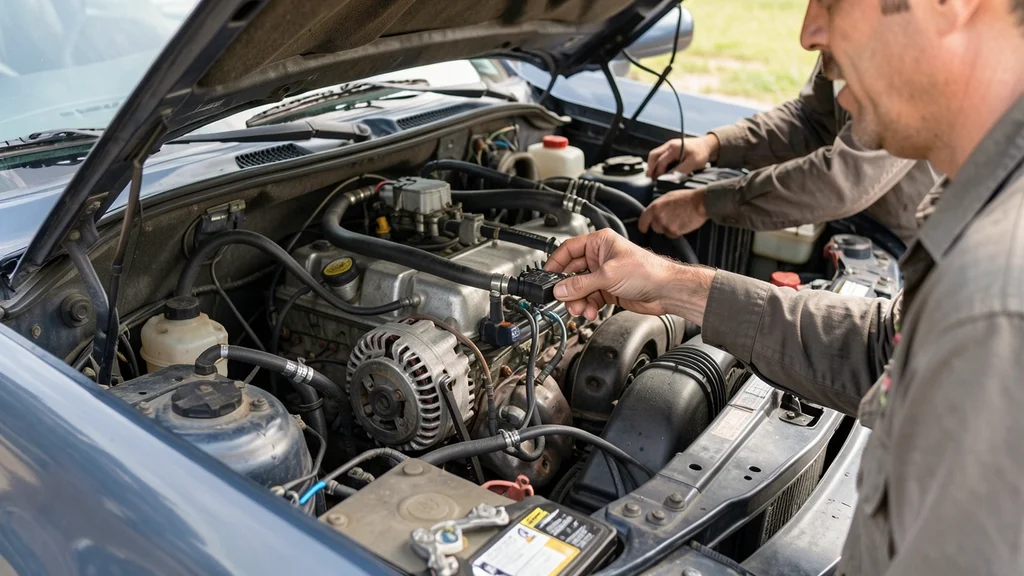
If your car’s electrical system is acting up, you might wonder can you drive a car with a bad alternator. The short answer is no—driving with a failing alternator risks leaving you stranded and can damage other components. A bad alternator fails to charge the battery, which powers everything from your headlights to the engine control unit.
You can technically drive a short distance with a bad alternator if the battery has enough charge, but it will eventually die, leaving you without power steering, brakes, or engine function. It’s unsafe and not recommended.
Signs Your Alternator Is Failing
The alternator keeps your battery charged while the engine runs. When it starts to fail, you’ll notice warning signs that demand immediate attention. Ignoring these symptoms can lead to a complete electrical shutdown.
Here are the most common indicators of a bad alternator:
- Dim or flickering headlights – The alternator struggles to supply consistent power, causing lights to dim, especially at idle.
- Warning light on the dashboard – Most modern cars have a battery or alternator warning light that illuminates when there’s a charging issue.
- Weak or dead battery – If your battery dies repeatedly despite jumps or replacements, the alternator may not be recharging it.
- Strange noises – A whining or grinding sound from the engine bay can indicate a failing alternator bearing.
- Electrical failures – Malfunctioning power windows, radio, or other accessories due to low voltage.
- Stalling or difficulty starting – The engine may crank slowly or stall because the battery isn’t getting enough charge.
- Burning rubber smell – A slipping alternator belt can overheat and produce a distinct odor.
Warning: Driving with a failing alternator can cause sudden loss of power, including critical systems like power steering and brakes. This creates dangerous driving conditions.
According to AAA, electrical system failures, including alternator issues, are among the top reasons for roadside assistance calls. If you notice any of these signs, get your vehicle checked immediately.
What Happens When You Drive With a Bad Alternator
Once the alternator stops working properly, your car relies solely on the battery. A fully charged battery can power essential systems for a short time, but it won’t last long. Here’s what happens as the battery drains:
- First 5-10 minutes: Your car may run normally if the battery was fully charged. Headlights and accessories work, but the battery warning light is likely on.
- 10-30 minutes: Non-essential systems like the radio, air conditioning, or power windows start to fail. Headlights dim noticeably.
- 30-60 minutes: Critical systems begin to struggle. Power steering becomes heavy, and the engine may start to misfire.
- 60+ minutes: The battery is nearly dead. The engine stalls, and you lose all electrical power, including brakes and steering assist.
| Time Driving | Symptoms You’ll Experience |
|---|---|
| 0-10 minutes | Warning light on, battery starts draining |
| 10-30 minutes | Accessories fail, headlights dim |
| 30-60 minutes | Power steering weakens, engine misfires |
| 60+ minutes | Engine stalls, total electrical failure |
The exact timeframe depends on your battery’s condition and your car’s electrical load. Newer cars with advanced electronics drain the battery faster than older models. According to a study by the Car Care Council, the average car battery lasts 3-5 years, but a failing alternator can kill it in a single drive.
How to Test Your Alternator at Home
If you suspect your alternator is failing, you can perform a few simple tests at home before visiting a mechanic. These methods help confirm whether the alternator or the battery is the issue.
Method 1: Jump Start Test
- Jump start your car if the battery is dead.
- Once the engine is running, disconnect the jumper cables.
- If the car dies immediately, the alternator is likely bad.
- If the car stays running, the alternator is probably fine, and the issue may be with the battery.
Method 2: Multimeter Test
- Set your multimeter to DC voltage (20V range).
- With the engine off, test the battery voltage. A healthy battery reads 12.6V.
- Start the engine and test again. A good alternator should produce 13.8V to 14.4V.
- If the voltage stays below 13V or drops while the engine runs, the alternator is failing.
Method 3: Headlight Test
- Start the engine and turn on the headlights.
- Rev the engine to about 2,000 RPM.
- If the headlights get brighter, the alternator is working.
- If they stay dim or flicker, the alternator isn’t charging the battery properly.
Important: If your alternator test shows low voltage, avoid driving the car. Have it towed to a repair shop to prevent further damage.
Can You Drive Short Distances With a Bad Alternator
In an emergency, you might consider driving a short distance to a repair shop or a safe location. However, this is risky and should only be attempted if absolutely necessary. Here’s what you need to know:
- Battery charge level: If your battery is fully charged, you may have 15-30 minutes of driving time before the battery drains completely.
- Electrical load: Turn off all non-essential systems (radio, AC, lights) to maximize battery life.
- Distance: Stick to the shortest possible route. Every mile counts when the alternator isn’t charging.
- Safety: Avoid highways or busy roads where losing power could be dangerous.
- Towing: If you’re unsure, call for a tow. Many insurance policies include roadside assistance for situations like this.
According to the National Highway Traffic Safety Administration (NHTSA), electrical failures contribute to thousands of accidents each year. Driving with a bad alternator increases your risk of being involved in one of these incidents.
What to Do If Your Alternator Fails While Driving
If your alternator fails while you’re on the road, follow these steps to stay safe:
- Stay calm and pull over safely – Turn on your hazard lights and move to the shoulder or a safe parking area.
- Turn off non-essential systems – Shut off the radio, AC, and any other accessories to conserve battery power.
- Assess the situation – Check for warning lights and listen for unusual noises. If you’re unsure, don’t attempt to drive further.
- Call for help – Contact roadside assistance or a tow truck. If you’re in an unsafe location, call emergency services.
- Do NOT attempt to jump start the car – If the alternator is bad, a jump start won’t fix the underlying issue and may damage the donor vehicle’s electrical system.
Tip: Keep a portable jump starter in your car for emergencies. While it won’t fix a bad alternator, it can provide enough power to get you to a safe location if the battery is completely dead.
Alternator Replacement Cost and Time
If your alternator is failing, replacement is the only long-term solution. The cost varies depending on your vehicle’s make and model, as well as whether you choose OEM or aftermarket parts.
| Vehicle Type | Alternator Cost (Parts) | Labor Cost | Total Estimated Cost |
|---|---|---|---|
| Compact Car | $150 – $300 | $100 – $200 | $250 – $500 |
| SUV/Truck | $200 – $500 | $150 – $300 | $350 – $800 |
| Luxury Car | $300 – $700 | $200 – $400 | $500 – $1,100 |
Replacing an alternator typically takes 1-2 hours, depending on the vehicle. Some models have alternators that are easily accessible, while others may require removing additional components, increasing labor time and cost. According to RepairPal, the average alternator replacement cost across all vehicles is $400-$600.
Here are some factors that affect the cost:
- OEM vs. Aftermarket: OEM (Original Equipment Manufacturer) parts are more expensive but often last longer. Aftermarket parts are cheaper but may vary in quality.
- Vehicle Age: Older cars may have cheaper parts but could require additional repairs.
- Location: Labor rates vary by region. Urban areas tend to have higher labor costs than rural areas.
- Warranty: Some repair shops offer warranties on parts and labor, which can add to the upfront cost but provide peace of mind.
How to Extend Your Alternator’s Lifespan
While alternators are designed to last, proper maintenance can help extend their lifespan. Here are some tips to keep your alternator in good working condition:
- Regular battery checks – A weak battery forces the alternator to work harder, reducing its lifespan. Test your battery every 6 months and replace it if it’s more than 3-5 years old.
- Keep connections clean – Corrosion on battery terminals or alternator connections can hinder performance. Clean them regularly with a battery terminal cleaner.
- Avoid overloading the electrical system – Excessive use of aftermarket accessories (amplifiers, lights, etc.) can strain the alternator. Ensure your electrical system can handle the load.
- Check belt tension – The alternator is driven by a serpentine belt. If the belt is loose or worn, it can cause the alternator to underperform. Inspect the belt for cracks or wear and replace it if necessary.
- Listen for unusual noises – A whining or grinding noise from the alternator area can indicate a failing bearing. Address it promptly to avoid further damage.
- Regular inspections – Have your alternator and charging system checked during routine maintenance. Many shops include this in a standard tune-up.
Important: Most alternators last between 80,000 to 150,000 miles or 7-10 years. If yours is approaching this range, consider having it tested preemptively.
Common Mistakes to Avoid With Alternator Issues
When dealing with a bad alternator, many drivers make mistakes that can worsen the problem or lead to unnecessary expenses. Here’s what to avoid:
- Ignoring warning signs – Many drivers dismiss dim lights or warning indicators, assuming they’re minor issues. Addressing problems early can save you from a breakdown.
- Jump-starting repeatedly – If your car won’t start, jump-starting it repeatedly without fixing the alternator can damage the battery and other electrical components.
- Using the wrong alternator – Not all alternators are the same. Using an incorrect or low-quality alternator can cause compatibility issues and poor performance.
- Neglecting the battery – A bad battery can mimic alternator problems. Always test both components to identify the root cause.
- DIY without experience – Replacing an alternator requires some mechanical skill. If you’re not confident, leave it to a professional to avoid damaging other parts.
- Driving until the car dies – Pushing your luck by driving with a failing alternator can leave you stranded in an unsafe location.
According to a survey by AAA, 1 in 3 drivers have experienced a breakdown due to electrical system failures, many of which could have been prevented with proper maintenance.
Frequently Asked Questions
How long can you drive with a bad alternator?
You can typically drive for 15-30 minutes with a bad alternator if the battery is fully charged. However, this varies based on your car’s electrical load and battery condition. It’s not safe to drive any distance with a failing alternator, as you risk sudden power loss.
Will a bad alternator destroy a new battery?
Yes, a bad alternator can ruin a new battery. If the alternator isn’t charging the battery, the battery will drain completely, leading to deep discharges that shorten its lifespan. Additionally, an overcharging alternator can damage the battery by causing it to overheat.
Can you jump start a car with a bad alternator?
You can jump start a car with a bad alternator, but it won’t fix the underlying issue. The car may run for a short time after the jump, but the battery will drain again once the jump cables are removed. It’s a temporary solution at best.
What happens if you ignore a bad alternator?
Ignoring a bad alternator will eventually leave you stranded. The battery will drain completely, and your car’s electrical systems will fail, including critical components like power steering, brakes, and the engine control unit. You may also damage other electrical parts, leading to costly repairs.
How do I know if it’s the alternator or the battery?
The easiest way to tell is to perform a multimeter test. With the engine off, a good battery should read 12.6V. With the engine running, the voltage should increase to 13.8V-14.4V.
If the voltage doesn’t rise, the alternator is likely bad. If the voltage is low both with the engine off and on, the battery may be the issue.
Final Thoughts
Driving with a bad alternator is a gamble you shouldn’t take. While you might make it a short distance, the risks far outweigh the benefits. A failing alternator can leave you stranded, damage your battery, and even cause accidents due to sudden power loss.
If you notice any warning signs, get your car checked immediately. Regular maintenance and prompt repairs can save you from costly breakdowns and keep you safe on the road.
Leave a Reply