
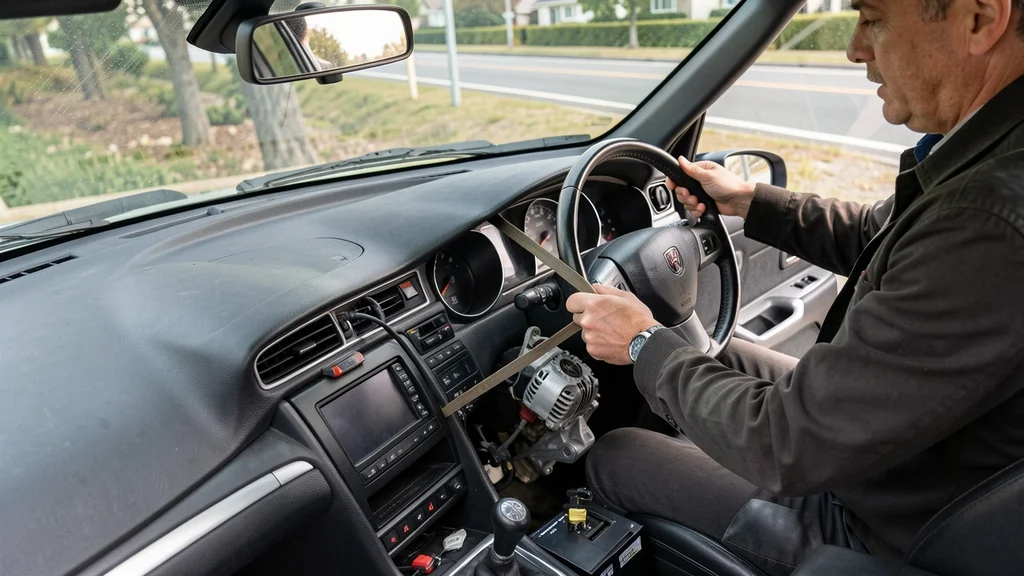
If your engine suddeny loses power and the battery light glows on the dash, can you drive a car without an alternator belt becomes a critical question. The alternator belt drives the component that keeps your battery charged and electrical systems running. Without it, your car relies solely on the battery, which drains fast.
This guide covers how far you can go, the risks involved, and what to do if this happens to you.
You can drive a car without an alternator belt for a very short distance, typically 5 to 20 miles, depending on battery charge and electrical load. The battery will drain quickly, leaving you stranded once it dies.
How the Alternator Belt Powers Your Car
The alternator belt, also known as the serpentine belt in many modern cars, is a crucial link in your vehicle’s charging system. It transfers mechanical power from the engine’s crankshaft to the alternator, which then converts this energy into electricity.
This electricity powers your car’s electrical systems—lights, radio, power steering, and air conditioning—while simultaneously recharging the battery. Without the belt, the alternator stops spinning, and your car becomes completely reliant on the battery’s stored power.
- Alternator: Generates electricity to power systems and recharge the battery
- Battery: Stores electrical energy and provides power when the engine is off
- Serpentine Belt: Drives multiple components, often including the alternator, power steering, and AC
- Crankshaft Pulley: Transfers engine rotation to the belt system
- Tensioner: Keeps the belt tight for proper operation
| Component | Function | What Happens Without Belt |
|---|---|---|
| Alternator | Charges battery, powers electrical systems | Battery drains, systems fail one by one |
| Power Steering Pump | Assists steering effort | Steering becomes very heavy |
| Air Conditioning Compressor | Cools cabin air | AC stops working immediately |
| Water Pump | Circulates engine coolant | Engine overheats rapidly |
In many vehicles, the alternator belt also drives other critical components. When it breaks, you lose more than just electrical power—you might also lose power steering, air conditioning, and even engine cooling if your water pump is belt-driven.
How Far Can You Actually Drive Without It
The distance you can drive without an alternator belt depends on several factors, but expect it to be measured in miles, not hours. Your battery’s charge level at the moment of failure is the biggest variable.
A fully charged battery typically holds enough power for 30-60 minutes of driving under ideal conditions. However, with headlights, radio, and other electrical loads, this drops significantly. Most drivers find they can go 5-20 miles before the battery is completely drained.
Warning: Driving with a dead alternator belt will leave you stranded. The battery will drain completely, and your engine will stall once the battery can no longer power the ignition system.
- First 1-2 miles: All systems operate normally as the battery maintains charge
- 2-5 miles: Non-essential systems (radio, AC) begin to weaken or fail
- 5-10 miles: Power steering becomes heavy, headlights dim noticeably
- 10-15 miles: Engine starts to sputter as fuel pump and ignition struggle
- 15+ miles: Complete electrical failure, engine stalls, car stops
| Battery Charge Level | Electrical Load | Estimated Range |
|---|---|---|
| 100% | Minimal (no lights, no AC) | 15-20 miles |
| 100% | Moderate (headlights on) | 8-12 miles |
| 75% | Moderate | 5-8 miles |
| 50% | Heavy (all systems on) | 2-5 miles |
| 25% | Any load | 1-3 miles |
These estimates assume a typical passenger car with a standard 12-volt battery. Larger vehicles with more electrical demands or weaker batteries will have even shorter ranges. The key is to minimize electrical usage and get to a safe location or repair shop immediately.
Signs Your Alternator Belt Has Failed
Recognizing the symptoms of a failing or broken alternator belt can help you react quickly and avoid being stranded. The signs often appear suddenly and escalate rapidly.
The first indication is usually the battery warning light on your dashboard. This light comes on when the charging system isn’t working properly. You might also notice your headlights dimming or flickering, especially at idle.
Other electrical components like power windows or the radio may start to malfunction or work intermittently.
- Battery Warning Light: The most obvious sign, appearing on your dashboard immediately
- Dimming Headlights: Lights become noticeably dimmer, especially at low RPMs
- Electrical Failures: Power windows, radio, or other accessories stop working
- Heavy Steering: Power steering fails, making the wheel very hard to turn
- AC Stops Working: Air conditioning blows warm air as the compressor stops
- Engine Overheating: Temperature gauge rises if the water pump is belt-driven
- Squealing Noise: A high-pitched squeal before failure indicates a loose or worn belt
- Dashboard Lights Flicker: All warning lights may flicker or behave erratically
Tip: If you hear a squealing noise from the engine bay, check your belt tension immediately. A loose belt can fail at any moment, leaving you without power steering or charging capability.
In some cases, you might smell burning rubber, which indicates the belt is slipping excessively or has been damaged. If your car has a separate belt for the alternator (not a serpentine system), you might only lose charging capability without affecting other systems. However, most modern cars use a single serpentine belt that drives multiple components.
Immediate Steps to Take When the Belt Breaks
If you suspect your alternator belt has failed while driving, your immediate priority is to get to a safe location. The actions you take in the first few minutes can determine whether you make it to help or end up stranded.
First, turn off all non-essential electrical components. This includes your radio, air conditioning, interior lights, and any other accessories. Reducing the electrical load will help conserve your battery power for critical systems like the ignition and fuel pump.
If it’s safe to do so, also turn off your headlights and use your hazard lights if you need to pull over.
- Stay Calm: Don’t panic. You have a few miles to react if you act quickly
- Reduce Electrical Load: Turn off radio, AC, interior lights, and any non-essential systems
- Find Safe Location: Pull over to the shoulder or a parking lot if possible
- Call for Help: Contact roadside assistance or a tow truck immediately
- Assess Situation: If you’re mechanically inclined, pop the hood to confirm belt failure
- Consider Temporary Fix: In emergency situations, you might remove accessories to reduce load
- Wait Safely: If you can’t drive further, stay with your vehicle in a safe location
| Action | Effect on Battery Life | Time Gained |
|---|---|---|
| Turn off radio | Reduces load by 5-10 amps | 5-10 minutes |
| Turn off AC | Reduces load by 10-15 amps | 10-15 minutes |
| Turn off headlights | Reduces load by 8-12 amps | 8-12 minutes |
| Use hazard lights | Increases load by 5 amps | -5 minutes |
| All systems off | Minimal drain | 20-30 minutes |
If you’re in a remote area and need to keep moving, drive at a steady speed with minimal electrical usage. Avoid stopping if possible, as restarting the engine will draw a significant amount of power from the battery. Keep in mind that every time you turn the key, you’re using valuable battery reserve that you might need to reach help.
Can You Replace the Belt Yourself
Replacing an alternator belt is a task that many DIY mechanics can handle, but it requires some mechanical aptitude and the right tools. The difficulty level depends on your vehicle’s make and model, as access to the belt and tensioner varies significantly between cars.
For most vehicles, you’ll need a new belt (make sure it’s the correct size for your specific car), a socket wrench set, and possibly a serpentine belt diagram for your particular engine. The process typically involves releasing tension on the belt using the tensioner pulley, removing the old belt, routing the new one according to the diagram, and then reapplying tension.
- Tools Needed: Socket wrench set, new belt, belt diagram, flashlight
- Time Required: 30-60 minutes for beginners, 15-30 minutes for experienced
- Difficulty Level: Moderate – requires some mechanical knowledge
- Cost Savings: $80-$150 compared to professional installation
- Safety Considerations: Disconnect battery, work in well-ventilated area, use jack stands if working under car
Important: Always disconnect the negative battery terminal before working on the charging system to prevent electrical shorts or injury.
- Locate the Belt: Open the hood and find the serpentine belt routing diagram (usually on a sticker under the hood)
- Release Tension: Use a socket wrench to rotate the tensioner pulley and release tension on the belt
- Remove Old Belt: Slip the old belt off the pulleys once tension is released
- Inspect Components: Check all pulleys for wear or damage before installing the new belt
- Install New Belt: Route the new belt according to the diagram, ensuring it sits properly in all pulley grooves
- Apply Tension: Rotate the tensioner back to apply proper tension to the new belt
- Test Operation: Reconnect battery, start engine, and verify all systems are working
If you’re not comfortable with this process, it’s better to call a professional. A mistakenly routed belt can cause damage to engine components or fail prematurely. Also, some vehicles have very tight engine bays that make belt replacement particularly challenging without specialized tools.
Long Term Damage From Driving Without the Belt
While you might be able to drive a short distance without an alternator belt, continuing to do so can cause significant damage to your vehicle. The risks go beyond just being stranded—they can lead to expensive repairs.
The most immediate risk is a completely dead battery. Once the battery is drained, you won’t be able to start your car again without a jump start or replacement. More concerning is the potential for damage to other components that rely on the belt.
If your water pump is belt-driven, your engine can overheat quickly, leading to serious engine damage.
- Dead Battery: Complete discharge requiring replacement if left too long
- Engine Overheating: If water pump is belt-driven, can cause warped heads or blown gaskets
- Power Steering Damage: Driving with heavy steering can damage the power steering system
- Alternator Failure: Running without proper lubrication can damage the alternator bearings
- Belt Damage to Other Components: A broken belt can flail around and damage hoses, wires, or other engine parts
- Electrical System Issues: Voltage spikes from a failing alternator can damage sensitive electronics
- Reduced Safety: Loss of power steering or braking assistance can lead to accidents
| Component at Risk | Potential Damage | Estimated Repair Cost |
|---|---|---|
| Battery | Complete discharge, possible cell damage | $100-$300 |
| Engine | Overheating, warped heads, blown gaskets | $1,500-$4,000+ |
| Power Steering | Pump damage from excessive load | $400-$800 |
| Alternator | Bearing failure from lack of lubrication | $300-$700 |
| Electrical System | Voltage spikes damaging components | $200-$1,500+ |
According to a study by the Car Care Council, battery and charging system issues are among the top reasons for vehicle breakdowns, accounting for nearly 20% of all roadside assistance calls. The average cost of these repairs can range from $150 for a simple belt replacement to over $1,000 if the failure has caused damage to other components.
Preventing Alternator Belt Failure
Regular maintenance can significantly extend the life of your alternator belt and help you avoid unexpected failures. The serpentine belt typically lasts between 60,000 to 100,000 miles, but this can vary based on driving conditions and belt quality.
The most important preventive measure is regular inspection. Check your belt for signs of wear such as cracks, fraying, or glazing (a shiny, hardened surface) every 6 months or 6,000 miles. Also, listen for any squealing noises, which often indicate a belt that’s slipping or wearing out.
- Regular Inspections: Check belt condition every 6 months or 6,000 miles
- Listen for Noises: Squealing indicates potential belt issues
- Check Tension: Ensure proper tension – too loose or too tight can cause problems
- Look for Wear: Cracks, fraying, or glazing are signs of imminent failure
- Replace on Schedule: Follow manufacturer’s recommended replacement intervals
- Use Quality Parts: Invest in high-quality belts for longer life
- Keep Pulley System Clean: Dirt and debris can accelerate belt wear
Tip: When replacing your serpentine belt, it’s a good idea to also replace the tensioner and any idler pulleys. These components wear out at similar rates, and replacing them all at once can prevent future failures.
- Visual Inspection: Look for cracks, fraying, or missing chunks in the belt ribs
- Tension Test: Press on the belt between pulleys – it should deflect about 1/2 inch with moderate pressure
- Noise Test: Listen for squealing, especially when accelerating or when the engine is cold
- Performance Test: Check that all belt-driven components (AC, power steering) are working properly
- Age Check: Replace the belt if it’s been more than 5-7 years, regardless of mileage
According to the National Institute for Automotive Service Excellence (ASE), proper belt maintenance can prevent up to 80% of unexpected belt failures. They recommend having your belt system inspected by a professional at least once a year, or more often if you frequently drive in harsh conditions.
Frequently Asked Questions
How long can I drive with a broken alternator belt?
You can typically drive 5 to 20 miles with a broken alternator belt, depending on your battery’s charge level and electrical load. The battery will drain quickly, especially if you’re using lights, radio, or air conditioning. It’s best to pull over immediately and call for assistance to avoid being stranded.
What happens if I keep driving without an alternator belt?
Continuing to drive without an alternator belt will eventually drain your battery completely, leaving you stranded. If your water pump is also belt-driven, your engine will overheat, potentially causing serious damage. Other systems like power steering and air conditioning will also fail, making the car difficult to control.
Can I jump start my car if the alternator belt is broken?
Yes, you can jump start your car if the alternator belt is broken, but the battery will continue to drain once you’re running. The jump will give you enough power to start the engine, but without the alternator working, you’ll only have a few miles of driving before the battery dies again. It’s better to use the jump to get to a repair shop immediately.
How do I know if my alternator belt is failing?
The most common signs of a failing alternator belt include a squealing noise from the engine, the battery warning light on your dashboard, dimming headlights, and electrical accessories that stop working properly. You might also notice a burning rubber smell or see visible cracks or fraying on the belt itself during inspection.
Is it safe to drive with a squealing alternator belt?
Driving with a squealing alternator belt is not safe and should be addressed immediately. The squealing indicates that the belt is slipping or worn, which means it’s not properly driving the alternator and other components. This can lead to sudden failure, leaving you without power steering, charging capability, or even engine cooling.
Have it inspected and replaced as soon as possible.
Final Thoughts
While you technically can drive a car without an alternator belt for a short distance, it’s not recommended. The risks of being stranded or causing serious damage to your vehicle far outweigh any potential benefits. The smartest approach is to recognize the signs of belt failure, pull over safely, and address the issue immediately.
Regular maintenance and inspections can help prevent this situation from occurring in the first place, saving you from the hassle and potential expense of a breakdown.
Leave a Reply