
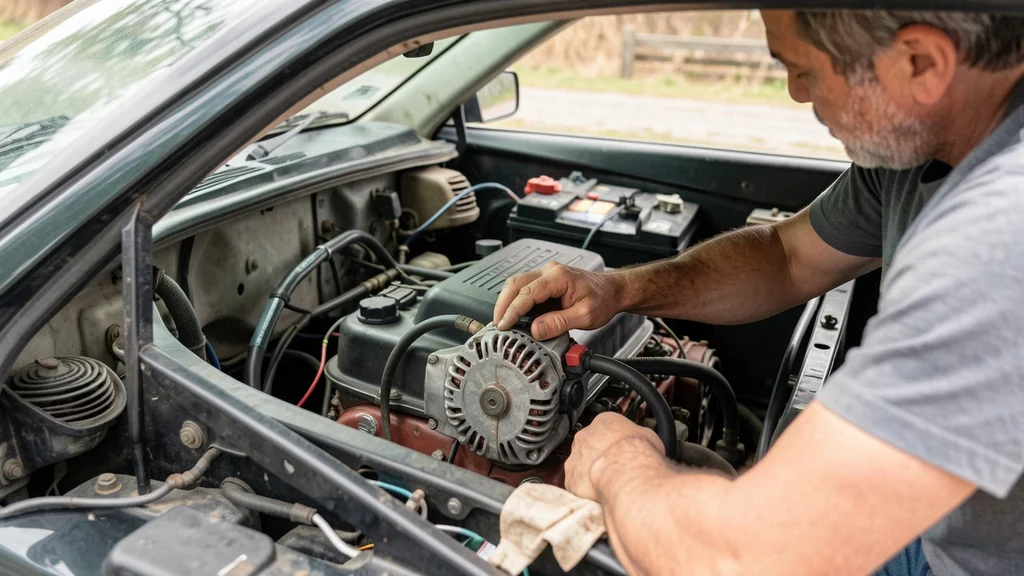
If your car’s electrical system is acting up, you may wonder can you drive long distance with a bad alternator. The short answer is no—driving with a failing alternator is risky, especially over long distances. The alternator keeps your battery charged and powers essential components like lights, ignition, and electronics.
A bad alternator can leave you stranded with a dead battery or worse, cause engine stalling in the middle of nowhere. This guide explains the dangers, warning signs, and what to do if you suspect your alternator is failing.
You can drive short distances with a bad alternator if the battery has enough charge but long trips are extremely dangerous. The battery will drain quickly leaving you stranded. Always fix or replace the alternator before attempting any extended drive.
What Does an Alternator Do in Your Car
An alternator is the heart of your car’s electrical system. It converts mechanical energy from the engine into electrical energy to power your vehicle’s components and recharge the battery while driving. Without it, your car relies solely on the battery, which has limited capacity. Once the battery charge depletes, your car will lose power to critical systems like the ignition, fuel pump, and lights.
- Charges the battery while the engine runs, ensuring it stays powered for starts and electrical demands
- Powers electrical systems like headlights, radio, air conditioning, and dashboard controls
- Maintains voltage stability typically between 13.8 and 14.4 volts for most vehicles
- Prevents battery drain by continuously replenishing the charge used during engine off periods
- Supports engine performance by ensuring consistent power to the spark plugs and fuel injection system
According to the National Institute for Automotive Service Excellence (ASE), a healthy alternator should output between 13.8 and 14.4 volts. Anything below 13 volts indicates a problem. Modern cars with advanced electronics draw more power, making a functional alternator even more critical.
Signs Your Alternator Is Failing
Recognizing the early warning signs of a bad alternator can save you from a breakdown. Some symptoms may mimic other issues, so it’s important to diagnose correctly. If you notice one or more of these signs, get your alternator checked immediately.
- Dim or flickering headlights – The alternator struggles to supply consistent power, causing lights to dim, especially at idle.
- Warning lights on the dashboard – The battery or alternator warning light (often shaped like a battery) illuminates when the system detects low voltage.
- Weak or dead battery – If your battery dies frequently or struggles to hold a charge, the alternator may not be recharging it.
- Electrical failures – Power windows, radio, or air conditioning may work intermittently or fail entirely.
- Engine stalling or difficulty starting – A weak alternator can’t power the spark plugs or fuel pump, leading to rough starts or stalls.
- Burning rubber smell – A failing alternator can overheat, causing the drive belt to wear out and emit a burning odor.
- Whining or grinding noises – Worn bearings inside the alternator can produce unusual sounds, often worse when accessories are in use.
Warning: Ignoring these signs can lead to a complete electrical failure, leaving you stranded. If your alternator warning light comes on, pull over safely and turn off unnecessary electrical loads.
Can You Drive With a Bad Alternator
Driving with a bad alternator is possible for very short distances, but it’s not advisable. The battery alone can power your car for a limited time, but once it drains, you’ll lose all electrical functions. Here’s what to expect:
| Scenario | Driving Distance | Risk Level |
|---|---|---|
| Battery fully charged, minimal electrical use | 5-25 miles | High – Battery will drain quickly |
| Battery partially charged, some electrical use | 1-10 miles | Very High – Risk of stalling |
| Battery dead or very low | 0-1 mile | Extreme – Car may not start |
The battery’s capacity and the car’s electrical demand determine how far you can go. Modern vehicles with fuel injection and electronic controls will die much sooner than older carbureted models. If you must drive, turn off all non-essential electronics (AC, radio, headlights if daytime) to conserve battery power.
What Happens If You Drive Long Distance With a Bad Alternator
Attempting a long-distance trip with a bad alternator is a gamble with serious consequences. Here’s what could happen:
- Sudden loss of power – The battery will eventually drain, causing the engine to shut off. This can happen in the middle of traffic or on a remote highway.
- Stranded without warning – Unlike a mechanical breakdown, electrical failure can occur abruptly, leaving you with no power for lights, phone charging, or hazard signals.
- Damage to other components – Voltage spikes from a failing alternator can damage sensitive electronics like the ECU, sensors, or infotainment system.
- Increased risk of accidents – Dim or flickering headlights reduce visibility at night, and power steering may fail if the system is electric.
- Costly tows and repairs – A breakdown far from home means expensive towing and potential additional damage to your vehicle.
According to AAA, electrical system failures are among the top reasons for roadside assistance calls. In 2023, they responded to over 4 million battery-related calls, many of which were linked to alternator issues. The average cost of a tow is between $75 and $125, not including repairs.
How Far Can You Drive on Battery Power Alone
The distance you can drive on battery power alone depends on several factors, including battery health, vehicle electrical demand, and driving conditions. Most car batteries have a reserve capacity of 60-120 minutes, but this translates to far less driving time due to the high electrical load.
| Battery Condition | Estimated Driving Time | Estimated Distance |
|---|---|---|
| New battery, full charge | 30-60 minutes | 15-30 miles |
| Good battery, partial charge | 15-30 minutes | 5-15 miles |
| Old/weak battery | 5-15 minutes | 1-5 miles |
These estimates assume minimal electrical use (no AC, radio, or headlights). Real-world conditions, such as night driving or stop-and-go traffic, will reduce these ranges significantly. Additionally, modern vehicles with electronic fuel injection require more power than older carbureted models, further shortening the distance.
What to Do If Your Alternator Fails While Driving
If your alternator fails while driving, follow these steps to maximize your chances of reaching a safe location:
- Stay calm and assess the situation – Check your dashboard for warning lights and note any changes in vehicle performance.
- Turn off non-essential electronics – Shut off the radio, AC, interior lights, and any other unnecessary electrical loads to conserve battery power.
- Pull over safely – If you’re in heavy traffic or an unsafe area, find a safe place to pull over as soon as possible.
- Call for assistance – Contact a roadside assistance service or a tow truck. If you’re a member of AAA or a similar service, now is the time to use it.
- Avoid restarting the engine – Each start drains the battery significantly. If you must move the car, do so only if absolutely necessary.
- Use hazard lights sparingly – If you’re stranded, use hazard lights only when needed to signal other drivers, as they drain the battery quickly.
- Attempt a jump start only if safe – If you have jumper cables and a helper, you can try jump-starting the car to drive to a nearby repair shop. However, this is a temporary solution.
Tip: If you’re far from help, consider asking a passing motorist to call for assistance on your behalf. Many people are willing to help in an emergency.
How to Test Your Alternator
Testing your alternator is straightforward and can be done with a few basic tools. Here’s how to check if it’s functioning properly:
Method 1: Using a Multimeter
- Park and prepare – Park your car in a safe, well-ventilated area and turn off the engine. Open the hood and locate the battery.
- Set up the multimeter – Turn your multimeter to the DC voltage setting (20V range).
- Test battery voltage (engine off) – Connect the red probe to the positive (+) battery terminal and the black probe to the negative (-) terminal. A healthy battery should read between 12.2 and 12.6 volts.
- Start the engine – Have a helper start the car while you monitor the multimeter.
- Check voltage with engine running – With the engine running, the voltage should increase to between 13.8 and 14.4 volts. If it stays below 13 volts, your alternator is likely bad.
- Rev the engine – Ask your helper to rev the engine to around 2000 RPM. The voltage should remain stable or increase slightly. A dropping voltage indicates alternator issues.
Method 2: The Headlight Test
- Park safely – Park your car in a dark area (like a garage at night) with the engine off.
- Turn on headlights – Switch on the headlights to normal (not high beam).
- Start the engine – Have someone start the car while you observe the headlights.
- Watch for brightness changes – If the headlights brighten significantly when the engine starts, the alternator is likely working. If they stay dim or flicker, the alternator may be failing.
- Rev the engine – If the headlights brighten when the engine is revved, it’s another sign of alternator trouble.
Method 3: Visual and Auditory Inspection
- Check the drive belt – Look for cracks, fraying, or wear on the alternator belt. A loose or damaged belt can prevent the alternator from functioning properly.
- Listen for unusual noises – A whining or grinding sound from the alternator area may indicate worn bearings or internal damage.
- Inspect for leaks or damage – Look for oil leaks or physical damage to the alternator housing.
- Check electrical connections – Ensure all wires and connectors to the alternator are tight and corrosion-free.
How to Temporarily Fix a Bad Alternator
If you’re in a pinch and need to get your car to a repair shop, there are a few temporary fixes you can try. These are not permanent solutions but may help you drive short distances.
- Jump-start the car – If your battery is dead due to a bad alternator, jump-starting can give you enough power to drive to a nearby mechanic. Remember, the battery will drain quickly, so drive directly to the shop.
- Replace the drive belt – If the alternator belt is loose or broken, replacing it may restore function temporarily. However, if the alternator itself is bad, this won’t fix the underlying issue.
- Disconnect non-essential electronics – Unplug devices like phone chargers, GPS units, or aftermarket stereos to reduce the electrical load on the battery.
- Use a portable jump starter – A portable jump starter can provide a quick boost to get you moving. Some models even have a built-in alternator tester.
Warning: Temporary fixes are just that—temporary. Driving with a bad alternator, even for a short distance, risks further damage to your vehicle’s electrical system. Always aim to replace the alternator as soon as possible.
Alternator Replacement Cost and Process
If your alternator is confirmed bad, replacement is the only permanent solution. Here’s what to expect in terms of cost and process:
| Factor | Details |
|---|---|
| Parts cost | $200 – $600 depending on vehicle make and model |
| Labor cost | $100 – $300 (1-2 hours of labor) |
| Total cost (parts + labor) | $300 – $900 |
| DIY difficulty | Moderate (requires basic tools and mechanical knowledge) |
| Warranty | 1-2 years for parts, varies by manufacturer |
The replacement process typically involves:
- Disconnect the battery – Always disconnect the negative battery terminal first to prevent electrical shorts.
- Remove the drive belt – Loosen the tensioner and slip the belt off the alternator pulley.
- Disconnect electrical connections – Unplug the wiring harness and remove the battery cable from the alternator.
- Remove the alternator – Unbolt the alternator from its mounting bracket and lift it out.
- Install the new alternator – Bolt the new alternator in place and reconnect all electrical connections.
- Reinstall the drive belt – Route the belt back onto the pulleys and tension it properly.
- Reconnect the battery – Reattach the battery terminals, starting with the positive (+) terminal.
- Test the system – Start the car and check for proper voltage output using a multimeter.
Important: If you’re not comfortable with DIY repairs, leave alternator replacement to a professional mechanic. Incorrect installation can damage the new alternator or other electrical components.
Frequently Asked Questions
How long can a car run with a bad alternator?
A car can typically run for 5 to 30 minutes on battery power alone, depending on the battery’s health and the vehicle’s electrical demand. Driving at night or with accessories like AC or headlights will drain the battery much faster. Once the battery is depleted, the engine will stall.
Will a bad alternator destroy a new battery?
Yes, a bad alternator can destroy a new battery. If the alternator overcharges, it can cause the battery to overheat and fail prematurely. If it undercharges, the battery will repeatedly drain, shortening its lifespan.
Always fix the alternator before replacing the battery.
Can I drive 30 minutes with a bad alternator?
Driving for 30 minutes with a bad alternator is possible only if the battery is fully charged and you minimize electrical use. However, this is risky and not recommended. The battery will likely drain before you reach your destination, leaving you stranded.
What happens if I ignore a bad alternator?
Ignoring a bad alternator will eventually lead to a dead battery and a car that won’t start. In some cases, voltage spikes from a failing alternator can damage sensitive electronics like the ECU, sensors, or infotainment system, leading to costly repairs.
How do I know if it’s the battery or the alternator?
If your car starts but dies shortly after, it’s likely the alternator. If the car doesn’t start at all and the battery is old, it could be the battery. The best way to confirm is to test the voltage with a multimeter while the engine is running.
A reading below 13 volts indicates an alternator issue.
Final Thoughts
Driving long distance with a bad alternator is not worth the risk. The alternator is vital for keeping your battery charged and your car’s electrical systems running. Ignoring the warning signs can leave you stranded or cause expensive damage.
If you suspect your alternator is failing, get it tested and replaced as soon as possible. A small investment in repairs now can save you from costly tows and repairs later.
Leave a Reply