
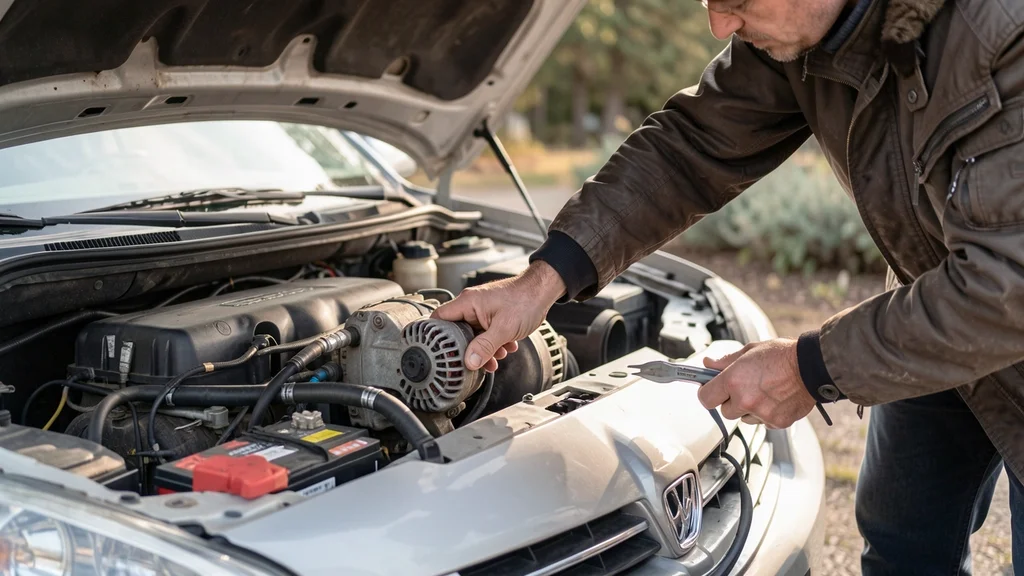
If your car’s battery light flickers or the headlights dim unexpectedly, can you drive with faulty alternator concerns likely cross your mind. A failing alternator doesn’t just drain your battery—it risks stranding you and damaging critical electrical systems. This guide explains the risks, warning signs, and how far you can safely go before repairs become urgent.
You can drive with a faulty alternator for a short distance but it’s extremely risky. Once the battery drains completely your engine will stall leaving you stranded. Most vehicles last 30 minutes to 2 hours depending on battery health and electrical load.
What an Alternator Does in Your Car
The alternator is your car’s power plant charging the battery and supplying electricity to all systems while the engine runs. Without it the battery alone can’t sustain the vehicle’s electrical demands. Modern cars rely on consistent voltage to power everything from fuel injectors to headlights.
- Charges the battery while driving to maintain 12.6-14.8 volts
- Powers electrical systems including lights, radio, and ECU
- Prevents battery drain by replacing used charge continuously
- Regulates voltage to prevent damage to sensitive electronics
- Supports engine operation by powering ignition and fuel systems
According to the Car Care Council, a properly functioning alternator produces between 13.8 and 14.4 volts at idle. When this drops below 13 volts your battery starts discharging faster than it’s charging.
Top Signs Your Alternator Is Failing
Identifying alternator problems early can save you from a breakdown. These warning signs typically appear in stages but can escalate quickly.
- Dashboard warning lights appear—most commonly the battery or ALT light. This is often the first sign of electrical system trouble.
- Dim or flickering headlights especially when idling or at low RPMs indicate insufficient power generation.
- Weak or dead battery that needs frequent jump starts suggests the alternator isn’t charging it properly.
- Electrical accessories malfunction such as slow power windows, erratic radio behavior, or dashboard gauge failures.
- Engine stalls or struggles to start even with a relatively new battery.
- Burning rubber smell from the engine bay can indicate alternator belt slippage or overheating components.
- Whining or grinding noises often point to failing alternator bearings or a slipping serpentine belt.
Warning: Ignoring these signs can lead to complete electrical failure while driving. The National Highway Traffic Safety Administration reports that electrical system failures cause thousands of stranding incidents annually.
How Long Can You Drive With a Bad Alternator
The distance you can travel depends on three critical factors: your battery’s current charge level, the vehicle’s electrical load, and the alternator’s remaining capacity.
| Battery Condition | Electrical Load | Estimated Driving Time |
|---|---|---|
| New/fully charged | Minimal (no A/C, radio off) | 1.5–2.5 hours |
| Partially charged | Moderate (A/C on, headlights) | 30–60 minutes |
| Weak/old battery | High (all accessories on) | 5–15 minutes |
Remember that these are rough estimates. A study by AAA found that 35% of vehicles with alternator issues strand their owners within 30 minutes of the first warning sign. The moment your headlights start dimming significantly your time is running out.
What Happens When You Drive With a Faulty Alternator
Continuing to drive with a failing alternator creates a cascade of problems that go beyond just running out of power. The electrical system in modern vehicles is complex and interconnected.
- Complete electrical failure leaves you without power steering, brakes, or engine management
- Battery damage from deep discharging can reduce its lifespan permanently
- Engine computer issues as the ECU loses power and may reset or malfunction
- Safety system failures including ABS, traction control, and airbag systems
- Fuel system problems as electric fuel pumps stop working
- Stranding risk increases exponentially with each mile driven
The Society of Automotive Engineers warns that voltage drops below 12 volts can cause erratic behavior in electronic fuel injection systems potentially damaging expensive components.
How to Test Your Alternator at Home
You don’t need professional tools to check if your alternator is the culprit. These simple tests can confirm your suspicions before you’re left stranded.
- Visual inspection check for loose or damaged belts and wiring connections to the alternator. Look for corrosion on battery terminals.
- Headlight test start the engine and rev it to about 2000 RPM. If headlights brighten significantly the alternator is likely failing.
- Voltage test with engine off use a multimeter to check battery voltage. A healthy battery reads 12.6 volts. Below 12.4 volts suggests it’s not holding charge.
- Voltage test with engine running should read 13.8–14.4 volts at idle. Anything below 13 volts indicates charging system problems.
- Load test turn on headlights, A/C, and radio. Voltage should stay above 13 volts. If it drops below 12.8 volts your alternator can’t handle the load.
Tip: If you don’t have a multimeter most auto parts stores will test your charging system for free. They can also check your battery health simultaneously.
What to Do When Your Alternator Fails While Driving
If you notice warning signs while on the road take immediate action to maximize your remaining driving time and reach safety.
- Turn off all non-essential electrical loads including A/C, radio, heated seats, and phone chargers. This reduces battery drain significantly.
- Avoid stopping if possible as restarting the engine requires the most battery power. Idling uses less battery than starting.
- Drive directly to a repair shop or safe location. Don’t make unnecessary detours that could deplete your battery.
- Use momentum to your advantage when approaching traffic lights or stop signs to minimize engine restarts.
- Call for assistance if you’re more than a few miles from help. Many tow trucks can jump-start your vehicle to get you to a repair facility.
According to J.D. Power research, 68% of drivers who experience alternator failure while driving report that their first warning was dimming headlights. Acting immediately when you notice this sign can give you precious extra minutes to reach safety.
Can You Jump Start a Car With a Bad Alternator
Jump-starting a car with a faulty alternator is possible but it won’t solve the underlying problem. The jump will provide enough power to start the engine but once the jumper cables are removed your battery will start draining again.
| Scenario | Will It Work? | Duration |
|---|---|---|
| Jump start with good battery | Yes | 5–30 minutes |
| Jump start with weak battery | Maybe | 2–10 minutes |
| Jump start + immediate repair shop | Yes | Until you arrive |
The key is to drive directly to a repair facility after a successful jump start. Every minute counts as your battery drains without the alternator replenishing it.
Alternator Replacement Cost and Process
Replacing a faulty alternator is typically a straightforward job but costs vary significantly based on your vehicle and whether you DIY or use a professional.
- Parts cost ranges from $100 to $350 for most vehicles. Luxury or European models can cost $400–$800.
- Labor cost typically $70–$200 depending on the shop’s hourly rate and vehicle accessibility.
- Total professional replacement usually $200–$500 for most domestic vehicles.
- DIY difficulty is moderate for most cars. Requires basic tools and about 1–2 hours.
- Warranty on new alternators typically 1–2 years or 12,000–24,000 miles.
Important: Always replace the serpentine belt when replacing the alternator. A worn belt can cause premature alternator failure and most shops charge minimal extra labor for this.
The replacement process generally involves:
- Disconnecting the battery to prevent electrical shorts
- Removing the serpentine belt from the alternator pulley
- Disconnecting electrical connections and mounting bolts
- Installing the new alternator and reconnecting all components
- Testing the charging system to ensure proper operation
How to Extend Your Alternator’s Lifespan
Proper maintenance can help your alternator last longer—typically 7–10 years or 100,000–150,000 miles. These preventive measures can save you from premature failure.
- Regular battery maintenance clean corrosion from terminals and ensure proper connections. A weak battery forces the alternator to work harder.
- Check belt condition every 6 months or 6,000 miles. A slipping or cracked serpentine belt reduces alternator efficiency.
- Avoid electrical overload don’t run high-power accessories with the engine off. This drains the battery and stresses the charging system.
- Keep it clean dirt and debris can clog alternator vents causing overheating. Use compressed air to clean the alternator housing periodically.
- Monitor voltage regularly use a multimeter to check charging system health during routine maintenance.
- Address warning signs immediately the sooner you catch alternator issues the less damage occurs to other electrical components.
According to a study by RepairPal, vehicles with regular charging system maintenance experience 40% fewer alternator failures than those without. The average alternator replacement interval is 100,000 miles but can extend to 150,000+ miles with proper care.
Common Alternator Problems and Solutions
Not all alternator issues require complete replacement. Some problems can be fixed with simpler repairs saving you time and money.
| Problem | Symptoms | Solution |
|---|---|---|
| Worn brushes | Intermittent charging, dim lights | Replace brushes or alternator |
| Faulty voltage regulator | Overcharging (15+ volts) or undercharging | Replace alternator (usually built-in) |
| Bad bearings | Whining or grinding noises | Replace alternator |
| Slipping belt | Squealing noise, battery light | Replace serpentine belt |
| Corroded connections | Intermittent charging issues | Clean and tighten connections |
Many alternator problems start as minor issues that escalate. Addressing them early can prevent complete failure. The Automotive Service Association estimates that 25% of alternator replacements could be avoided with timely maintenance.
Frequently Asked Questions
How long will a car run with a bad alternator?
Most cars will run for 30 minutes to 2 hours with a completely dead alternator depending on battery health and electrical load. With a partially failing alternator you might get slightly more time. Drive directly to a repair shop as the battery will drain quickly with any electrical usage.
Can a bad alternator destroy a new battery?
Yes a faulty alternator can ruin a new battery by either overcharging it (causing fluid loss and plate damage) or undercharging it (leading to deep discharge and sulfation). Both scenarios significantly shorten battery lifespan. Always fix the alternator before replacing the battery.
What happens if you disconnect the battery while the engine is running?
With a properly functioning alternator the engine should continue running as the alternator provides all necessary power. However if the alternator is bad disconnecting the battery will cause the engine to stall immediately. This test can help diagnose alternator problems but isn’t recommended for modern vehicles with sensitive electronics.
Why does my alternator keep failing?
Premature alternator failures are often caused by excessive heat, electrical overloads, poor quality parts, or voltage regulator issues. Driving with a weak battery forces the alternator to work harder. Regularly check your charging system and address any electrical problems immediately to extend alternator life.
Can I drive my car with a bad alternator to get it fixed?
You can but it’s extremely risky. If you must drive turn off all non-essential electrical components and go directly to the repair shop. The moment your headlights start dimming significantly pull over immediately.
Many repair shops offer free charging system tests and can often replace the alternator the same day.
Final Thoughts
While you technically can you drive with faulty alternator for a short time the risks far outweigh any temporary convenience. A failing alternator doesn’t just leave you stranded—it can damage expensive electrical components and create dangerous situations. Pay attention to warning signs like dimming lights or battery warnings and address them immediately.
Regular charging system checks can prevent most alternator failures and save you from costly repairs down the road.
Leave a Reply