
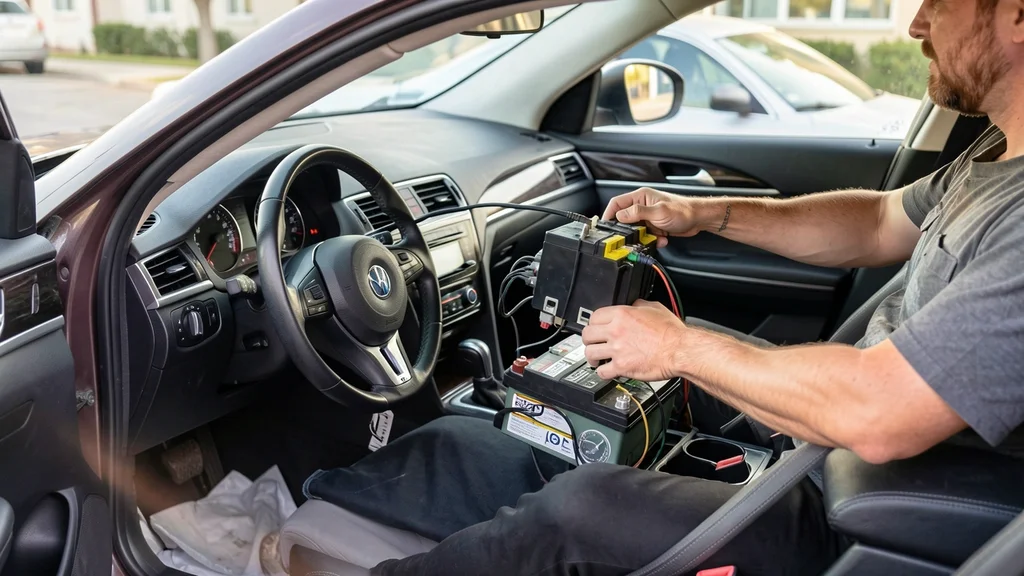
If your car’s battery light suddenly appears on the dashboard, you might wonder can you drive without alternator and how long you can safely keep going. The alternator is a critical component that charges the battery and powers the electrical system while the engine runs. Without it, your vehicle relies solely on the battery, which will drain quickly.
You can drive without an alternator for a very short distance, typically 30 minutes to an hour, depending on the battery charge and electrical load. The car will run until the battery dies, leaving you stranded.
What Does an Alternator Do in a Car
The alternator is your car’s power generator. It converts mechanical energy from the engine into electrical energy to charge the battery and power all electrical systems while the vehicle is running.
Without it, the battery would deplete rapidly, and the car would lose power to essential components like the ignition system, lights, and fuel pump. This can lead to stalling and leave you unable to restart the engine.
Modern vehicles rely heavily on electronics, so the alternator’s role is even more critical. It ensures the battery stays charged and the electrical system operates smoothly.
- Charges the battery while the engine runs
- Powers electrical systems like headlights, radio, and air conditioning
- Maintains voltage stability to prevent electrical failures
- Supports the starter motor for engine cranking
- Runs the fuel pump and ignition system
Important: Driving without a working alternator will drain the battery quickly, especially if you use headlights, air conditioning, or other electrical accessories.
Signs Your Alternator Is Failing
A failing alternator often gives warning signs before it stops working completely. Recognizing these symptoms early can help you avoid being stranded with a dead battery.
One of the first signs is a dimming or flickering of the headlights or interior lights. This happens because the alternator is no longer providing a steady charge, causing voltage fluctuations.
Another common symptom is a dead battery, even after a jump start. If your battery keeps dying despite being new or recently charged, the alternator is likely the culprit.
- Battery warning light on the dashboard
- Dim or flickering headlights
- Weak or dead battery that won’t hold a charge
- Electrical accessories like power windows or radio not working properly
- Strange noises such as grinding or whining from the engine bay
- Stalling or difficulty starting the engine
- Burning smell from overheating alternator components
| Symptom | Likely Cause |
|---|---|
| Battery light on dashboard | Alternator not charging battery |
| Dim headlights | Low voltage from failing alternator |
| Dead battery | Alternator not recharging battery |
| Electrical accessories failing | Insufficient power from alternator |
The alternator is connected to the engine via a serpentine belt. If this belt breaks or becomes loose, the alternator cannot function, leading to the symptoms above.
How Far Can You Drive Without an Alternator
The distance you can drive without an alternator depends on several factors, including the battery’s charge level, the car’s electrical load, and driving conditions. In most cases, you’ll only have about 30 minutes to an hour of driving time before the battery drains completely.
If you’re driving at night with headlights on, using the air conditioning, or listening to the radio, the battery will drain much faster. These accessories draw significant power, reducing the time you have before the car stalls.
On the other hand, if you’re driving during the day with minimal electrical load, you might stretch the battery life a bit longer. However, even under ideal conditions, you won’t get far without a working alternator.
- Battery charge level (full vs. nearly dead)
- Electrical load (headlights, AC, radio, etc.)
- Driving conditions (city vs. highway, stop-and-go traffic)
- Battery age and health (older batteries drain faster)
- Car model and electrical demands (modern cars use more electricity)
Tip: If your alternator fails, turn off all non-essential electrical accessories to maximize the remaining battery life and get to a safe location or repair shop.
What Happens When the Alternator Fails While Driving
When the alternator fails while driving, the car will initially continue running because the battery still has some charge. However, as the battery depletes, you’ll notice a gradual loss of electrical functions.
The first signs may be dimming headlights or a weakening of electrical accessories like power windows or the radio. Eventually, the battery will no longer have enough power to run the ignition system or fuel pump, causing the engine to stall.
Once the engine stalls, you won’t be able to restart it without a jump start or replacing the alternator. If you’re lucky, you might coast to a safe spot, but in most cases, you’ll need to call for assistance.
- Battery light illuminates on the dashboard
- Headlights and interior lights dim
- Electrical accessories stop working (radio, AC, power windows)
- Engine begins to misfire or run roughly
- Car stalls and will not restart
| Stage | Symptoms |
|---|---|
| Early failure | Battery light on, slight dimming of lights |
| Moderate failure | Electrical accessories weaken or fail |
| Complete failure | Engine stalls, car will not restart |
If you experience these symptoms, pull over to a safe location as soon as possible. Continuing to drive risks stranding yourself in an unsafe or inconvenient location.
Can You Jump Start a Car With a Bad Alternator
Jump starting a car with a bad alternator is possible, but it’s only a temporary solution. The jump start will provide enough power to get the engine running, but the alternator won’t recharge the battery, so the car will eventually stall again.
If you jump start the car, drive directly to a repair shop or a safe location where you can address the alternator issue. Avoid turning off the engine once it’s running, as you may not be able to restart it without another jump.
Keep in mind that repeatedly jump starting a car with a bad alternator can damage the battery over time. It’s best to diagnose and fix the alternator as soon as possible.
- Jump starting works but is temporary
- Drive directly to a repair shop after jump starting
- Avoid turning off the engine once running
- Repeated jump starts can damage the battery
- Fix the alternator to prevent further issues
Warning: Do not rely on jump starting as a long-term solution. A bad alternator will continue to drain the battery, leaving you stranded if not repaired.
How to Test Your Alternator
Testing your alternator can help you confirm whether it’s the source of your electrical problems. You can perform a basic test at home with a multimeter, or take your car to a professional for a more thorough diagnosis.
To test the alternator with a multimeter, start by checking the battery voltage with the engine off. A fully charged battery should read around 12.6 volts. Then, start the engine and check the voltage again.
A healthy alternator should produce between 13.8 and 14.4 volts.
If the voltage reading is outside this range, the alternator may be failing. Additionally, if the voltage drops when you rev the engine, it’s a sign that the alternator isn’t functioning properly.
- Check battery voltage with the engine off (should be ~12.6V)
- Start the engine and check voltage again (should be 13.8-14.4V)
- Rev the engine and monitor voltage (should remain stable)
- Test with electrical load (turn on headlights, AC, etc.)
- Inspect alternator belt for wear or damage
| Test | Expected Result | Possible Issue |
|---|---|---|
| Battery voltage (engine off) | ~12.6V | Low battery charge |
| Voltage (engine running) | 13.8-14.4V | Failing alternator |
| Voltage with electrical load | Stable within range | Alternator not handling load |
If you’re unsure about performing these tests yourself, most auto parts stores offer free alternator testing. They can quickly determine whether your alternator is functioning properly.
What to Do If Your Alternator Fails While Driving
If your alternator fails while driving, stay calm and take immediate action to ensure your safety. The first step is to reduce the electrical load on the battery by turning off non-essential accessories like the radio, air conditioning, and interior lights.
Next, try to drive to the nearest safe location, such as a parking lot or repair shop. If you’re on a highway, exit at the next opportunity and pull over to a well-lit, safe area.
If the car stalls and you’re unable to restart it, turn on your hazard lights and call for roadside assistance. Avoid attempting to jump start the car if you’re in an unsafe location, such as the middle of a busy road.
- Turn off non-essential accessories (radio, AC, lights)
- Drive to a safe location or repair shop
- Pull over if the car stalls and turn on hazard lights
- Call for roadside assistance if needed
- Avoid jump starting in unsafe locations
Important: If your alternator fails, prioritize safety. Do not attempt to drive long distances, as the battery will drain quickly and leave you stranded.
Common Causes of Alternator Failure
Alternators can fail for various reasons, and understanding these causes can help you prevent issues in the future. One of the most common causes is a worn-out or broken serpentine belt, which drives the alternator.
Another common issue is a faulty voltage regulator, which controls the alternator’s output. If the voltage regulator fails, the alternator may either undercharge or overcharge the battery, both of which can cause damage.
Other causes include worn brushes, a failing diode, or internal damage to the alternator. Regular maintenance and inspections can help identify these issues before they lead to a complete alternator failure.
- Worn or broken serpentine belt
- Faulty voltage regulator
- Worn brushes inside the alternator
- Failing diode in the alternator’s rectifier
- Internal damage due to age or overheating
- Corrosion or loose connections in the alternator wiring
| Cause | Symptoms | Solution |
|---|---|---|
| Worn serpentine belt | Squealing noise, battery light | Replace the belt |
| Faulty voltage regulator | Overcharging or undercharging | Replace the regulator |
| Worn brushes | Dim lights, weak electrical system | Replace the alternator |
Regularly inspecting your serpentine belt and electrical system can help you catch potential issues before they lead to alternator failure.
Frequently Asked Questions
How long can you drive with a bad alternator?
You can typically drive for about 30 minutes to an hour with a bad alternator, depending on the battery’s charge and the electrical load. After that, the battery will drain, and the car will stall.
Can a car run without an alternator?
A car can run for a short time without an alternator, but it will eventually stall once the battery is depleted. The alternator is essential for keeping the battery charged and the electrical system running.
Will a bad alternator drain a new battery?
Yes, a bad alternator will drain a new battery because it won’t recharge the battery while the engine is running. This can lead to a dead battery, even if it’s new.
Can you drive with a bad alternator if the battery is fully charged?
Even with a fully charged battery, you can only drive for a short time with a bad alternator. The battery will drain quickly, especially if you use electrical accessories like headlights or air conditioning.
How much does it cost to replace an alternator?
The cost to replace an alternator varies depending on the car model and labor rates, but it typically ranges from $400 to $1,000, including parts and labor. Some vehicles may cost more if the alternator is difficult to access.
Final Thoughts
Driving without an alternator is possible for a very short time, but it’s not safe or practical. The alternator plays a crucial role in keeping your car’s battery charged and electrical systems running. If you notice signs of alternator failure, such as a battery warning light or dimming headlights, address the issue immediately to avoid being stranded.
Regular maintenance and inspections can help prevent alternator failure and keep your car running smoothly.
Leave a Reply