
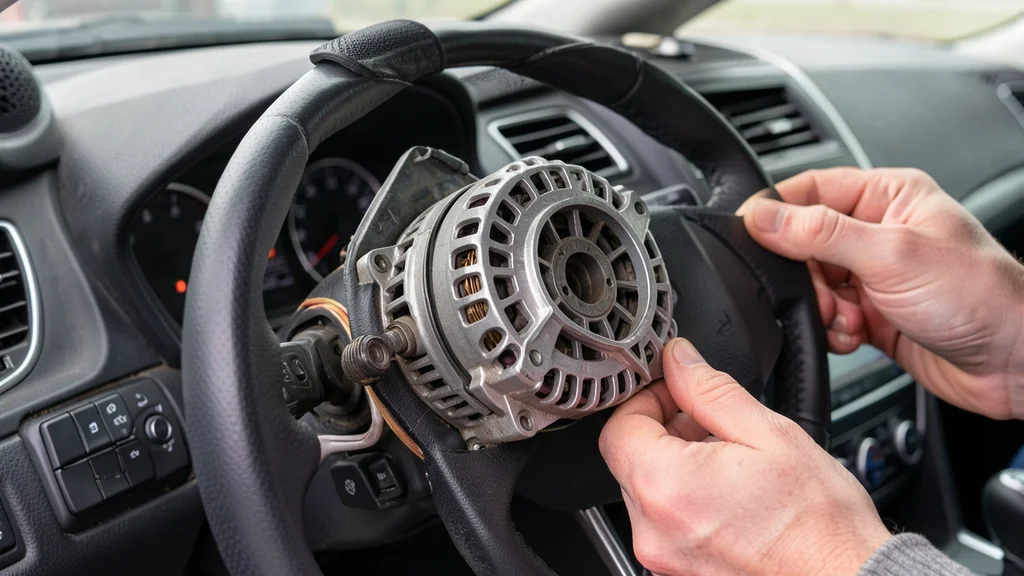
If your car suddenly stalls or struggles to start but the dashboard stays dark, you might wonder can you have a bad alternator and no warning light. The short answer is yes—alternator failure often happens without triggering the battery or charging system warning. This guide explains why, the subtle signs to watch for, and how to diagnose the issue before you’re left stranded.
Yes you can have a bad alternator with no warning light on the dash. Modern cars may not show a battery or charging alert until the alternator fails completely or the voltage drops below a critical threshold. Rely on dim lights, weak accessories, or a dead battery as early clues instead.
Why No Warning Light Appears with a Bad Alternator
Most drivers assume the battery warning light on the dashboard will flash the moment the alternator acts up. That’s not always how it works.
The warning light is triggered by the vehicle’s computer when it detects voltage outside the normal range—typically below 13 volts or above 14.5 volts. However, alternators can fail gradually. In the early stages, the voltage might still hover within the “acceptable” range, even if it’s not optimal.
This means the system doesn’t register a problem, and no light appears.
Additionally, some alternators fail in a way that doesn’t immediately affect voltage output. For example, a worn bearing or slipping belt might not cause electrical issues at first but will eventually lead to total failure. The warning light only reacts to electrical anomalies, not mechanical ones.
- Voltage Thresholds: The ECU only triggers the warning light if voltage drops below ~13V or spikes above ~14.5V.
- Gradual Failure: Alternators can degrade slowly, maintaining “normal” voltage until they suddenly can’t.
- Mechanical Issues: Problems like a failing bearing or loose belt don’t directly affect voltage, so no light appears.
- Battery Compensation: A healthy battery can temporarily mask alternator issues by supplying power, delaying the warning.
- Faulty Sensors: If the voltage sensor itself is malfunctioning, the system may not detect the problem at all.
Warning: Never ignore dim headlights or slow power windows, even without a warning light. These are often the first signs of alternator trouble and can leave you stranded if ignored.
Common Signs of a Bad Alternator Without a Warning Light
Since the warning light isn’t a reliable early indicator, you need to recognize other symptoms. These signs often appear before the alternator fails completely, giving you time to act.
One of the most noticeable symptoms is dim or flickering headlights, especially when idling or at low RPMs. The alternator is responsible for powering the electrical system while the engine runs, so if it’s not generating enough power, the lights will suffer. Similarly, weak or slow accessories—like power windows, seat heaters, or the radio cutting in and out—can signal an underperforming alternator.
| Symptom | What It Means | Severity |
|---|---|---|
| Dim or flickering headlights | Alternator not generating enough power to maintain electrical load | High |
| Weak or slow power windows | Insufficient power delivery to accessories | Medium |
| Dead battery after driving | Alternator failed to recharge the battery while driving | Critical |
| Strange noises (whining or grinding) | Worn bearings or failing internal components | High |
| Electrical smells (burning wires) | Overheating alternator or electrical short | Critical |
If you notice any of these symptoms, it’s critical to test your alternator as soon as possible. A failing alternator won’t just leave you without power—it can also damage your battery by failing to recharge it properly.
How to Test for a Bad Alternator Without a Warning Light
Testing your alternator doesn’t require a professional mechanic. With a few basic tools, you can diagnose the issue at home. The most reliable method is using a multimeter to check the voltage output of the alternator while the engine is running.
Start by checking the battery voltage with the engine off. A fully charged battery should read around 12.6 volts. Then, start the engine and rev it to about 2,000 RPM.
The voltage at the battery should now read between 13.8 and 14.5 volts. If it’s below 13 volts, the alternator is likely not charging the battery properly. If the voltage is above 14.5 volts, the alternator may be overcharging, which can damage the battery and electrical system.
- Check Battery Voltage (Engine Off): Use a multimeter to measure the battery voltage. It should be around 12.6V if fully charged.
- Start the Engine: Turn the engine on and let it idle.
- Measure Voltage at Idle: The voltage should rise to 13.8-14.5V. If it stays below 13V, the alternator is likely failing.
- Rev the Engine to 2,000 RPM: Voltage should remain stable within the 13.8-14.5V range. A drop or spike indicates alternator issues.
- Test All Accessories Off: Turn off all electrical loads (lights, radio, AC) and recheck the voltage. A significant difference suggests the alternator can’t handle the load.
- Inspect Alternator Belt: Look for cracks, fraying, or looseness. A slipping belt can cause charging issues.
- Listen for Unusual Noises: A whining or grinding noise from the alternator area may indicate bearing failure.
Tip: If you don’t have a multimeter, most auto parts stores offer free alternator testing. They can quickly tell you if it’s faulty.
Can a Bad Alternator Kill a New Battery
Yes, a bad alternator can destroy a brand-new battery—and it often does. Here’s how it happens: when the alternator fails, the battery takes over supplying power to the entire electrical system. This drains the battery quickly, but the real damage occurs when the alternator overcharges or sends inconsistent voltage to the battery.
An overcharging alternator (producing more than 14.5V) can boil the electrolyte out of the battery, causing irreversible damage. On the other hand, an undercharging alternator forces the battery to work overtime, leading to deep discharges that shorten its lifespan. In both cases, the battery can fail prematurely, sometimes within weeks of installation.
| Scenario | Impact on Battery | Result |
|---|---|---|
| Undercharging Alternator (<13V) | Battery drains completely to power the car | Deep discharge, reduced battery life |
| Overcharging Alternator (>14.5V) | Excessive voltage boils battery electrolyte | Permanent battery damage, swelling, or leakage |
| Inconsistent Voltage | Battery experiences rapid charge/discharge cycles | Premature battery failure, sulfation |
If you’ve recently replaced your battery but are experiencing electrical issues, test the alternator immediately. Replacing the battery without fixing the alternator will only lead to another dead battery.
What to Do If Your Alternator Fails Without Warning
If your alternator fails while driving, stay calm and follow these steps to minimize damage and get to safety. The key is to reduce the electrical load on the battery as much as possible, since the alternator is no longer charging it.
First, turn off all non-essential electrical systems. This includes the radio, air conditioning, heated seats, and interior lights. If it’s safe to do so, turn off your headlights as well—though this is only advisable in daylight.
Next, avoid using power steering if possible, as it draws significant power. If your car has an automatic transmission, shift to neutral when stopping to reduce load on the engine and electrical system.
- Turn Off Non-Essential Electronics: Radio, AC, heated seats, and interior lights should be off to conserve battery power.
- Minimize Headlight Use: If it’s daytime, turn off headlights. At night, use them sparingly.
- Avoid Power Steering: Manual steering reduces electrical load if your car has electric power steering.
- Shift to Neutral When Stopped: Reduces engine load and conserves battery power in automatic transmissions.
- Drive Directly to a Safe Location: Head to the nearest auto shop or parking lot. Avoid long distances.
- Call for Assistance: If the car stalls, do not attempt to jump-start it repeatedly. Call a tow truck or roadside assistance.
- Do Not Turn Off the Engine: If the car is still running, keep it running until you reach safety. Restarting it may drain the battery completely.
Important: If your alternator fails, the battery will only last 30 minutes to an hour at most. Act quickly to avoid being stranded.
Alternator vs Battery Problems How to Tell the Difference
It’s easy to confuse alternator issues with battery problems, especially when no warning light appears. However, there are clear ways to distinguish between the two. The primary difference is that a bad battery will struggle to start the car but may run fine once the engine is going, while a bad alternator will cause the car to lose power while driving or fail to start after a short drive.
A simple test is to jump-start the car. If it starts but dies shortly after removing the jumper cables, the alternator is likely the culprit. If the car starts and continues running, the issue is probably the battery.
Additionally, if your headlights are dim when the engine is off but brighten when revved, the alternator is likely failing to charge the battery properly.
| Issue | Bad Battery | Bad Alternator |
|---|---|---|
| Car Won’t Start | Slow cranking or clicking noise | May start but dies quickly |
| Headlights | Dim when engine is off, normal when running | Dim or flickering while driving |
| After Jump-Start | Car runs fine, battery recharges | Car dies after removing jumper cables |
| Electrical Accessories | Work fine when engine is running | Weak or stop working while driving |
| Battery Age | Older than 3-5 years | Can happen at any age |
If you’re still unsure, the best approach is to have both the battery and alternator tested. Most auto parts stores and repair shops offer free diagnostics and can pinpoint the exact issue.
Preventing Alternator Failure Without Relying on Warning Lights
Since warning lights aren’t a reliable early indicator of alternator problems, proactive maintenance is key to avoiding unexpected failures. Regularly checking your alternator’s health can save you from costly repairs and inconvenient breakdowns.
Start by visually inspecting the alternator and its connections. Look for corrosion on the terminals, loose or damaged wires, or a worn-out serpentine belt. Corrosion can disrupt the flow of electricity, while a loose belt can cause the alternator to underperform.
Clean any corrosion with a baking soda and water solution, and tighten loose connections.
- Regular Voltage Checks: Use a multimeter to test alternator output every 6 months. Voltage should be 13.8-14.5V with the engine running.
- Inspect the Serpentine Belt: Check for cracks, fraying, or glaze every 3-6 months. Replace if worn.
- Clean Battery Terminals: Corrosion on battery terminals can affect charging. Clean them every few months.
- Listen for Noises: A whining or grinding noise from the alternator area may indicate bearing wear. Address it immediately.
- Avoid Electrical Overload: Don’t run too many accessories at once, especially with the engine off. This can strain the alternator.
- Check for Leaks: Alternators can leak oil, which can damage internal components. Look for oil stains near the alternator.
- Professional Inspection: Have a mechanic check the alternator during routine maintenance, especially if your car is older.
Tip: If you frequently drive short distances, your alternator may not have enough time to fully recharge the battery. Consider taking a longer drive occasionally to maintain battery health.
According to a study by AAA, alternator and battery-related issues are among the top reasons for roadside assistance calls, accounting for nearly 20% of all breakdowns. Regular maintenance can significantly reduce your risk of joining that statistic.
Frequently Asked Questions
Why doesn’t my alternator warning light come on when it’s failing?
The warning light is triggered by voltage levels outside a specific range (typically 13-14.5V). If the alternator is failing gradually, the voltage may stay within this range until it’s too late. Additionally, mechanical issues like a worn bearing won’t affect voltage, so no light appears.
Can I drive with a bad alternator if the battery is fully charged?
Technically, yes, but only for a short distance. The battery alone can power the car’s electrical systems for about 30 minutes to an hour, depending on the load. However, once the battery drains, the car will stall, and you’ll be stranded.
It’s not recommended.
How long does an alternator last on average?
Most alternators last between 80,000 to 150,000 miles, or about 7-10 years. However, factors like extreme temperatures, electrical load, and driving habits can shorten or extend this lifespan. Regular maintenance can help maximize its longevity.
What happens if I ignore a bad alternator?
Ignoring a bad alternator can lead to a dead battery, sudden stalling while driving, and potential damage to other electrical components. In severe cases, an overcharging alternator can damage the battery, fuses, or even the vehicle’s computer system.
Can a bad alternator cause my car to stall while driving?
Yes, a failing alternator can cause your car to stall. As the alternator stops charging the battery, the battery eventually drains to the point where it can no longer power the ignition system or fuel injectors, causing the engine to shut off.
Final Thoughts
While a warning light is a helpful indicator, it’s not foolproof when it comes to alternator issues. Can you have a bad alternator and no warning light? Absolutely.
The best defense is staying vigilant for subtle signs like dim lights, weak accessories, or unusual noises. Regular voltage checks and proactive maintenance can help you catch problems early, avoiding the inconvenience and cost of a sudden breakdown. Don’t wait for a warning light—take control of your car’s health today.
Leave a Reply