
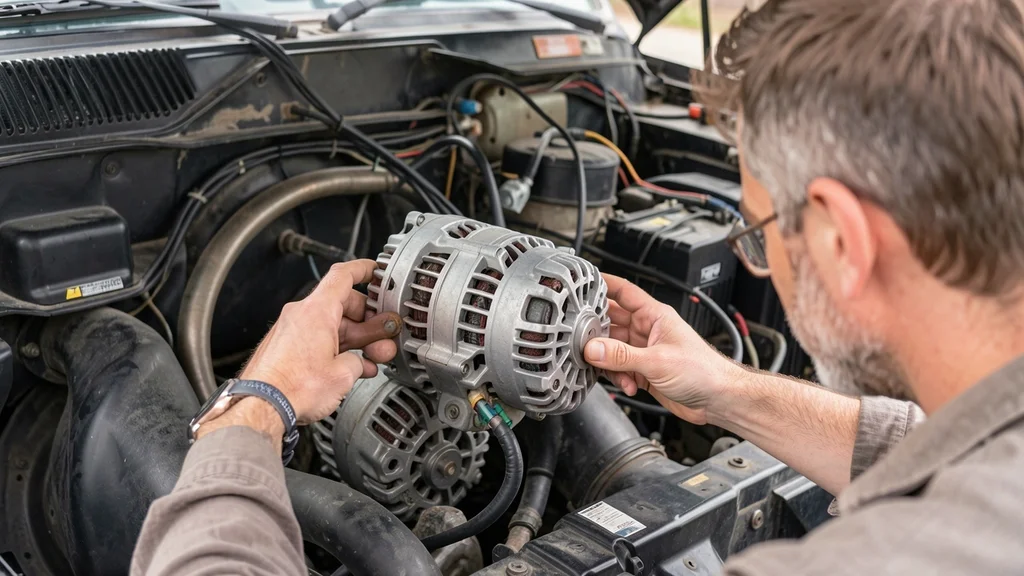
If your truck’s electrical system struggles with aftermarket accessories, you may wonder can you put a more powerful alternator in your truck to handle the extra load. Upgrading your alternator can prevent dimming lights, dead batteries, and electrical failures, especially if you run high-wattage sound systems, winches, or LED light bars. This guide covers everything you need to know about compatibility, installation, and performance benefits.
Yes you can install a higher-output alternator in most trucks as long as it matches your engine’s mounting bracket and electrical system voltage. A typical upgrade jumps from 100-140 amps to 200-300 amps for heavy-duty use.
How to Check if Your Truck Needs a More Powerful Alternator
Signs your stock alternator is overloaded include flickering headlights when the radio is loud, a battery that drains overnight, or a whining noise from the engine bay. These issues often appear when you add power-hungry accessories like subwoofers, invertors, or auxiliary lighting.
To confirm, perform a voltage test with a multimeter. At idle, a healthy alternator should output 13.8-14.4 volts. If readings drop below 13 volts with accessories on, your alternator is struggling.
Also check for warning lights on the dashboard, as modern trucks often have built-in alternator failure alerts.
- Dimming or flickering headlights with accessories running
- Battery dies frequently despite being new
- Whining or grinding noise from the alternator area
- Electrical accessories perform poorly or cut out
- Dashboard warning lights for charging system issues
Tip: Use a clamp meter to measure alternator output directly. Anything below 80% of its rated amperage under load means it’s time for an upgrade.
Compatibility Factors for a High Output Alternator
Not all alternators fit every truck. The primary considerations are physical size, mounting brackets, pulley alignment, and electrical connections. Most trucks use a serpentine belt system, so the alternator must align perfectly with the existing pulleys to avoid belt wear or slippage.
Electrical compatibility is just as critical. Your truck’s voltage regulator must match the alternator’s output, typically 12V for gas engines and 24V for some diesels. Additionally, the wiring harness and fuse box must handle the increased amperage without overheating.
| Factor | Details |
|---|---|
| Mounting Brackets | Must match your engine’s existing bracket configuration (e.g., GM LS, Ford Modular, Cummins) |
| Pulley Alignment | Serpentine belt must align without tension or misalignment |
| Electrical Connections | Plug-and-play connectors preferred; may need wiring upgrades for high amperage |
| Voltage Rating | Must match truck’s system (12V for most gas, 24V for some diesel) |
| Amperage Capacity | Stock: 100-140A; Upgraded: 200-300A for heavy loads |
For popular trucks like the Ford F-150 or Chevy Silverado, aftermarket brands like Powermaster, Mean Green, and DC Power Engineering offer direct-fit high-output alternators. Diesel trucks (e.g., Dodge Ram 2500 with Cummins) often require heavy-duty alternators rated at 200A or more due to higher electrical demands.
Steps to Install a More Powerful Alternator in Your Truck
Upgrading your alternator is a manageable DIY project if you have basic mechanical skills. The process involves removing the old unit, transferring components if needed, and installing the new alternator while ensuring all connections are secure.
Before starting, gather the necessary tools: a socket set, wrenches, a serpentine belt diagram for your truck, and a torque wrench. Safety first—disconnect the negative battery terminal to avoid electrical shorts.
- Disconnect the Battery
Remove the negative terminal first to prevent short circuits. This step is non-negotiable for safety. - Locate and Remove the Old Alternator
Follow the serpentine belt path to the alternator. Loosen the tensioner pulley to release belt tension, then remove the belt from the alternator pulley. Unbolt the alternator from its bracket and disconnect the wiring harness. - Transfer Components (If Needed)
Some high-output alternators require you to transfer the pulley or voltage regulator from your old unit. Check the manufacturer’s instructions. - Install the New Alternator
Position the new alternator in the bracket and secure it with bolts. Reattach the wiring harness, ensuring a snug fit. Reinstall the serpentine belt using the diagram as a reference. - Reconnect the Battery
Reattach the negative terminal last. Start the engine and check for proper voltage output (13.8-14.4V at idle).
Warning: Never disconnect the battery while the engine is running. This can cause a voltage spike that damages the alternator or ECU.
Top 5 High Output Alternators for Trucks
If you’re in the market for an upgrade, here are five of the best high-output alternators for trucks, based on amperage, durability, and compatibility. These models are popular among off-road enthusiasts, audio fanatics, and commercial users.
1. Powermaster 47876 200 Amp Alternator
This alternator is a top choice for GM trucks, including Chevy Silverado and GMC Sierra models. It delivers 200 amps at idle and features a heavy-duty internal regulator for consistent performance. The Powermaster 47876 is designed for direct bolt-on installation, making it a hassle-free upgrade.
- 200 amps at idle, 250 amps peak
- Direct fit for GM LS engines
- Heavy-duty internal voltage regulator
- One-year warranty
- Powder-coated finish for corrosion resistance
| Pros | Cons |
|---|---|
| High idle output | Slightly heavier than stock |
| Easy installation | Limited to GM applications |
Best For: GM truck owners who need a reliable, high-amperage alternator for towing or audio systems.
2. Mean Green 94250 270 Amp Alternator
The Mean Green 94250 is a beast, offering 270 amps of continuous power, making it ideal for heavy-duty applications like winches, hydraulics, or competition audio systems. It’s built with oversized diodes and a high-temperature epoxy coating for durability under extreme conditions.
- 270 amps continuous, 300 amps peak
- Fits Ford 6.0L, 6.4L, and 6.7L Powerstroke diesel engines
- Oversized diodes for better heat dissipation
- High-temperature epoxy coating
- Three-year warranty
Important: Requires a wiring upgrade for trucks with stock wiring harnesses to handle the increased amperage safely.
Best For: Ford diesel truck owners who need maximum power for industrial or off-road use.
3. DC Power Engineering D975 270 Amp Alternator
DC Power Engineering is known for its high-performance alternators, and the D975 is no exception. This model is universal, meaning it can be adapted to fit a wide range of trucks with the right mounting brackets. It’s a favorite among custom builders and off-road racers.
- 270 amps continuous
- Universal fit with custom brackets
- Billet aluminum construction
- Internal fan for improved cooling
- One-year warranty
| Pros | Cons |
|---|---|
| Extremely high output | Requires custom mounting brackets |
| Lightweight billet aluminum | More expensive than direct-fit options |
Best For: Custom truck builds or off-road vehicles where a universal alternator is needed.
4. Bosch AL87X 170 Amp Alternator
For those who want a balance between performance and affordability, the Bosch AL87X is a great option. It’s a direct-fit replacement for many Ford and GM trucks and offers a solid 170 amps, which is a significant upgrade over most stock alternators.
- 170 amps continuous
- Direct fit for Ford F-150, Chevy Silverado, and more
- OEM-quality construction
- Built-in overvoltage protection
- Two-year warranty
Best For: Daily drivers or light towing applications where a moderate power boost is sufficient.
5. Leece-Neville 270 Amp Heavy Duty Alternator
Leece-Neville is a trusted name in heavy-duty alternators, and their 270-amp model is built for the toughest conditions. It’s commonly used in commercial trucks, RVs, and emergency vehicles, making it a solid choice for those who need industrial-grade reliability.
- 270 amps continuous
- Heavy-duty construction for commercial use
- Dual internal fans for cooling
- Compatibility with 12V and 24V systems
- Three-year warranty
Tip: Ideal for trucks with dual battery setups or those running 24V systems.
Best For: Commercial trucks, RVs, or any vehicle requiring extreme durability and power.
Wiring Upgrades for High Output Alternators
Installing a high-output alternator often requires upgrading your truck’s wiring to handle the increased amperage safely. Stock wiring may overheat or create a bottleneck, reducing the alternator’s effectiveness and potentially causing electrical fires.
The most critical upgrade is the alternator’s output wire, which should be at least 4-gauge (or thicker) for alternators over 200 amps. The battery cables should also be upgraded to 1/0 or 2/0 gauge for high-amperage systems. Additionally, consider adding a high-amperage fuse or circuit breaker near the alternator to protect the system.
- Output Wire: Upgrade to 4-gauge or thicker for alternators over 200 amps
- Battery Cables: Use 1/0 or 2/0 gauge for high-amperage setups
- Fuse/Circuit Breaker: Install a 200A+ fuse near the alternator for safety
- Grounding: Ensure all ground connections are clean and secure; add additional grounding straps if needed
- Voltage Drop Test: Perform a voltage drop test to identify any weak points in the wiring
| Component | Recommended Gauge | Notes |
|---|---|---|
| Alternator Output Wire | 4 AWG or thicker | Use marine-grade wire for durability |
| Battery Positive Cable | 1/0 or 2/0 AWG | Upgrade both positive and negative cables |
| Ground Straps | 4 AWG or thicker | Add multiple grounding points for stability |
| Fuse | 200A+ | Install within 18 inches of the alternator |
Avoid using crimped connections for high-amperage wiring—solder or weld connections are far more reliable. Additionally, route wires away from heat sources and sharp edges to prevent damage. If you’re unsure about the wiring, consult a professional to ensure safety and performance.
Common Mistakes to Avoid When Upgrading Your Alternator
Upgrading your alternator seems straightforward, but there are several pitfalls that can lead to poor performance or even damage to your truck’s electrical system. Being aware of these mistakes can save you time, money, and frustration.
One of the most common errors is installing a high-output alternator without upgrading the wiring. As mentioned earlier, stock wiring can’t handle the increased amperage, leading to overheating or voltage drops. Another mistake is mismatching the alternator’s voltage to your truck’s system—always double-check whether your truck runs on 12V or 24V.
- Skipping the Wiring Upgrade
Stock wiring is not designed for high amperage. Upgrade to thicker gauge wires to prevent overheating and voltage drops. - Ignoring Pulley Alignment
Misaligned pulleys can cause belt wear, noise, or premature alternator failure. Always check alignment before finalizing the installation. - Using Low-Quality Components
Cheap alternators or wiring can fail under heavy loads. Invest in reputable brands like Powermaster, Mean Green, or Bosch. - Forgetting to Test After Installation
Always test voltage output at idle and under load to ensure the alternator is performing as expected. - Overloading the System
Even a high-output alternator has limits. Avoid exceeding its rated amperage with too many accessories.
Warning: Never mix battery types (e.g., AGM and flooded) in a dual-battery setup with a high-output alternator. This can cause charging imbalances and damage the batteries.
Benefits of Upgrading Your Truck’s Alternator
Investing in a high-output alternator offers several advantages beyond just preventing electrical issues. These benefits can enhance your truck’s performance, reliability, and even its resale value.
One of the most noticeable benefits is improved electrical stability. With a high-output alternator, your truck’s voltage remains steady even when running multiple accessories, which means no more dimming lights or weak stereo performance. This is especially important for off-road enthusiasts who rely on winches, LED light bars, and other power-hungry equipment.
- Prevents Electrical Failures: No more dead batteries or flickering lights when using accessories.
- Supports High-Power Accessories: Run winches, sound systems, and LED lights without straining the system.
- Extends Battery Life: A properly charged battery lasts longer and performs better.
- Improves Fuel Efficiency: Some high-output alternators are more efficient, reducing engine load and improving MPG.
- Increases Resale Value: A truck with upgraded electrical components is more attractive to buyers.
- Enhances Off-Road Capability: Essential for winches, air compressors, and other off-road gear.
- Reduces Downtime: Fewer electrical issues mean less time spent on repairs.
According to a study by the Specialty Equipment Market Association (SEMA), trucks with upgraded electrical systems (including high-output alternators) are 20% less likely to experience roadside electrical failures. This reliability is a major selling point for used trucks, as buyers are willing to pay a premium for vehicles with proven performance upgrades.
Frequently Asked Questions
Can I install a high-output alternator myself?
Yes, if you have basic mechanical skills and the right tools. The process involves removing the old alternator, installing the new one, and upgrading the wiring if necessary. However, if you’re unsure about electrical work, it’s best to consult a professional to avoid damaging your truck’s electrical system.
Will a high-output alternator damage my truck’s battery?
No, a high-output alternator will not damage your battery as long as it’s properly sized and the wiring is upgraded. In fact, it will keep your battery charged more effectively, especially when running multiple accessories. Just ensure the alternator’s voltage matches your truck’s system (usually 12V).
How much does it cost to upgrade to a high-output alternator?
The cost varies depending on the brand and amperage. A quality high-output alternator typically ranges from $300 to $800. If you need to upgrade the wiring or hire a professional for installation, expect to pay an additional $100–$300 for parts and labor.
Can I use a high-output alternator with a stock battery?
Yes, but it’s not ideal for heavy loads. A stock battery may not handle the increased charging rate well, leading to reduced lifespan. For best results, pair a high-output alternator with a high-capacity battery, such as an AGM or deep-cycle battery, especially if you run power-hungry accessories.
What’s the difference between a high-output alternator and a standard one?
A standard alternator typically produces 60–140 amps, which is sufficient for basic electrical needs. A high-output alternator, on the other hand, can produce 200–300 amps or more, making it suitable for trucks with heavy electrical demands, such as towing, off-roading, or high-performance audio systems.
Final Thoughts
Upgrading your truck’s alternator is a smart investment if you frequently use power-hungry accessories or want to avoid electrical issues. A high-output alternator ensures stable voltage, extends battery life, and supports heavy-duty applications. Just remember to check compatibility, upgrade your wiring if needed, and follow proper installation steps to get the most out of your upgrade.
Leave a Reply