
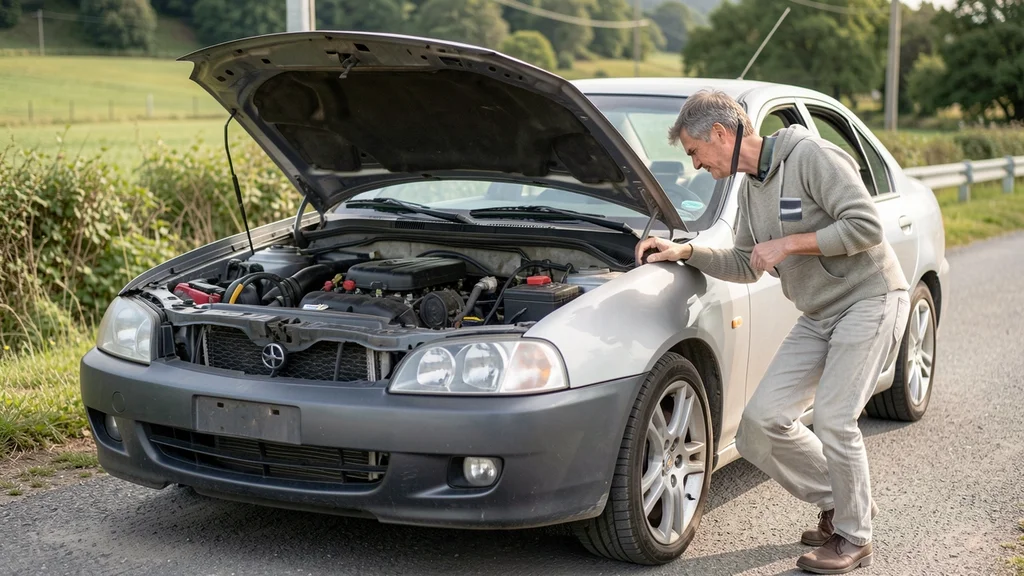
If your car’s battery light flickers or the headlights dim while driving, you might be dealing with a failing alternator. The question of can you run your car with a bad alternator is critical because the alternator keeps your battery charged and powers electrical systems while the engine runs. Ignoring the issue can leave you stranded with a dead battery or worse, a stalled engine.
This guide covers how long you can drive, the risks involved, and what to do next.
You can run your car with a bad alternator only for a short time, typically 5 to 30 minutes, depending on battery health and electrical demand. The battery alone cannot sustain the car’s power needs for long, so pull over safely as soon as you notice warning signs.
How Long Can You Drive With a Faulty Alternator
The time you can drive with a bad alternator depends on several factors. A healthy battery may keep the engine running for 15 to 30 minutes with minimal electrical load, like headlights off and no AC. However, if the battery is weak or you’re using power-hungry accessories, you might have as little as 5 minutes before the engine stalls.
Modern vehicles rely heavily on electronics, so the moment the alternator fails, the battery starts draining rapidly. The car will eventually shut down once the battery voltage drops below the threshold needed to power the ignition system and fuel injectors. Driving at night with headlights on or in heavy traffic with frequent stops will deplete the battery even faster.
- Battery condition: A new, fully charged battery buys you more time than an old or weak one.
- Electrical load: Turn off all non-essential systems (radio, AC, heated seats) to extend driving time.
- Driving conditions: Highway driving with consistent RPMs may last longer than stop-and-go city traffic.
- Alternator failure mode: A completely dead alternator drains the battery faster than one that’s only partially failing.
Warning: Driving with a bad alternator risks sudden power loss, which can be dangerous in high-speed traffic or remote areas. Always pull over at the first safe opportunity.
Signs Your Alternator Is Failing
Recognizing the symptoms of a bad alternator early can save you from a breakdown. The most common signs include dimming headlights, a dead battery, or a battery warning light on the dashboard. Other indicators are flickering interior lights, weak or slow cranking when starting the car, and electrical accessories (like power windows or the radio) working intermittently.
Sometimes, the alternator may produce a whining or grinding noise due to a failing bearing. You might also notice a burning smell from the engine bay, which could indicate an overheating alternator or electrical issues. If you experience any of these symptoms, it’s crucial to have your charging system tested as soon as possible.
| Symptom | Likely Cause | Severity |
|---|---|---|
| Battery warning light on | Alternator not charging | High |
| Dim or flickering headlights | Low voltage from alternator | High |
| Slow cranking or no start | Dead battery (due to alternator failure) | High |
| Whining or grinding noise | Failing alternator bearing | Medium |
| Burning smell | Overheating alternator | High |
If multiple symptoms appear simultaneously, the alternator is likely the culprit. A single symptom, like dim headlights, could also stem from a bad battery or wiring issue, so a professional diagnosis is recommended.
What Happens When the Alternator Fails While Driving
When the alternator fails while driving, the car initially continues running because the battery takes over. However, the battery can only supply power for a limited time. As the battery drains, the voltage drops, and critical systems begin to fail.
The first to go are usually non-essential electronics like the radio or dashboard lights.
Next, essential systems such as the fuel pump, ignition, and engine control module (ECM) start to malfunction. The engine may run rough, misfire, or lose power. Eventually, the battery voltage drops too low to sustain the ignition system, and the engine stalls.
Once stalled, the car will not restart without a jump or a new battery—even if the alternator is replaced on the spot.
- First 1-5 minutes: Battery takes over; non-essential systems (radio, AC) may turn off.
- 5-15 minutes: Headlights dim; power steering and brakes may feel heavier.
- 15-30 minutes: Engine runs rough; dashboard lights flicker; possible stalling.
- 30+ minutes: Engine stalls completely; car will not restart without external power.
Important: If your car stalls due to a bad alternator, do not attempt to restart it repeatedly. This can drain the battery completely and damage the starter motor.
Can You Jumpstart a Car With a Bad Alternator
Yes, you can jumpstart a car with a bad alternator, but it’s only a temporary solution. The jump will provide enough power to start the engine, but once the jump cables are removed, the battery will start draining again because the alternator isn’t charging it. This means you’ll have a very limited window to drive to a repair shop or a safe location.
If you jumpstart the car, drive directly to a mechanic without turning off the engine. Turning the engine off will likely prevent it from restarting, as the battery will already be depleted. Also, avoid using any electrical accessories during the drive to conserve battery power.
- Steps to jumpstart:
- Park the donor car close enough for the jumper cables to reach.
- Connect the red (positive) clamp to the dead battery’s positive terminal, then the other red clamp to the donor battery’s positive terminal.
- Connect the black (negative) clamp to the donor battery’s negative terminal, then the other black clamp to an unpainted metal surface on the dead car (not the battery).
- Start the donor car and let it run for a few minutes.
- Attempt to start your car. If it starts, do not turn it off.
- What NOT to do:
- Don’t connect the negative clamp to the dead battery’s negative terminal (risk of explosion).
- Don’t rev the engine excessively; it won’t charge the battery faster.
- Don’t drive long distances; the battery will drain quickly.
How to Test Your Alternator at Home
You don’t need to be a professional mechanic to test your alternator. With a simple multimeter, you can check if it’s functioning properly. Start by testing the battery voltage with the engine off.
A fully charged battery should read around 12.6 volts. Then, start the engine and rev it to about 2,000 RPM. The voltage should rise to between 13.8 and 14.4 volts if the alternator is working correctly.
If the voltage stays below 13.8 or drops while the engine is running, the alternator is likely faulty. Another test involves turning on all electrical accessories (headlights, AC, radio) while the engine is running. If the voltage drops significantly below 13.8, the alternator may not be able to handle the load.
| Test | Expected Reading | What It Means |
|---|---|---|
| Battery voltage (engine off) | 12.6V | Normal battery charge |
| Voltage (engine running, no load) | 13.8-14.4V | Alternator charging properly |
| Voltage (engine running, full load) | 13.5-14.0V | Alternator handling load well |
| Voltage (engine running, below 13.8V) | Below 13.8V | Alternator not charging |
For a more thorough diagnosis, many auto parts stores offer free alternator and battery testing. They can confirm whether the issue is with the alternator, battery, or another component of the charging system.
Common Causes of Alternator Failure
Alternators typically last between 80,000 to 100,000 miles, but several factors can lead to premature failure. The most common causes include a worn-out alternator brush, a faulty voltage regulator, or a broken alternator belt. Corrosion on the battery terminals or a loose connection can also prevent the alternator from charging the battery properly.
Other causes include internal shorts or open circuits within the alternator, often due to age or heat damage. Driving conditions can also play a role: frequent short trips don’t allow the alternator to fully charge the battery, while extreme heat can accelerate wear and tear on internal components. Additionally, water exposure (e.g., driving through deep puddles) can damage the alternator if it’s not properly sealed.
- Worn carbon brushes: These brushes transfer current between stationary and rotating parts. Over time, they wear out and need replacement.
- Faulty voltage regulator: This component controls the alternator’s output. If it fails, the alternator may overcharge or undercharge the battery.
- Bad bearings: Worn bearings can cause noise and eventually lead to alternator failure.
- Broken or slipping belt: The serpentine belt drives the alternator. If it’s loose, worn, or broken, the alternator won’t spin at the correct speed.
- Corrosion or loose connections: Poor electrical connections can disrupt the charging process.
- Internal electrical issues: Shorts, open circuits, or damaged diodes can cause the alternator to fail.
- Overloading: Adding aftermarket accessories (e.g., high-powered stereos) can overload the alternator if it’s not rated for the extra demand.
Tip: Regularly inspect your serpentine belt for cracks or wear, and clean battery terminals to prevent corrosion. These simple steps can extend the life of your alternator.
How to Extend the Life of Your Alternator
While alternators are designed to last for many years, proactive maintenance can help maximize their lifespan. One of the simplest ways to extend your alternator’s life is to keep the battery in good condition. A weak or dead battery forces the alternator to work harder, which can lead to premature wear.
Regularly check the battery’s charge and clean the terminals to prevent corrosion.
Another key factor is avoiding electrical overloads. If you’ve added aftermarket accessories like powerful sound systems, LED light bars, or other high-wattage devices, ensure your alternator can handle the additional load. Upgrading to a high-output alternator may be necessary if your electrical demands exceed the stock alternator’s capacity.
- Keep the battery healthy:
- Test the battery voltage regularly (should be 12.6V with the engine off).
- Clean battery terminals and connections to prevent corrosion.
- Replace the battery every 3-5 years, or as recommended by the manufacturer.
- Avoid short trips:
- Short drives don’t give the alternator enough time to fully recharge the battery.
- If you mostly drive short distances, consider using a battery maintainer.
- Inspect the serpentine belt:
- Check for cracks, fraying, or glossy spots (signs of wear).
- Replace the belt every 60,000-100,000 miles or as recommended.
- Monitor electrical demand:
- Avoid running too many accessories at once.
- Upgrade the alternator if you’ve added high-power devices.
- Watch for warning signs:
- Address dim lights, warning lights, or strange noises immediately.
- Have the charging system tested if you notice any issues.
What to Do If Your Alternator Fails
If your alternator fails while driving, the first priority is to get to a safe location. Pull over as soon as you notice warning signs like dimming lights or a battery warning. Turn off all non-essential electrical accessories to reduce the battery drain.
If you’re in a safe spot, you can attempt to jumpstart the car to drive to a repair shop, but remember that this is only a temporary fix.
Once you’ve reached a safe location, the next step is to diagnose and repair the issue. If you’re not comfortable testing or replacing the alternator yourself, have the car towed to a professional mechanic. They can confirm the problem and replace the alternator if necessary.
If you decide to replace it yourself, make sure to disconnect the battery first to avoid electrical shorts.
- Immediate steps:
- Pull over safely and turn off non-essential electronics.
- Check for obvious issues like a loose or broken serpentine belt.
- Call for roadside assistance if you’re unsure what to do.
- If you’re stranded:
- Call a tow truck or roadside assistance.
- If you have jumper cables, ask another driver for a jump to get to a repair shop.
- Do not attempt to drive long distances after a jump.
- Repair options:
- Visit a professional mechanic for diagnosis and replacement.
- If DIY-inclined, replace the alternator yourself (requires basic tools and safety precautions).
- Consider upgrading to a high-output alternator if you have high electrical demands.
| Option | Cost | Time | Pros | Cons |
|---|---|---|---|---|
| Professional replacement | $400-$800 | 1-2 hours | Guaranteed work, warranty | Higher cost |
| DIY replacement | $200-$400 | 2-4 hours | Lower cost, satisfying | Requires tools, skill |
| Used/refurbished alternator | $100-$300 | 1-2 hours | Cheaper | Shorter lifespan, no warranty |
Frequently Asked Questions
How long will a car run with a bad alternator?
A car can run for 5 to 30 minutes with a bad alternator, depending on the battery’s health and the electrical load. The battery alone cannot power the car indefinitely, so it’s critical to address the issue immediately. Driving with a dead alternator will eventually leave you stranded once the battery drains completely.
Can a bad alternator destroy a new battery?
Yes, a bad alternator can destroy a new battery. If the alternator overcharges the battery, it can cause the battery to overheat and fail prematurely. Conversely, if the alternator undercharges the battery, the battery will discharge completely, leading to sulfation and permanent damage.
Always fix the alternator before replacing the battery.
What does a bad alternator sound like?
A failing alternator often produces a whining or grinding noise due to worn bearings. This noise may get louder as the engine RPMs increase. If you hear such sounds coming from the engine bay, it’s a strong indicator that the alternator is on its way out and should be inspected immediately.
Will a car start with a bad alternator?
Yes, a car can start with a bad alternator if the battery has enough charge. However, once the engine is running, the battery will not recharge, and the car will eventually stall. If the battery is already drained, the car may not start at all without a jump.
How much does it cost to replace an alternator?
The cost to replace an alternator varies depending on the vehicle make and model. On average, you can expect to pay between $200 and $800 for parts and labor. Luxury or high-performance vehicles may cost more.
If you’re handy with tools, you can save money by replacing it yourself, as the part alone typically costs $100 to $400.
Final Thoughts
Driving with a bad alternator is a risky gamble that can leave you stranded at any moment. While you might squeeze out 5 to 30 minutes of runtime, the battery will eventually drain, and the engine will stall. Recognizing the warning signs—dim lights, battery warnings, or electrical issues—can help you address the problem before it’s too late.
If you suspect your alternator is failing, have it tested and replaced if necessary. Proactive maintenance, like checking the battery and belt, can also extend the life of your alternator and keep your car running reliably.
Leave a Reply