
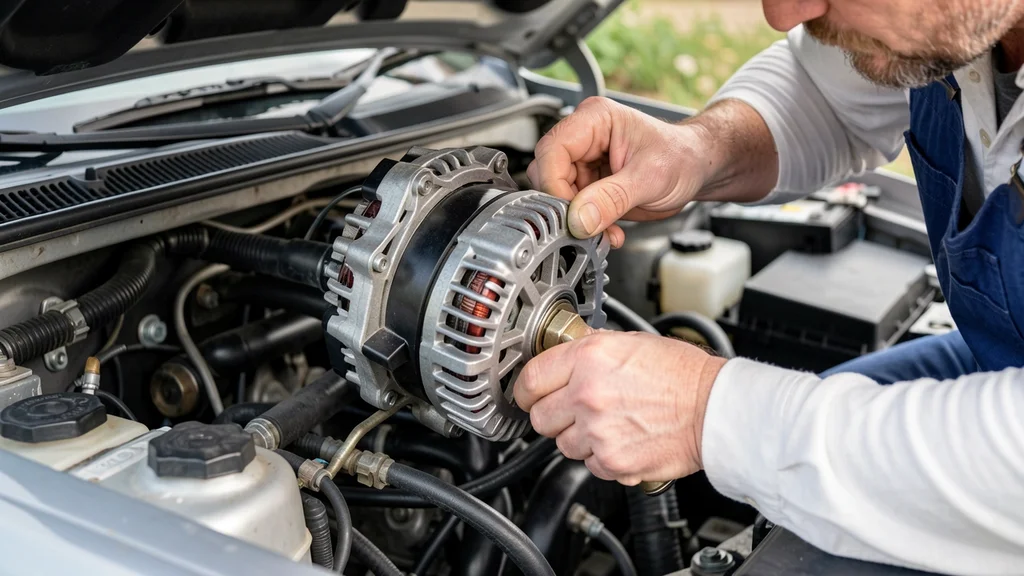
If your car’s battery light is on or you hear strange noises under the hood, how can you get the alternator checked or replaced is likely your next thought. The alternator keeps your battery charged and powers the electrical system while the engine runs. Getting it fixed quickly prevents breakdowns and costly damage.
This guide covers everything from diagnosing the issue to choosing between DIY and professional replacement.
You can get the alternator by purchasing a new or remanufactured unit from auto parts stores, dealerships, or online retailers. Replacement typically takes 1-2 hours at a repair shop, costing $400-$800 parts and labor combined.
Signs Your Alternator Needs Replacement
The alternator is the heart of your car’s electrical system, and when it fails, the signs are hard to miss. The most common symptom is a lit battery warning light on your dashboard, which often looks like a rectangle with a plus and minus sign. This light can appear dim or flicker, especially when you’re using electrical components like headlights or the radio.
Other telltale signs include dim or flickering headlights, a dead battery that won’t hold a charge, or strange noises coming from under the hood. You might also notice your radio or other electrical accessories cutting in and out. If you experience any of these, it’s a clear indication that your alternator may be on its last legs.
- Battery Warning Light: The most obvious sign, often the first to appear.
- Dim or Flickering Headlights: Alternator struggles to power the lights, causing inconsistency.
- Dead Battery: If your battery dies repeatedly, the alternator may not be charging it.
- Strange Noises: A whining or grinding noise often signals a failing alternator bearing.
- Electrical Issues: Malfunctioning windows, radio, or other accessories.
- Engine Stalling: In severe cases, the car may stall or fail to start.
Warning: Ignoring alternator issues can lead to a complete electrical failure, leaving you stranded. Address the problem as soon as you notice the first signs.
How to Test Your Alternator
Before replacing your alternator, it’s smart to confirm that it’s the actual culprit. Testing your alternator is a straightforward process that you can do at home with a multimeter. Start by checking the battery voltage with the engine off—a healthy battery should read between 12.2 and 12.6 volts.
Then, start the engine and rev it to about 2,000 RPM. The voltage should now read between 13.8 and 14.4 volts. If it’s outside this range, your alternator may be failing.
Auto parts stores like AutoZone, O’Reilly Auto Parts, and Advance Auto Parts often offer free alternator testing. They can also test your battery and starter to rule out other issues. This service is quick, usually taking less than 15 minutes, and gives you peace of mind before making any purchases.
- Check Battery Voltage (Engine Off): 12.2-12.6 volts indicates a healthy battery.
- Start Engine and Rev to 2,000 RPM: Voltage should rise to 13.8-14.4 volts.
- Test All Electrical Components: Ensure lights, radio, and other accessories are working properly.
- Listen for Unusual Noises: Grinding or whining sounds suggest bearing failure.
- Visit an Auto Parts Store: Get a professional diagnosis if you’re unsure.
| Test Method | Expected Result | Issue Indicated |
|---|---|---|
| Battery Voltage (Engine Off) | 12.2-12.6 volts | Low voltage may indicate battery or alternator issue |
| Voltage with Engine Running | 13.8-14.4 volts | Outside range suggests alternator failure |
| Load Test at Auto Parts Store | Passes all electrical tests | Failed test confirms alternator or battery issue |
If your alternator fails any of these tests, it’s time to consider a replacement. Remember, a failing alternator can damage your battery and other electrical components over time.
Where to Buy a Replacement Alternator
Once you’ve confirmed that your alternator needs replacing, the next step is sourcing a quality replacement. You have several options, each with its own pros and cons. Auto parts stores like AutoZone, O’Reilly, and Advance Auto Parts carry a wide range of new and remanufactured alternators.
These stores often provide warranties, sometimes for the lifetime of the part, and can help you find the exact match for your vehicle.
Online retailers like Amazon, RockAuto, and eBay offer competitive prices and the convenience of home delivery. However, be cautious when buying online—ensure the seller has a good return policy and that the part is compatible with your vehicle. Dealerships are another option, especially if you want an OEM (Original Equipment Manufacturer) alternator, but these tend to be more expensive.
- Auto Parts Stores: Convenient, immediate pickup, and professional advice.
- Online Retailers: Competitive pricing, wide selection, and home delivery.
- Dealerships: OEM parts, but often at a premium price.
- Junkyards: Cheap used alternators, but reliability can be a concern.
- Local Mechanics: Some shops sell parts and may offer discounts if you buy and install with them.
| Source | Price Range | Warranty | Pros | Cons |
|---|---|---|---|---|
| Auto Parts Stores | $80-$250 | Lifetime or 1-2 years | Immediate pickup, expert help | Limited to store inventory |
| Online Retailers | $60-$200 | Varies (30-90 days) | Competitive prices, home delivery | Return hassles, compatibility risks |
| Dealerships | $200-$500 | 1-2 years | OEM quality, exact fit | Higher cost, longer wait times |
For most drivers, auto parts stores offer the best balance of convenience, price, and reliability. If you’re unsure, ask the staff for recommendations based on your vehicle’s make and model.
New vs Remanufactured Alternators
When buying a replacement alternator, you’ll often have the choice between new and remanufactured units. New alternators are brand-new parts that have never been used. They come with a full warranty and are guaranteed to meet OEM specifications.
However, they’re also the most expensive option, often costing 30-50% more than remanufactured alternatives.
Remanufactured alternators, on the other hand, are used units that have been restored to like-new condition. The process involves disassembling the alternator, inspecting each component, replacing worn or damaged parts, and reassembling it to meet strict quality standards. Remanufactured alternators are significantly cheaper and often come with warranties that rival new parts.
According to the Automotive Parts Remanufacturers Association, remanufactured alternators can save consumers up to 40% compared to new units.
| Factor | New Alternator | Remanufactured Alternator |
|---|---|---|
| Cost | Higher ($200-$500) | Lower ($80-$250) |
| Warranty | 1-3 years | Lifetime or 1-2 years |
| Reliability | High (brand-new parts) | High (rigorously tested) |
| Availability | May require ordering | Often in stock |
| Environmental Impact | Higher (new materials) | Lower (recycled parts) |
Tip: If you’re on a budget, a remanufactured alternator is a smart choice. Just make sure it comes with a solid warranty and is from a reputable brand like Bosch, Denso, or ACDelco.
DIY Alternator Replacement Step by Step
Replacing your alternator yourself can save you a significant amount of money on labor costs. While the process varies slightly depending on your vehicle, the general steps are similar across most models. Before you start, gather the necessary tools: a socket wrench set, a serpentine belt diagram (usually found in your owner’s manual or under the hood), and a jack with jack stands if you need to access the alternator from underneath.
Safety is paramount. Always disconnect the negative battery cable first to prevent electrical shorts. Then, locate the alternator—it’s typically mounted near the engine and connected to the battery via a thick cable.
Loosen the tensioner pulley to remove the serpentine belt, then unbolt the alternator and disconnect the wiring harness. Installation is the reverse process, but make sure the belt is properly tensioned and all connections are secure.
- Disconnect the Battery: Remove the negative cable first to avoid shorts.
- Locate the Alternator: Refer to your owner’s manual for the exact location.
- Remove the Serpentine Belt: Loosen the tensioner pulley and slip the belt off.
- Disconnect Wiring: Unplug the alternator’s electrical connectors.
- Unbolt the Alternator: Remove the mounting bolts (usually 2-3).
- Install the New Alternator: Bolt it in place and reconnect the wiring.
- Reinstall the Serpentine Belt: Follow the diagram to route the belt correctly.
- Reconnect the Battery: Attach the negative cable last.
- Test the System: Start the engine and check for proper charging.
Warning: Always support the vehicle properly with jack stands if you’re working underneath. Never rely on just a jack—it can fail and cause serious injury.
If you’re not comfortable with DIY, don’t hesitate to take your car to a professional. Alternator replacement is a common job for mechanics, and most shops can have it done in under two hours.
Professional Alternator Replacement Costs
If you decide to have a professional handle the replacement, costs can vary widely depending on your location, the type of vehicle you drive, and whether you choose a new or remanufactured alternator. On average, you can expect to pay between $400 and $800 for parts and labor combined. Labor costs typically range from $120 to $200, while the alternator itself can cost anywhere from $250 to $600, depending on the make and model of your car.
Luxury and European vehicles often have higher replacement costs due to the complexity of their electrical systems and the price of OEM parts. For example, replacing an alternator in a BMW or Mercedes can cost between $600 and $1,200. On the other hand, domestic vehicles like Ford, Chevy, or Dodge tend to be on the lower end of the price spectrum, with total costs often under $500.
| Vehicle Type | Alternator Cost | Labor Cost | Total Estimated Cost |
|---|---|---|---|
| Domestic (Ford, Chevy, Dodge) | $150-$300 | $120-$200 | $300-$500 |
| Asian (Toyota, Honda, Nissan) | $200-$400 | $150-$250 | $400-$650 |
| European (BMW, Mercedes, Audi) | $300-$600 | $200-$300 | $600-$1,200 |
To get the best deal, consider shopping around for quotes from different repair shops. Some shops offer discounts for AAA members or other affiliations. Additionally, if you purchase the alternator yourself, some shops may reduce the labor cost.
According to a 2023 report by AAA, the average cost of alternator replacement has increased by about 10% over the past five years due to rising parts and labor costs.
Common Mistakes to Avoid
Whether you’re replacing the alternator yourself or having a professional do it, there are a few common mistakes to watch out for. One of the most frequent errors is failing to disconnect the battery before starting the job. This can lead to electrical shorts, which can damage the alternator, battery, or even the vehicle’s electrical system.
Always remove the negative battery cable first and reconnect it last.
Another common issue is improper belt tension. If the serpentine belt is too loose, it can slip and fail to power the alternator effectively. If it’s too tight, it can wear out prematurely and put unnecessary strain on the alternator bearings.
Always refer to your vehicle’s manual for the correct tension specifications, or use a belt tension gauge if available.
- Not Disconnecting the Battery: Can cause electrical shorts and damage components.
- Improper Belt Tension: Too loose causes slippage; too tight causes wear.
- Using the Wrong Alternator: Always match the part number to your vehicle’s specifications.
- Skipping the Test Drive: Always test the charging system after replacement to confirm it’s working.
- Ignoring Other Components: Check the battery, cables, and fuses for issues that may have caused the alternator to fail.
- Over-Tightening Bolts: Can strip threads or damage the alternator housing.
Important: After replacing the alternator, have the entire charging system tested. A weak battery or corroded cables can cause the new alternator to fail prematurely.
How to Extend the Life of Your Alternator
While alternators are designed to last for many years, there are steps you can take to maximize their lifespan. Regular maintenance is key. Keep your battery terminals clean and free of corrosion, as poor connections can force the alternator to work harder.
Additionally, avoid running high-power electrical accessories, like aftermarket stereos or lights, when the engine is off. This can drain the battery and put extra strain on the alternator when you start the car.
Driving habits also play a role. Frequent short trips can prevent the alternator from fully charging the battery, leading to premature wear. If you mostly drive short distances, consider using a battery maintainer to keep the battery charged when the car is parked.
According to a study by the Automotive Maintenance and Repair Association, vehicles driven primarily on short trips are 30% more likely to experience alternator failure.
- Keep Battery Terminals Clean: Prevents voltage drops and strain on the alternator.
- Avoid High Electrical Loads: Limit use of aftermarket accessories when the engine is off.
- Drive Regularly: Longer drives help the alternator fully charge the battery.
- Check Belt Condition: Replace worn or cracked serpentine belts promptly.
- Monitor Warning Lights: Address electrical issues as soon as they appear.
- Use Quality Parts: Invest in a high-quality alternator and battery for better longevity.
| Maintenance Task | Frequency | Benefit |
|---|---|---|
| Clean Battery Terminals | Every 6 months | Prevents voltage drops |
| Inspect Serpentine Belt | Every 12 months | Prevents belt failure |
| Test Charging System | Every 12 months | Catches issues early |
| Avoid Short Trips | Whenever possible | Reduces strain on alternator |
Frequently Asked Questions
How long does it take to replace an alternator?
For a professional mechanic, replacing an alternator typically takes between 1 and 2 hours. The exact time depends on your vehicle’s make and model, as well as the accessibility of the alternator. Some vehicles, particularly those with tight engine bays, may take longer.
If you’re doing it yourself, expect to spend 2-4 hours, especially if it’s your first time.
Can I drive with a bad alternator?
Driving with a bad alternator is not recommended. While your car may run for a short time on battery power alone, the battery will eventually drain, leaving you stranded. Additionally, a failing alternator can cause electrical issues that may damage other components, such as your vehicle’s computer or sensors.
What causes an alternator to fail?
Alternators can fail for several reasons. The most common causes include worn-out brushes or bearings, a damaged voltage regulator, or a shorted diode. Other factors, such as excessive heat, electrical overloads, or fluid leaks (e.g., coolant or oil), can also lead to alternator failure.
Regular maintenance and addressing electrical issues promptly can help extend its lifespan.
How much does an alternator cost?
The cost of an alternator varies depending on whether it’s new or remanufactured, as well as your vehicle’s make and model. New alternators typically range from $200 to $600, while remanufactured units can cost between $80 and $250. Labor costs for professional installation usually add another $120 to $200 to the total bill.
Can I replace an alternator myself?
Yes, replacing an alternator is a DIY-friendly job for those with basic mechanical skills and the right tools. However, it does require some knowledge of your vehicle’s electrical system and the ability to safely disconnect the battery and work in tight spaces. If you’re unsure, it’s best to leave it to a professional to avoid costly mistakes.
Final Thoughts
Knowing how can you get the alternator replaced is essential for keeping your vehicle running smoothly. Whether you choose to tackle the job yourself or hire a professional, addressing alternator issues promptly can save you from breakdowns and more expensive repairs down the line. Remember to test your alternator if you suspect a problem, choose a quality replacement, and follow proper installation procedures to ensure a long lifespan for your new part.
Leave a Reply