
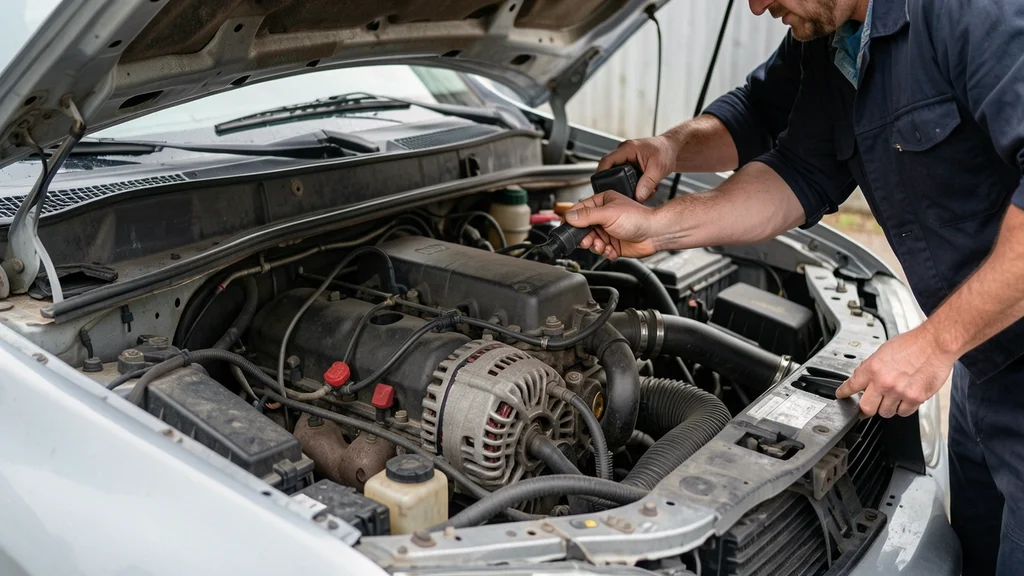
If your car’s electrical system is acting up, knowing how can you tell alternator is going bad can save you from being stranded. The alternator charges the battery and powers electronics while the engine runs, so spotting early warning signs is crucial. From dim lights to strange noises, we’ll cover the key symptoms, diagnostic tips, and fixes to keep your vehicle running smoothly.
The most common signs of a failing alternator are dim headlights, a dead battery, warning lights on the dashboard, and a burning smell. If you notice these, test the alternator immediately to avoid breakdowns.
Dashboard Warning Lights You Should Never Ignore
The alternator warning light (often shaped like a battery) is the first red flag. This light appears when the alternator isn’t generating enough voltage to charge the battery or power the car’s electrical systems. Modern vehicles also trigger the check engine light if the alternator fails, as the ECU detects irregular voltage levels.
Ignoring these lights can lead to a complete electrical failure. Some cars may also show a “CHG” or “ALT” symbol, which directly points to alternator issues. If the light flickers or stays on, it’s time to inspect the charging system.
- Battery Light: Direct indicator of alternator or battery issues
- Check Engine Light: Can appear if the alternator affects engine performance
- Dim Interior Lights: Often accompany warning lights due to low voltage
- Voltage Gauge: If your car has one, readings below 13.5V suggest problems
- Absent Lights: Some older models lack warning lights, so watch for other symptoms
Warning: Never ignore the battery warning light. Driving with a failing alternator can drain the battery completely, leaving you stranded.
Dim or Flickering Lights as a Clear Signal
When the alternator weakens, it struggles to maintain consistent power to your car’s electrical components. Headlights that dim when idling but brighten when accelerating are a classic sign. This happens because the alternator can’t keep up with demand at low RPMs, but the engine’s higher speed temporarily boosts output.
Interior lights, dashboard illumination, and even your radio may flicker or dim. Some drivers notice their power windows move slower than usual. These inconsistencies happen because the alternator isn’t providing steady voltage.
If you see flickering, it’s a strong indication the alternator is on its last legs.
- Headlights: Most noticeable at night; dimming or pulsing is a red flag
- Dashboard Lights: Flickering gauges or backlighting
- Interior Dome Light: Dimmer than usual when doors open
- Radio: Volume drops or display dims, especially at low speeds
- Power Accessories: Slow window operation or weak seat heating
| Light Type | Normal Behavior | Failing Alternator Sign |
|---|---|---|
| Headlights | Bright and steady | Dim or flickering, especially at idle |
| Dashboard | Consistent brightness | Flickering or dimming gauges |
| Interior Lights | Bright when doors open | Weak or inconsistent |
| Radio | Clear sound at all times | Volume drops or cuts out |
If multiple lights dim or flicker simultaneously, the alternator is likely the culprit. A single dim light may indicate a bulb issue, but systemic dimming points to the charging system.
Dead Battery or Frequent Jump Starts
A dead battery is often the first symptom drivers notice, but it’s not always the battery’s fault. The alternator’s job is to recharge the battery while the engine runs. If the alternator fails, the battery drains quickly, even while driving.
Many people mistake this for a bad battery and replace it, only to find the new battery dies just as fast.
Frequent jump-starts are a major red flag. If your car needs a jump more than once or twice a year, test the alternator. Another clue: the battery warning light comes on, but the car starts fine after a jump.
This happens because the jump provides enough power to start the engine, but the alternator can’t sustain it.
- Battery Dies Overnight: Alternator may not have recharged it properly
- Car Stalls After Jump: Alternator isn’t maintaining charge during operation
- Clicking Noise on Start: Insufficient power to turn the starter motor
- Battery Age: If the battery is new but keeps dying, suspect the alternator
- Voltage Test: Use a multimeter to check alternator output (should be 13.5-14.5V)
Tip: If your battery is over 3 years old and frequently dies, test both the battery and alternator. Many auto parts stores offer free testing.
Strange Noises from the Alternator
A failing alternator often makes unusual noises. The most common sound is a whining or grinding noise, which usually means the alternator’s bearings are wearing out. This happens because the internal components spin at high speeds (up to 15,000 RPM), and worn bearings create friction and noise.
You might also hear a rattling sound if the alternator’s internal parts are loose or damaged. These noises typically get louder as the engine RPM increases. If you hear a high-pitched squeal, it could be the alternator belt slipping or wearing out, though this may also indicate a problem with the belt tensioner or pulley.
- Whining Noise: Often indicates bearing failure
- Grinding: Can mean internal components are failing
- Rattling: Loose parts inside the alternator
- Squealing: Usually a worn or loose belt
- Clicking: May signal a faulty voltage regulator or diode
| Noise Type | Likely Cause | Severity |
|---|---|---|
| Whining | Worn bearings | High – Replace soon |
| Grinding | Internal damage | Critical – Replace immediately |
| Rattling | Loose components | Moderate – Inspect ASAP |
| Squealing | Worn belt | Low – Replace belt |
Noises from the alternator are often mistaken for engine or transmission issues. A quick way to check is to rev the engine while the car is parked. If the noise changes pitch with RPM, it’s likely the alternator.
Electrical Accessories Behaving Erratically
Modern cars rely heavily on electrical systems, and a failing alternator can cause a cascade of issues. Power windows may move slower than usual or stop working entirely. The radio might cut out or reset presets.
Climate control systems, like the A/C or heater fan, may run at reduced power or shut off unexpectedly.
Some drivers notice their power seats move sluggishly or the seat heaters don’t get as hot. In severe cases, the car’s computer may enter a “limp mode” to conserve power, reducing engine performance. These symptoms occur because the alternator can’t supply enough electricity to all systems, forcing the car to prioritize critical functions like fuel injection and ignition.
- Power Windows: Slow operation or complete failure
- Radio: Resets, cuts out, or displays “low voltage” warnings
- Climate Control: Weak airflow or inconsistent heating/cooling
- Power Seats: Move slowly or not at all
- Seat Heaters: Don’t reach full temperature or turn off
- GPS/Navigation: Reboots or freezes due to power fluctuations
Important: If multiple electrical accessories fail simultaneously, it’s almost certainly an alternator issue. Don’t replace individual components until you’ve tested the charging system.
Burning Smell or Overheating Signs
An overheating alternator can emit a distinct burning smell, often described as similar to burning rubber or electrical insulation. This happens when the alternator works harder to compensate for failing components, generating excessive heat. Over time, the heat can damage the alternator’s wiring, causing a short circuit or even a fire.
The smell might be most noticeable near the engine bay, especially after driving for a while. Some drivers also report seeing smoke coming from under the hood. If you notice a burning smell, pull over immediately and turn off the engine.
Continuing to drive could lead to a fire or complete alternator failure.
- Burning Rubber: Often indicates a slipping or worn belt
- Electrical Burning: Suggests internal alternator component failure
- Hot Alternator Housing: Too hot to touch after driving
- Smoke: Visible from the engine bay
- Melted Wiring: Check for damaged wires near the alternator
Warning: A burning smell from the alternator is a serious issue. Stop driving immediately and have the vehicle towed to a mechanic to prevent fire risks.
Engine Stalling or Difficulty Starting
As the alternator fails, it can’t provide enough power to keep the engine running, leading to stalling. This often happens when the battery is already weak, and the alternator can’t recharge it. The engine may sputter, lose power, or shut off completely, especially at low speeds or when idling.
You might also notice the car is harder to start. The starter motor requires a lot of power, and if the battery isn’t fully charged (due to a bad alternator), the engine may crank slowly or not at all. Some drivers experience intermittent starting issues— the car starts fine one day and struggles the next, which is a classic sign of a failing alternator.
- Stalling at Idle: Alternator can’t maintain power at low RPMs
- Slow Cranking: Starter struggles due to low battery charge
- Intermittent Starting: Car starts sometimes but not always
- Sputtering Engine: Uneven power delivery due to electrical issues
- Misfiring: Spark plugs may not fire correctly without proper voltage
| Symptom | Likely Cause | Action Needed |
|---|---|---|
| Stalling at idle | Alternator not charging at low RPMs | Test alternator output |
| Slow cranking | Weak battery due to bad alternator | Check battery and alternator |
| Intermittent starting | Alternator failing intermittently | Replace alternator |
If your car stalls or has trouble starting, check the battery voltage with a multimeter. A healthy charging system should show 13.5-14.5 volts with the engine running. Anything lower suggests alternator problems.
How to Test Your Alternator at Home
You don’t need to be a mechanic to test your alternator. With a multimeter (available for under $20), you can perform a basic check in a few minutes. Start by testing the battery voltage with the engine off.
A fully charged battery should read around 12.6 volts. Then, start the engine and rev it to about 2,000 RPM. The voltage should jump to 13.5-14.5 volts if the alternator is working properly.
If the voltage stays below 13 volts, the alternator isn’t charging the battery. If it’s above 15 volts, the alternator is overcharging, which can damage the battery and electrical components. For a more thorough test, you can check the alternator’s output directly at the alternator’s output terminal (usually marked “B+” or “OUT”).
- Set Multimeter: To DC voltage, 20V range
- Test Battery (Engine Off): Should read 12.4-12.6V
- Test Battery (Engine On): Should read 13.5-14.5V
- Rev Engine: To 2,000 RPM, voltage should stay stable
- Check Alternator Output: Directly at the alternator terminal
- Inspect Belt: Look for cracks, fraying, or looseness
- Listen for Noises: Whining or grinding sounds during testing
Tip: Many auto parts stores (like AutoZone, O’Reilly, or Advance Auto) offer free alternator and battery testing. If you’re unsure, take advantage of this service.
Common Mistakes to Avoid When Diagnosing
Misdiagnosing a bad alternator is common, leading to unnecessary parts replacements. One of the biggest mistakes is assuming the battery is the problem when the real issue is the alternator. Replacing the battery without testing the alternator will only lead to another dead battery.
Always test both components.
Another mistake is ignoring early warning signs. Many drivers wait until their car won’t start before addressing the issue, which can lead to more expensive repairs. Additionally, some people confuse alternator noises with other engine issues, like a failing water pump or power steering pump.
A quick way to differentiate is to remove the alternator belt and check if the noise stops—if it does, the alternator is likely the culprit.
- Replacing Only the Battery: Test the alternator first to avoid repeated issues
- Ignoring Warning Lights: Dashboard lights are there for a reason—don’t ignore them
- Assuming It’s the Starter: Slow cranking can be a bad battery or alternator; test both
- Overlooking Belt Issues: A worn belt can cause alternator problems
- Not Checking Connections: Corroded or loose connections can mimic alternator failure
- Driving with a Bad Alternator: Can lead to a dead battery and stranded vehicle
| Mistake | Why It’s a Problem | Solution |
|---|---|---|
| Replacing only the battery | Bad alternator will drain the new battery | Test alternator before replacing battery |
| Ignoring warning lights | Early signs of failure go unnoticed | Address warnings immediately |
| Assuming it’s the starter | Starter issues have different symptoms | Test both battery and alternator |
If you’re unsure, have a professional mechanic perform a full charging system test. This will identify whether the issue is the battery, alternator, starter, or another electrical component.
Frequently Asked Questions
Can I drive with a bad alternator?
No, you should not drive with a bad alternator. Once the alternator fails, the battery will drain quickly, and your car will eventually stall. In modern vehicles, you may lose power steering and braking assistance, making it unsafe to drive.
If the alternator fails while driving, pull over immediately and call for assistance.
How long does an alternator last?
Most alternators last between 80,000 to 150,000 miles, or about 7-10 years. However, this depends on driving conditions, electrical load, and quality of the alternator. Frequent short trips, extreme temperatures, and high electrical demands (like aftermarket audio systems) can shorten its lifespan.
Regular maintenance, such as checking the belt and connections, can help extend its life.
What causes an alternator to fail?
Alternators typically fail due to worn-out bearings, faulty voltage regulators, or damaged diodes. Other common causes include a loose or worn drive belt, corrosion on connections, or fluid leaks (like coolant or oil) damaging the alternator. Overloading the electrical system with aftermarket accessories can also strain the alternator, leading to premature failure.
How much does it cost to replace an alternator?
The cost to replace an alternator varies depending on the vehicle make and model. On average, you can expect to pay between $400 to $1,000, including parts and labor. The alternator itself usually costs between $200 to $600, while labor ranges from $200 to $400.
Luxury or import vehicles may cost more. Some auto parts stores offer lifetime warranties on alternators, making DIY replacement a cost-effective option for those with mechanical skills.
Can a bad alternator damage the battery?
Yes, a bad alternator can damage the battery. If the alternator overcharges, it can cause the battery to overheat and lose electrolyte fluid, shortening its lifespan. Conversely, if the alternator undercharges, the battery will drain completely, leading to deep discharges that can permanently damage the battery plates.
In both cases, the battery may fail prematurely, requiring replacement.
Final Thoughts
Recognizing the signs of a failing alternator early can save you from costly repairs and inconvenient breakdowns. Watch for dashboard warning lights, dim or flickering lights, electrical accessory issues, and unusual noises. Testing the alternator with a multimeter is a simple way to confirm the problem.
If you notice any of these symptoms, address them promptly to keep your car running reliably.
Leave a Reply