
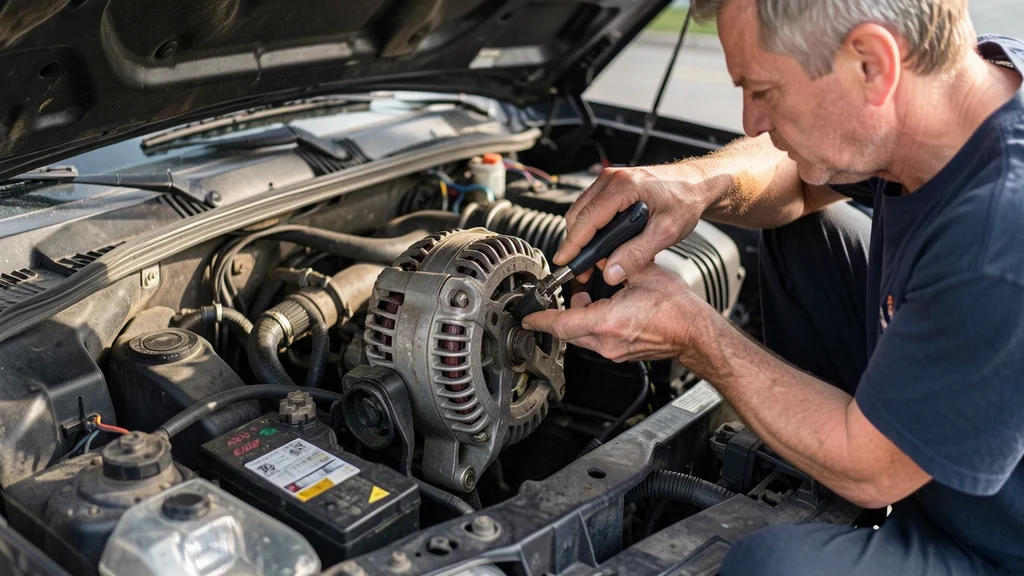
If your car’s electrical system is acting up, how can you tell if you have a faulty alternator before you’re left stranded? The alternator charges the battery and powers your vehicle’s electronics, so spotting early warning signs can save you from a breakdown. From dim headlights to strange noises, these symptoms often point to alternator trouble rather than just a dead battery.
You can tell if you have a faulty alternator by watching for dim or flickering headlights, a dead battery, warning lights on the dash, strange noises, or electrical failures like power windows moving slowly.
What Does an Alternator Do
The alternator is a critical component that converts mechanical energy from the engine into electrical energy to power your car’s systems and recharge the battery while the engine runs.
Unlike the battery, which only provides a short burst of power to start the engine, the alternator continuously supplies electricity to keep everything running, from the headlights to the radio. If it fails, your battery will drain quickly, leaving you with a car that won’t start or stay running.
Most alternators last between 80,000 and 150,000 miles, but extreme conditions like heat, moisture, or poor electrical connections can shorten their lifespan. According to the Car Care Council, electrical issues are among the top reasons for vehicle breakdowns, with alternator failure being a common culprit.
- Primary Function: Charges the battery and powers electrical systems while the engine runs
- Location: Typically mounted near the front of the engine, driven by a serpentine belt
- Key Components: Stator, rotor, diode rectifier bridge, voltage regulator
- Output: Usually produces 13-14.5 volts to maintain battery charge
- Failure Impact: Can cause complete electrical system failure within minutes
Important: Never disconnect the battery while the engine is running to “test” the alternator. This can damage the alternator and other electrical components.
Top 7 Warning Signs of a Faulty Alternator
A failing alternator rarely gives up without warning. Here are the most common symptoms to watch for, ranked by severity and how quickly you should act.
- Dim or Flickering Headlights
When the alternator can’t provide consistent power, your headlights may dim or flicker, especially at idle. This is often the first noticeable sign. Interior lights may also appear dimmer than usual.
The issue typically worsens as electrical demand increases, such as when you turn on the air conditioning or stereo.
- Most noticeable at night or in low-light conditions
- May fluctuate with engine RPM changes
- Often accompanied by other electrical issues
- Can indicate a failing diode in the alternator
- May be more pronounced with high-beam usage
Tip: If your headlights dim when you rev the engine, it’s a strong sign of alternator trouble. The temporary increase in RPM gives the alternator a brief boost in output.
- Battery Warning Light on Dashboard
The most obvious sign is the battery or charging system warning light on your dashboard. This light, often shaped like a battery or with the words “ALT” or “CHARGE,” illuminates when the voltage drops below a certain threshold. Modern vehicles may also display a message like “Check Charging System.”
| Warning Light | Meaning | Severity |
|---|---|---|
| Battery Symbol | Low voltage detected | High |
| ALT Text | Alternator malfunction | High |
| Check Charging System | Voltage irregularity | Medium |
The warning light may come on intermittently at first, especially when electrical load is high. Don’t ignore it—this is your car’s way of telling you the charging system needs attention.
- Dead Battery
A dead battery is often mistaken for the root problem, but if your battery keeps dying despite being new or recently charged, the alternator is likely the culprit. The alternator is supposed to recharge the battery while you drive, so if it’s not working, the battery will eventually drain completely.
- Car won’t start without a jump
- Battery dies overnight or after short trips
- Frequent need for jump-starts
- Clicking sound when turning the key
- Slow cranking when starting the engine
- Battery age is less than 3-5 years
Warning: Continuing to drive with a dead battery and faulty alternator can damage your car’s electrical system and leave you stranded unexpectedly.
- Strange Noises
A failing alternator often produces unusual noises. The most common is a whining or grinding sound, which usually indicates that the internal bearings are wearing out. You might also hear a squealing noise if the serpentine belt that drives the alternator is slipping or worn.
- Whining/Grinding: Worn bearings inside the alternator
- Squealing: Loose or worn serpentine belt
- Growling: Often indicates internal alternator damage
- Clicking: May signal a failing voltage regulator
- Rattling: Could mean internal components are coming loose
These noises often change with engine RPM and may be louder when the engine is cold. If you hear any unusual sounds from the engine bay, it’s worth having your alternator checked.
- Electrical Failures
As the alternator struggles to provide power, you may notice various electrical components failing or working intermittently. Power windows may move sluggishly, the radio might cut in and out, or your power seats could stop working properly.
| Component | Symptom | Cause |
|---|---|---|
| Power Windows | Slow operation | Low voltage |
| Dashboard Lights | Flickering | Voltage fluctuation |
| Radio/Stereo | Resets or cuts out | Insufficient power |
| Power Seats | Moves erratically | Voltage instability |
| Air Conditioning | Weaker airflow | Compressor underpowered |
These issues often appear when using multiple electrical systems simultaneously, as the demand exceeds the alternator’s reduced capacity.
- Smell of Burning Rubber or Wires
A failing alternator can overheat, producing a distinct burning smell. This could be from the alternator itself overheating, the serpentine belt slipping and burning, or electrical wiring getting too hot. The smell is often most noticeable near the engine bay.
- Burning rubber: Serpentine belt slipping or overheating
- Burning wires: Electrical components overheating
- Hot metal smell: Internal alternator components overheating
- Often accompanied by smoke in severe cases
- May be more noticeable when the engine is hot
Warning: If you smell burning, pull over immediately and turn off the engine to prevent electrical fires or further damage.
- Engine Stalling or Difficulty Starting
In severe cases, a faulty alternator can cause your engine to stall or make it difficult to start. Modern fuel-injected engines rely on consistent electrical power for the fuel pump, ignition system, and engine control unit. Without proper voltage, these systems can’t function correctly.
- Engine stalls while driving, especially at low speeds
- Hard starting, even with a “good” battery
- Rough idle or misfires
- Check Engine light may come on
- Car may crank but not start
- Difficulty restarting after stalling
If your car stalls and won’t restart immediately, it’s often because the battery has been completely drained by the failing alternator. In this case, a jump-start might get you going temporarily, but the alternator needs to be replaced.
How to Test Your Alternator at Home
You don’t need to be a professional mechanic to perform some basic alternator tests. With a few simple tools and safety precautions, you can check if your alternator is functioning properly.
Tools You’ll Need
- Digital multimeter (available for under $20 at auto parts stores)
- Jumper cables (optional, for testing purposes)
- Basic hand tools (wrench, socket set)
- Safety glasses and gloves
- Owner’s manual for your specific vehicle
Safety Precautions
- Always wear safety glasses when working near the battery
- Remove all jewelry to prevent electrical shorts
- Ensure the vehicle is in Park (automatic) or Neutral (manual) with the parking brake engaged
- Avoid leaning over the battery while testing
- Never touch both battery terminals with metal tools
- Work in a well-ventilated area
Step-by-Step Testing Process
- Visual Inspection
Start with a visual check of the alternator and its components. Look for any obvious signs of damage, corrosion, or wear.
- Check the serpentine belt for cracks, fraying, or glaze
- Inspect the alternator housing for damage or oil leaks
- Look at the battery terminals for corrosion or loose connections
- Check all wiring connections to the alternator
- Ensure the alternator is mounted securely
- Battery Voltage Test (Engine Off)
This initial test helps establish a baseline for your battery’s condition.
- Turn off the engine and all electrical accessories
- Set your multimeter to DC voltage (20V range)
- Connect the red probe to the positive (+) battery terminal
- Connect the black probe to the negative (-) battery terminal
- Read the voltage: A fully charged battery should read between 12.6 and 12.8 volts
Tip: If your battery reads below 12.4 volts, it may need charging or replacement before you can accurately test the alternator.
- Charging System Test (Engine Running)
This is the most important test for your alternator.
- Start the engine and let it idle
- Keep all electrical accessories off (lights, A/C, radio)
- Connect the multimeter to the battery terminals as before
- Read the voltage: Should be between 13.8 and 14.5 volts
- Turn on electrical accessories (headlights, A/C, rear defroster)
- Voltage should remain stable or drop only slightly (no more than 0.5V)
- Revoke Test (Advanced)
For a more thorough test, you can perform a rev test to see how the alternator responds to increased engine RPM.
- With the engine idling and multimeter connected, note the voltage
- Have an assistant rev the engine to about 2000 RPM
- Voltage should increase to about 14.5-15 volts
- If voltage doesn’t increase or decreases, the alternator may be failing
Important: Don’t rev the engine too high during this test. 2000 RPM is sufficient to check alternator response.
- Load Test
This test checks how the charging system responds to electrical load.
- Start with the engine running and multimeter connected
- Turn on all major electrical accessories (headlights, A/C, rear defroster, radio)
- Voltage should remain above 13 volts
- If voltage drops below 12.5 volts, the alternator may not be able to handle the load
Interpreting Your Results
| Voltage Reading | Engine Condition | Likely Issue |
|---|---|---|
| 12.6-12.8V | Off | Normal battery |
| 12.0-12.4V | Off | Partially discharged battery |
| Below 12.0V | Off | Discharged battery |
| 13.8-14.5V | Running | Normal alternator operation |
| 12.5-13.7V | Running | Weak alternator |
| Below 12.5V | Running | Failing alternator or dead battery |
If your readings don’t match the expected ranges, it’s time to have your alternator and charging system checked by a professional.
Alternator vs Battery Problems How to Tell the Difference
Many symptoms of a bad alternator can also indicate a battery problem. Learning to distinguish between the two can save you time and money on unnecessary parts replacements.
Key Differences
| Symptom | Likely Alternator | Likely Battery |
|---|---|---|
| Dim headlights | Yes – gets worse with electrical load | Maybe – but usually consistent |
| Warning light on dash | Yes – battery/ALT/CHARGE light | Rarely |
| Car won’t start | Maybe – if battery is dead from no charging | Yes – especially in cold weather |
| Clicking sound when starting | No | Yes – classic battery symptom |
| Electrical failures while driving | Yes – gets worse with electrical load | No |
| Car dies while driving | Yes – if battery drains completely | No |
| Slow cranking | Maybe – if battery is drained | Yes |
Simple Tests to Differentiate
- Jump-Start Test
If your car won’t start, try jump-starting it. If it starts and stays running after removing the jumper cables, the problem was likely a dead battery. If it dies immediately after removing the cables, the alternator isn’t charging the battery.
- Headlight Test
Start the engine and turn on the headlights. If they’re dim at idle but brighten when you rev the engine, this strongly suggests an alternator problem. With a good alternator, the headlights should remain bright regardless of engine speed.
- Battery Age Check
Consider the age of your battery. Car batteries typically last 3-5 years. If your battery is older than this and you’re having starting problems, it’s more likely the battery.
However, if your battery is relatively new and keeps dying, the alternator is probably at fault.
- Voltage Test
Perform the voltage tests described earlier. If the battery voltage is low with the engine off but doesn’t increase when the engine is running, the alternator is likely the problem. If the voltage is low both with the engine off and on, the battery may be the issue.
Tip: The most reliable test is to have both the battery and alternator professionally load-tested. Many auto parts stores offer this service for free.
Common Causes of Alternator Failure
Understanding what causes alternators to fail can help you prevent problems and extend the life of your charging system. Several factors can contribute to alternator failure, some of which are preventable with proper maintenance.
- Age and Wear
Alternators don’t last forever. Most will eventually wear out due to the constant stress of generating electricity. The average lifespan is about 7-10 years or 80,000-150,000 miles, but this can vary based on driving conditions and quality of the component.
- Bearings wear out from constant rotation
- Brushes inside the alternator wear down
- Diodes in the rectifier bridge can fail
- Stator or rotor windings can short out
- Voltage regulator can fail with age
- Overloading the Electrical System
Modern vehicles have more electrical demands than ever before. Adding aftermarket accessories like powerful stereos, amplifiers, or lighting can exceed the alternator’s capacity, causing it to overheat and fail prematurely.
- High-wattage stereo systems
- Aftermarket lighting (LED light bars, underglow)
- Multiple electrical accessories running simultaneously
- Inverter use for laptops or other devices
- Electric cooling fans or other high-draw components
Important: If you’re adding high-draw accessories, consider upgrading your alternator to handle the additional load. Standard alternators are often barely adequate for modern vehicles’ electrical demands.
- Fluid Contamination
Alternators are sealed units, but they’re not completely immune to fluid contamination. Coolant, power steering fluid, or oil leaks can seep into the alternator, damaging the internal components and causing electrical shorts.
- Coolant leaks from hoses or the radiator
- Power steering fluid leaks
- Engine oil leaks
- Automatic transmission fluid leaks
- Improper cleaning with high-pressure water
If you notice fluid leaks near your alternator, address them promptly to prevent damage to the charging system.
- Extreme Temperatures
Both extreme heat and cold can shorten an alternator’s lifespan. Heat causes the internal components to expand and can lead to premature wear, while cold can make the materials more brittle and prone to failure.
- Underhood temperatures can exceed 200°F in hot climates
- Alternators work harder in extreme heat to maintain output
- Cold weather can stress electrical connections
- Temperature fluctuations can cause condensation inside the alternator
- Vehicles in hot climates often see shorter alternator lifespans
According to a study by the Automotive Maintenance and Repair Association, vehicles in extremely hot climates experience alternator failures at a rate 30% higher than those in moderate climates.
- Poor Electrical Connections
Corrosion or loose connections at the battery terminals, alternator outputs, or ground connections can cause voltage drops and force the alternator to work harder, leading to premature failure.
- Corroded battery terminals
- Loose alternator output connections
- Poor ground connections
- Damaged or corroded wiring
- Improper battery terminal installation
Tip: Regularly clean your battery terminals and check all electrical connections. A simple cleaning with baking soda and water can prevent many charging system problems.
- Serpentine Belt Issues
The serpentine belt drives the alternator pulley. If this belt is worn, glaze, or improperly tensioned, it can cause the alternator to underperform or fail completely.
- Worn or cracked belt
- Glazed belt surface
- Improper belt tension (too loose or too tight)
- Belt slippage, especially in wet conditions
- Misaligned pulleys
A slipping belt can cause the alternator to work intermittently, leading to inconsistent charging and potential damage to the alternator’s internal components.
- Internal Component Failure
Sometimes, internal components of the alternator simply fail due to manufacturing defects or normal wear and tear. This can include the voltage regulator, rectifier bridge, or internal windings.
- Voltage regulator failure (most common internal failure)
- Diode failure in the rectifier bridge
- Stator or rotor winding shorts
- Bearing failure
- Brush wear
These types of failures often require complete alternator replacement, as the internal components are typically not serviceable.
What to Do If Your Alternator Is Failing
If you’ve confirmed that your alternator is failing, it’s important to take action quickly to avoid being stranded. Here’s what you should do, in order of priority.
- Assess the Severity
First, determine how severe the problem is. If you’re experiencing multiple symptoms like dim lights, warning lights on the dash, and electrical failures, the alternator may be on its last legs. If you only have one minor symptom, you might have a little more time.
- Single symptom (e.g., occasional dim lights): Monitor closely
- Multiple symptoms: Take immediate action
- Warning light on dash: Address as soon as possible
- Car stalling or not starting: This is an emergency
- Minimize Electrical Load
If you need to drive the vehicle before getting it repaired, minimize the electrical load to reduce stress on the failing alternator. This can buy you some time to get to a repair shop.
- Turn off unnecessary lights
- Avoid using the air conditioning
- Don’t use the radio or other entertainment systems
- Roll down windows instead of using power windows
- Avoid using power seats or other accessories
Warning: Driving with a failing alternator is risky. If the alternator fails completely, your battery will drain quickly, and you could be stranded. Only drive as far as absolutely necessary.
- Get a Professional Diagnosis
While the tests described earlier can give you a good indication of an alternator problem, it’s best to have a professional mechanic confirm the diagnosis. They have specialized tools to properly test the charging system.
- Many auto parts stores offer free charging system tests
- Professional diagnostics can pinpoint the exact issue
- Mechanics can check for other potential problems
- They can advise on the best repair options
According to a survey by AAA, misdiagnosed alternator problems lead to unnecessary part replacements in about 20% of cases. A professional diagnosis can save you money in the long run.
- Decide on Repair Options
Once you’ve confirmed the alternator is the problem, you have a few options for repair.
- Replace the Alternator: The most common solution. Alternators are typically not repairable and need to be replaced as a unit.
- Rebuild the Alternator: Some shops specialize in rebuilding alternators, which can be more cost-effective than buying new.
- Upgrade the Alternator: If you have high electrical demands, consider upgrading to a higher-output alternator.
- Check for Warranty Coverage: If your alternator is still under warranty, the replacement may be covered.
- Choose Quality Parts
When replacing your alternator, it’s important to choose a quality part. There are several options available, each with different price points and quality levels.
Option Pros Cons Price Range OEM (Original Equipment Manufacturer) Exact fit, reliable, often best quality Most expensive option $200-$500 Aftermarket New Good quality, often with warranty, widely available Quality varies by brand $100-$300 Remanufactured Cost-effective, often with warranty, eco-friendly Shorter lifespan than new, quality varies $80-$200 Used Least expensive Unknown condition, no warranty, risky $20-$100 For most drivers, a quality aftermarket or remanufactured alternator offers the best balance of price and reliability. OEM parts are ideal if you plan to keep your vehicle for many years.
- Consider Professional Installation
While some experienced DIYers may choose to replace the alternator themselves, professional installation is often the best choice for most drivers. Alternator replacement can be tricky, depending on your vehicle’s design.
- Some vehicles have alternators in hard-to-reach locations
- Serpentine belt routing can be complex
- Electrical connections need to be properly made
- Special tools may be required for some vehicles
- Professional installation often comes with a warranty
- Mechanics can check for other potential issues
The average labor cost for alternator replacement is between $100 and $200, depending on your vehicle and local labor rates. In many cases, the total cost of parts and labor is still less than having your car towed if the alternator fails completely.
Preventative Maintenance Tips
While alternators will eventually wear out, proper maintenance can extend their lifespan and help you avoid unexpected failures. Here are some preventative measures to keep your charging system in good shape.
- Regular Battery Maintenance
A healthy battery reduces stress on your alternator. Regular battery maintenance includes cleaning the terminals, checking the water level (for non-sealed batteries), and ensuring the battery is securely mounted.
- Clean battery terminals every 6 months
- Check battery hold-down for security
- Test battery voltage regularly
- Check battery age (replace after 3-5 years)
- Ensure battery terminals are tight
- Check and Replace the Serpentine Belt
The serpentine belt drives the alternator and other components. A worn or damaged belt can cause the alternator to underperform.
- Inspect the belt every 12,000-15,000 miles
- Replace the belt every 60,000-100,000 miles or at the first sign of wear
- Check for cracks, fraying, or glaze on the belt surface
- Ensure proper belt tension
- Verify proper belt routing
Important: Always replace the serpentine belt if you see any signs of damage. A broken belt can leave you stranded and may cause damage to other components.
- Keep Electrical Connections Clean
Corrosion or dirt on electrical connections can cause voltage drops and force your alternator to work harder.
- Clean battery terminals regularly
- Check alternator connections for corrosion
- Ensure all ground connections are clean and tight
- Inspect all wiring for damage or wear
- Use dielectric grease on connections to prevent corrosion
- Avoid Electrical Overloads
Minimize the electrical load on your alternator to extend its life.
- Don’t leave lights or accessories on when the engine is off
- Be mindful of aftermarket electrical accessories
- Avoid running high-draw accessories for extended periods
- Turn off unnecessary electrical loads when starting the engine
- Consider upgrading your alternator if you add high-draw accessories
- Regular System Checks
Perform regular checks of your charging system to catch problems early.
- Test battery voltage monthly
- Check charging system voltage every few months
- Listen for unusual noises from the engine bay
- Pay attention to warning lights on the dashboard
- Have the charging system professionally tested annually
- Address Fluid Leaks Promptly
Fluid leaks can damage your alternator and other electrical components.
- Check for coolant leaks regularly
- Inspect for power steering fluid leaks
- Look for engine oil leaks
- Address any fluid leaks immediately
- Keep the engine bay clean to spot leaks early
Tip: Consider having your charging system tested as part of your regular vehicle maintenance. Many repair shops include this as part of a comprehensive inspection.
Frequently Asked Questions
Can I drive with a bad alternator?
You can drive with a bad alternator for a short distance, but it’s not recommended. Once the alternator fails completely, your battery will drain quickly, and you’ll be stranded. If you must drive, minimize electrical load and head straight to a repair shop.
How long will a car run with a bad alternator?
The answer depends on your battery’s condition and your vehicle’s electrical demands. With a fully charged battery and minimal electrical load, you might get 30 minutes to an hour of driving. With heavy electrical use, it could be as little as 5-10 minutes.
Can a bad alternator ruin a new battery?
Yes, a bad alternator can ruin a new battery. If the alternator isn’t charging properly, the battery will repeatedly drain and be recharged, which can shorten its lifespan. Additionally, voltage spikes from a failing alternator can damage the battery.
What does a bad alternator sound like?
A bad alternator often makes a whining or grinding noise, which indicates worn bearings. You might also hear a squealing noise if the serpentine belt is slipping. These noises often change with engine RPM.
How much does it cost to replace an alternator?
The cost to replace an alternator varies by vehicle and part quality. Parts typically cost between $100 and $300, while labor ranges from $100 to $200. OEM alternators are more expensive, while remanufactured units are more affordable.
Total cost usually falls between $200 and $500.
Final Thoughts
Recognizing the signs of a faulty alternator can save you from unexpected breakdowns and costly repairs. From dim headlights to strange noises, your car often gives clear warnings before the alternator fails completely. Regular maintenance and prompt attention to symptoms can extend your alternator’s life and keep your vehicle running reliably.
If you suspect alternator trouble, don’t wait—get it checked out by a professional to avoid being left stranded.
Leave a Reply