
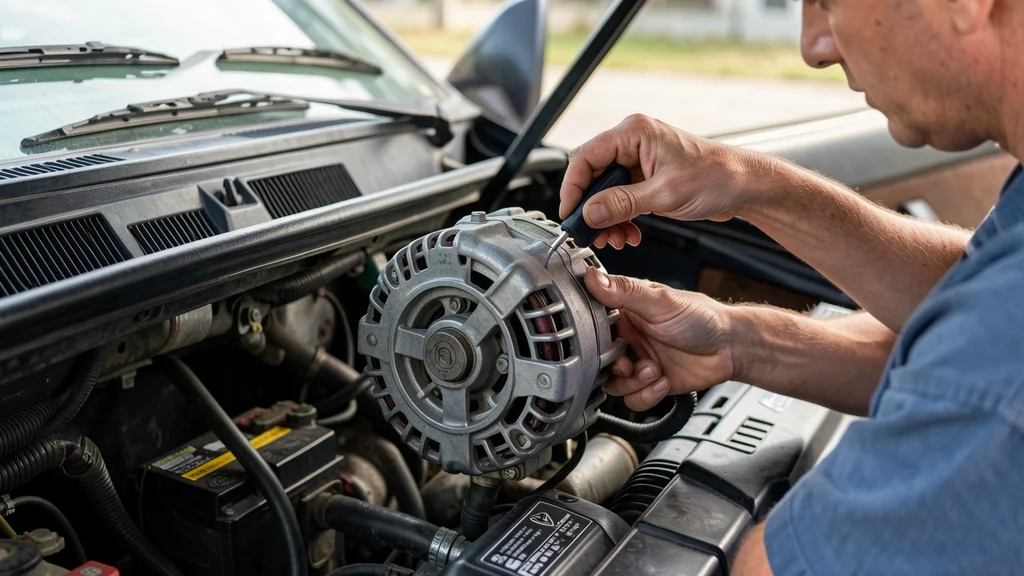
If your car’s electrical system is acting up, how can you tell if your alternator is bad and not the battery? The alternator keeps your battery charged and powers accessories while the engine runs, so spotting the early signs can save you from a breakdown. This guide covers the key symptoms, simple tests, and what to do next.
You can tell if your alternator is bad by watching for dim lights, a dead battery, strange noises, or a battery warning light. A quick voltage test with a multimeter or a visit to an auto parts store can confirm the issue.
Common Warning Signs of a Failing Alternator
The alternator is the heart of your car’s electrical system. When it starts to fail, you’ll notice problems that worsen over time. Some symptoms mimic a bad battery, so it’s important to know the difference.
Here are the most common red flags:
- Dim or flickering headlights – The alternator struggles to supply power, causing lights to dim, especially at idle.
- Dead battery – If your battery dies repeatedly even after jumps or replacements, the alternator may not be charging it.
- Battery warning light – This light (often shaped like a battery) appears on your dashboard when the charging system fails.
- Slow or weak accessories – Power windows, seats, or the radio may move sluggishly or stop working.
- Strange noises – A whining or grinding sound from the engine bay often means a failing alternator bearing.
- Stalling or hard starting – Without enough power, your engine may crank slowly or stall while driving.
- Burning rubber smell – The alternator belt can overheat and produce a burning odor if it’s slipping or worn.
Warning: Ignoring alternator issues can leave you stranded. If your car stalls while driving, pull over safely and call for help.
How to Test Your Alternator at Home
You don’t need a mechanic to check your alternator. A few simple tests can help you diagnose the problem before it leaves you without power.
Here’s how to test it yourself:
- Check the battery light – If the battery warning light is on, the alternator may be failing. Some cars also have an ALT or GEN light.
- Inspect the belt – Pop the hood and look at the serpentine belt. If it’s cracked, frayed, or loose, it may not be turning the alternator properly.
- Use a multimeter – Set it to DC voltage and connect the leads to the battery terminals. With the engine off, a healthy battery reads 12.6V. Start the engine—if the voltage drops below 13.5V or stays the same, the alternator is likely bad.
- Test with accessories on – Turn on the headlights, radio, and AC. If the voltage drops significantly (below 13V), the alternator can’t keep up.
- Listen for noises – Rev the engine and listen for a whining or grinding sound near the alternator.
| Test Method | Expected Result | Bad Alternator Sign |
|---|---|---|
| Multimeter test (engine off) | 12.6V | Below 12V |
| Multimeter test (engine on) | 13.5V–14.8V | Below 13V or no change |
| Battery light | Off | On or flickering |
| Accessories test | Voltage stays above 13V | Voltage drops below 13V |
According to AAA, alternator failure is one of the top 5 reasons for roadside assistance calls. A simple multimeter test can save you time and money by confirming the issue before visiting a mechanic.
Alternator vs Battery How to Tell the Difference
Many drivers confuse alternator problems with battery issues because both affect the electrical system. However, there are key differences in how they fail.
The battery provides the initial power to start the car, while the alternator keeps it charged and powers the electrical system while the engine runs. Here’s how to tell which one is the culprit:
| Symptom | Likely Bad Battery | Likely Bad Alternator |
|---|---|---|
| Car won’t start | Clicking noise, no crank | Slow crank, stalls after jump |
| Lights dim | Dim when starting, brighten after | Dim at idle, brighten when revving |
| Warning light | None or check engine | Battery/ALT light on |
| Accessories | Work fine until battery dies | Weak or stop working while driving |
| Jump start result | Starts, runs fine after | Starts but dies again quickly |
A simple trick is to jump-start your car. If it starts but dies again once you remove the jumper cables, the alternator is likely the problem. If it starts and stays running, the battery was probably the issue.
Step by Step Alternator Inspection
If you suspect your alternator is failing, a visual inspection can reveal obvious issues. Here’s how to do it safely and effectively.
- Park safely – Turn off the engine, engage the parking brake, and open the hood. Never work on a running engine unless specified.
- Locate the alternator – It’s usually near the top of the engine, connected to the battery with thick cables and driven by a belt.
- Check the connections – Look for corroded, loose, or damaged cables. Clean corrosion with a wire brush if needed.
- Inspect the belt – The serpentine belt should be tight and free of cracks. Press down on it—if it moves more than ½ inch, it may be loose.
- Look for damage – Check for fluid leaks, burnt smells, or physical damage to the alternator housing.
- Test the voltage – Use a multimeter to check the alternator’s output as described earlier.
Tip: If you’re unsure about the belt tension, use a belt tension gauge or consult a professional. Over-tightening can damage the alternator bearing.
What Causes an Alternator to Fail
Alternators don’t fail without a reason. Understanding the common causes can help you prevent future issues and extend the life of your charging system.
Here are the most frequent culprits:
- Worn-out brushes – The carbon brushes inside the alternator wear down over time, reducing its ability to generate power. Most alternators last 100,000–150,000 miles, but brushes may need replacement sooner.
- Faulty diode – The diode rectifies AC current to DC. If it fails, the alternator may overcharge the battery or not charge it at all.
- Bad voltage regulator – This component controls the alternator’s output. A faulty regulator can cause overcharging (above 15V) or undercharging (below 13V).
- Loose or damaged belt – A slipping or broken serpentine belt prevents the alternator from spinning, leading to no charge.
- Corrosion or poor connections – Corroded battery terminals or alternator wires disrupt the flow of electricity.
- Overheating – Alternators generate heat, and if the engine bay gets too hot, it can damage internal components. Poor ventilation or a failing cooling fan can contribute.
- Water damage – Driving through deep water can allow moisture into the alternator, causing short circuits or corrosion.
According to Consumer Reports, alternator failures are often linked to extreme temperatures. In hot climates, the lifespan of an alternator can be reduced by up to 30% due to increased stress on its components.
How to Extend Your Alternator’s Lifespan
While alternators are built to last, a few proactive steps can help you avoid premature failure and costly repairs. Regular maintenance is key to keeping your charging system in top shape.
Here’s how to maximize your alternator’s life:
- Keep the battery healthy – A weak or dead battery forces the alternator to work harder, shortening its lifespan. Test your battery every 6 months.
- Check the belt regularly – Inspect the serpentine belt for cracks, fraying, or glaze every 10,000 miles. Replace it every 60,000–100,000 miles or as recommended by your manufacturer.
- Clean the connections – Corrosion on battery terminals or alternator wires increases resistance and reduces efficiency. Clean them with a wire brush and apply dielectric grease.
- Avoid overloading the system – Don’t run too many accessories (like high-powered stereos or aftermarket lights) at once. This can strain the alternator.
- Drive regularly – Short trips don’t give the alternator enough time to fully recharge the battery. If you mostly drive short distances, consider using a battery maintainer.
- Monitor the warning lights – If the battery or alternator light comes on, address it immediately. Ignoring it can lead to a dead battery or alternator failure.
- Keep the engine bay clean – Dirt and debris can clog the alternator’s vents, causing it to overheat. Clean the engine bay periodically.
Important: If you notice any electrical issues, have your charging system tested by a professional. Many auto parts stores offer free testing.
When to Replace Your Alternator
If your alternator is failing, you’ll eventually need to replace it. But how do you know when it’s time? Some issues can be fixed with repairs, but others require a full replacement.
Here are the signs it’s time for a new alternator:
- The voltage test fails – If your multimeter shows the alternator isn’t charging the battery (voltage stays below 13V with the engine running), it’s time for a replacement.
- Persistent warning light – If the battery or alternator light stays on after checking connections and the battery, the alternator is likely bad.
- Noises don’t go away – If you hear grinding or whining from the alternator, the bearings are likely worn out. This usually requires a full replacement.
- Burning smell – A burning odor coming from the alternator indicates internal damage, such as a short circuit or overheating.
- Frequent battery deaths – If your battery keeps dying even after replacements, the alternator isn’t doing its job.
- Visual damage – Cracks, leaks, or burn marks on the alternator mean it’s no longer safe or functional.
| Issue | Can It Be Repaired? | Replacement Needed? |
|---|---|---|
| Worn brushes | Yes | No |
| Faulty diode | Sometimes | Often |
| Bad voltage regulator | Yes | No |
| Worn bearings | No | Yes |
| Internal short circuit | No | Yes |
Replacing an alternator is a common repair, and most mechanics can do it in 1–2 hours. The cost varies depending on your car’s make and model, but you can expect to pay between $400–$1,000 for parts and labor. If you’re handy, you can replace it yourself with basic tools.
Common Mistakes to Avoid When Diagnosing
Diagnosing alternator issues can be tricky, and even experienced drivers make mistakes. Avoiding these common pitfalls can save you time, money, and frustration.
- Assuming it’s the battery – Many people replace the battery only to find the problem persists. Always test both the battery and alternator.
- Ignoring the belt – A loose or damaged serpentine belt can mimic alternator failure. Check the belt tension and condition first.
- Not checking connections – Corroded or loose connections can cause charging issues. Clean and tighten all battery and alternator terminals.
- Using a cheap multimeter – Inaccurate voltage readings can lead to misdiagnosis. Use a high-quality multimeter for reliable results.
- Testing with the engine off – A battery can hold a charge temporarily, but the alternator’s performance can only be tested with the engine running.
- Overlooking warning lights – The battery or alternator light is your car’s way of telling you something’s wrong. Don’t ignore it.
- Jump-starting incorrectly – If you jump-start your car and the alternator is bad, the battery won’t recharge. Always test the charging system after a jump.
Warning: Never disconnect the battery while the engine is running to test the alternator. This can cause a voltage spike that damages sensitive electronics in your car.
Frequently Asked Questions
Can I drive with a bad alternator?
No, you should not drive with a bad alternator. Once the battery drains, your car will stall, leaving you stranded. If the alternator light comes on, pull over safely and have your car towed to a repair shop.
How long does an alternator last?
Most alternators last between 100,000–150,000 miles or 7–10 years. However, extreme temperatures, poor maintenance, or electrical overload can shorten its lifespan.
What happens if I don’t replace a bad alternator?
If you ignore a failing alternator, your battery will eventually drain completely. This can leave you stranded, and in some cases, a dead battery can cause other electrical components to fail.
Can a bad alternator damage my battery?
Yes, a bad alternator can overcharge or undercharge your battery. Overcharging can cause the battery to overheat and fail prematurely, while undercharging can lead to sulfation, which reduces the battery’s capacity.
How much does it cost to replace an alternator?
The cost to replace an alternator varies depending on your car’s make and model. On average, you can expect to pay between $400–$1,000 for parts and labor. Some luxury or European cars may cost more due to specialized parts.
Final Thoughts
Knowing how can you tell if your alternator is bad can save you from unexpected breakdowns and costly repairs. Watch for warning signs like dim lights, a dead battery, or strange noises, and use a multimeter to confirm the issue. Regular maintenance, such as checking the belt and connections, can extend your alternator’s life.
If you’re unsure, a professional inspection can provide peace of mind. Addressing alternator problems early ensures your car stays reliable and ready for the road.
Leave a Reply