
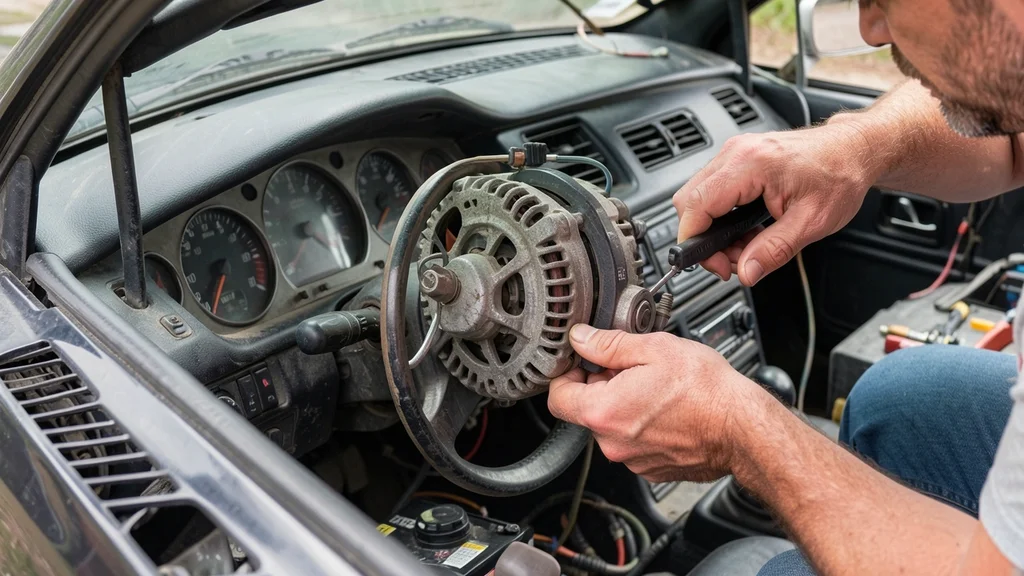
If your car’s electrical components seem sluggish or the battery light flickers, how can you tell if your alternator is going out is a question you need answered fast. The alternator keeps your battery charged and powers everything from headlights to the radio while the engine runs. Ignoring early warning signs can leave you stranded with a dead battery or worse, a stalled engine.
This guide covers the key symptoms, how to test it yourself, and when to call a professional.
You can tell if your alternator is going out by watching for dim lights, a dead battery, strange noises, or the battery warning light. A quick voltage test with a multimeter or a visit to an auto parts store for a free check confirms it.
Early Warning Signs of a Failing Alternator
The alternator is the heart of your car’s electrical system, and when it starts to fail, it sends clear signals. The first thing most drivers notice is dim or flickering headlights, especially at idle. This happens because the alternator can’t maintain consistent voltage to power the lights.
Another common sign is a weak or dead battery, even after a jump start. If your battery dies repeatedly, the alternator may not be recharging it properly.
You might also hear unusual noises like a whining or grinding sound from under the hood. This often means the alternator’s bearings are wearing out. Electrical issues can crop up too, such as power windows moving slower than usual or the radio cutting in and out.
These symptoms suggest the alternator isn’t generating enough power to keep all systems running smoothly.
- Dim or flickering headlights, especially at idle
- Battery warning light on the dashboard
- Frequent need for jump starts
- Whining or grinding noises from the engine bay
- Slow or malfunctioning electrical accessories
- Engine stalling or difficulty starting
- Burning rubber smell from the alternator belt
Warning: If your car stalls while driving, pull over immediately. A failing alternator can cause sudden loss of power steering and brakes, making the vehicle unsafe to drive.
How the Alternator Works and Why It Fails
The alternator converts mechanical energy from the engine into electrical energy to power your car’s systems and recharge the battery. It consists of a rotor, stator, voltage regulator, and diode rectifier. The engine’s serpentine belt spins the rotor inside the alternator, creating an alternating current (AC).
The diode rectifier then converts this AC power into direct current (DC) that the car’s electrical system can use.
Alternators typically fail due to wear and tear over time. The most common causes include a worn-out serpentine belt, faulty voltage regulator, or damaged bearings. Corrosion on the terminals or internal components can also disrupt electrical flow.
According to AAA, alternators usually last between 50,000 to 100,000 miles, but extreme temperatures and electrical demands can shorten their lifespan.
| Common Causes of Alternator Failure | Symptoms |
|---|---|
| Worn serpentine belt | Squealing noise, dim lights |
| Faulty voltage regulator | Overcharging or undercharging battery |
| Bad bearings | Grinding or whining noise |
| Corroded terminals | Intermittent electrical issues |
| Diode failure | Battery drains overnight |
Regular maintenance, such as checking the serpentine belt for cracks or wear, can help prevent alternator failure. Most auto repair shops recommend inspecting the belt every 60,000 miles or if you notice any squealing noises.
Step by Step How to Test Your Alternator
Testing your alternator at home is straightforward and can save you a trip to the mechanic. The easiest method is using a multimeter, a tool that measures electrical voltage, resistance, and current. You can find a basic multimeter at any auto parts store or online for under $20.
If you don’t have one, many auto parts stores like AutoZone or O’Reilly Auto Parts offer free alternator testing.
What You’ll Need
- A digital multimeter
- Safety gloves and glasses
- Your car’s owner manual (for reference)
Step 1: Check the Battery Voltage with the Engine Off
Start by turning off your engine and all electrical accessories. Open the hood and locate the battery. Connect the multimeter’s red probe to the positive (+) terminal and the black probe to the negative (-) terminal.
A healthy battery should read between 12.2 and 12.6 volts. If the voltage is below 12 volts, your battery may be weak or dead, which can mask alternator issues.
Step 2: Start the Engine and Check Voltage
Have someone start the engine while you monitor the multimeter. With the engine running, the voltage should jump to between 13.8 and 14.4 volts. This indicates the alternator is charging the battery properly.
If the voltage stays below 13.5 volts, the alternator isn’t generating enough power. If the voltage exceeds 14.5 volts, the alternator may be overcharging, which can damage the battery.
Step 3: Test Voltage with Electrical Load
Turn on the headlights, radio, and air conditioning to put a load on the electrical system. The voltage should remain steady between 13.8 and 14.4 volts. If the voltage drops below 13.5 volts, the alternator is struggling to keep up with the demand.
This is a clear sign it needs replacement.
Step 4: Inspect the Alternator Belt
With the engine off, locate the alternator and check the serpentine belt for signs of wear, such as cracks, fraying, or glazing. A loose or damaged belt can prevent the alternator from spinning properly. Press down on the belt between two pulleys; it should have a little give but not sag excessively.
If the belt is damaged or too loose, it needs replacement.
Tip: If you’re unsure about testing the alternator yourself, most auto parts stores offer free testing. They can quickly determine if the alternator, battery, or another component is the issue.
Alternator vs Battery Problems How to Tell the Difference
It’s easy to confuse alternator problems with battery issues because both can cause similar symptoms, like a car that won’t start. However, there are key differences. A dead battery usually means the car won’t start at all, and you may hear a clicking sound when turning the key.
Jump-starting the car will often get it running temporarily if the battery is the issue.
On the other hand, a failing alternator may allow the car to start, but it will quickly lose power once the battery is drained. If your car starts but then dies shortly after, or if the headlights dim while driving, the alternator is likely the culprit. Another way to tell is by checking the voltage as described earlier.
A weak battery won’t hold a charge, while a bad alternator won’t recharge the battery while the engine runs.
| Issue | Battery Problem | Alternator Problem |
|---|---|---|
| Car won’t start | Yes, clicking noise | Yes, but may start with a jump |
| Headlights dim | Usually at startup | While driving or idling |
| Voltage reading | Low when engine is off | Low when engine is running |
| Battery warning light | May not appear | Usually illuminated |
| Car dies while driving | Rare | Common |
If you’re still unsure, a professional diagnostic test is the best way to pinpoint the problem. Mechanics use specialized tools to test the alternator’s output and the battery’s health separately.
Common Mistakes When Diagnosing Alternator Issues
Even experienced DIYers can make mistakes when diagnosing alternator problems. One of the most common errors is assuming the battery is bad when the alternator is actually the issue. Replacing the battery without testing the alternator can lead to repeated breakdowns and unnecessary expenses.
Another mistake is ignoring the serpentine belt. A worn or loose belt can cause the alternator to underperform, but it’s an easy fix if caught early.
Some people also overlook the voltage regulator, which controls the alternator’s output. If the regulator fails, the alternator may overcharge or undercharge the battery, leading to damage. Additionally, corrosion on the battery terminals or alternator connections can disrupt the electrical flow, mimicking alternator failure.
Always clean the terminals before testing to ensure accurate results.
- Replacing the battery without testing the alternator: Always test both components to avoid misdiagnosis.
- Ignoring the serpentine belt: A worn belt can cause alternator issues but is an easy fix.
- Not checking for corrosion: Dirty terminals can give false readings during tests.
- Overlooking the voltage regulator: A faulty regulator can cause overcharging or undercharging.
- Assuming the alternator is bad based on one symptom: Multiple symptoms usually indicate a problem, but testing is essential.
Important: If you replace the alternator, always check the battery health afterward. A weak battery can shorten the life of a new alternator by forcing it to work harder.
What to Do If Your Alternator Is Failing
If you’ve confirmed your alternator is going out, the next step is to decide whether to repair or replace it. In most cases, replacement is the better option because alternators are complex, and repairs can be costly and temporary. A new alternator typically costs between $200 and $600, including parts and labor, depending on your vehicle’s make and model.
Remanufactured alternators are a budget-friendly alternative and often come with warranties.
If you’re comfortable with DIY repairs, replacing the alternator yourself can save on labor costs. The process involves disconnecting the battery, removing the serpentine belt, unbolting the old alternator, and installing the new one. However, it’s crucial to follow your vehicle’s service manual, as the steps can vary.
If you’re unsure, it’s best to leave it to a professional to avoid damaging other components.
Steps to Replace Your Alternator
- Disconnect the battery: Always start by disconnecting the negative (-) terminal to prevent electrical shorts.
- Remove the serpentine belt: Use a wrench to release tension on the belt and slide it off the alternator pulley.
- Unbolt the alternator: Most alternators are held in place by two or three bolts. Remove these to free the alternator.
- Disconnect electrical connections: Carefully unplug the wiring harness and remove the bolts securing the alternator’s electrical connections.
- Install the new alternator: Position the new alternator, reconnect the electrical connections, and bolt it in place.
- Reinstall the serpentine belt: Route the belt correctly according to your vehicle’s diagram and tension it properly.
- Reconnect the battery: Reattach the negative terminal last and test the vehicle to ensure everything works.
Warning: Never work on the electrical system with the engine running. This can cause serious injury or damage to the vehicle. Always disconnect the battery before starting any repairs.
How Long Can You Drive With a Bad Alternator
The answer depends on the severity of the alternator’s failure and the health of your battery. If the alternator is completely dead, your car will run solely on the battery’s stored power. In this case, you may only have 30 minutes to an hour of driving time before the battery is completely drained.
If the alternator is partially failing, you might get slightly more time, but it’s still risky.
Driving with a bad alternator is not recommended for several reasons. First, you risk being stranded if the battery dies. Second, the alternator powers critical systems like power steering and brakes.
If these systems fail while driving, you could lose control of the vehicle. Finally, a failing alternator can cause electrical surges that damage sensitive components like the engine control unit (ECU) or infotainment system.
If you suspect your alternator is failing, the safest course of action is to drive directly to a repair shop or call for a tow. Most tow services offer battery boosts or can transport your vehicle to a mechanic. According to AAA, the average cost of a tow is between $75 and $125, but it’s a small price to pay to avoid further damage or a dangerous situation on the road.
Preventative Maintenance to Extend Alternator Life
While alternators are designed to last for many years, regular maintenance can help extend their lifespan and prevent unexpected failures. One of the simplest things you can do is keep the battery terminals clean and free of corrosion. Corrosion can disrupt the electrical flow between the battery and alternator, causing the alternator to work harder than necessary.
Another key maintenance task is checking the serpentine belt for signs of wear. A loose or damaged belt can prevent the alternator from spinning properly, leading to reduced performance. Most mechanics recommend inspecting the belt every 60,000 miles or if you notice any squealing noises.
Replacing the belt before it fails can prevent damage to the alternator and other components.
- Clean battery terminals every 6 months to prevent corrosion.
- Inspect the serpentine belt for cracks or wear every 60,000 miles.
- Check electrical connections to the alternator for tightness and corrosion.
- Avoid short trips that don’t allow the alternator enough time to fully recharge the battery.
- Minimize electrical load by turning off accessories like the radio or air conditioning when the engine is idling.
- Test the alternator during routine maintenance to catch issues early.
Regularly testing your alternator and battery can also help catch problems before they leave you stranded. Many auto parts stores offer free testing, so there’s no excuse not to check these components periodically.
Frequently Asked Questions
Can a bad alternator kill a new battery?
Yes, a failing alternator can kill a new battery. If the alternator isn’t charging the battery properly, the battery will eventually drain completely. Additionally, a faulty voltage regulator can cause the alternator to overcharge the battery, leading to damage and a shortened lifespan.
Why does my car run fine but the battery light stays on?
The battery light may stay on if the alternator isn’t producing enough voltage to keep the battery charged, even if the car runs fine temporarily. This is often an early sign of alternator failure. Have it tested as soon as possible to avoid a sudden breakdown.
Can I drive my car with the battery light on?
It’s not recommended. The battery light indicates an issue with the charging system, which could be the alternator, battery, or wiring. Driving with this light on risks draining the battery completely or damaging other electrical components.
How much does it cost to replace an alternator?
The cost to replace an alternator varies depending on your vehicle’s make and model. On average, you can expect to pay between $200 and $600 for parts and labor. Remanufactured alternators are a cheaper alternative and often come with warranties.
Labor costs typically range from $100 to $200.
What causes an alternator to fail prematurely?
Alternators can fail prematurely due to extreme temperatures, excessive electrical demand (e.g., aftermarket audio systems), water damage, or poor maintenance. Corrosion on the terminals, a worn serpentine belt, or a faulty voltage regulator can also shorten an alternator’s lifespan.
Final Thoughts
Recognizing the signs of a failing alternator can save you from being stranded with a dead battery or a stalled engine. Watch for dim lights, electrical issues, or the battery warning light, and use a multimeter to confirm the problem. Regular maintenance, like checking the serpentine belt and cleaning battery terminals, can extend your alternator’s life.
If you suspect an issue, address it quickly to avoid costly repairs or dangerous situations on the road.
Leave a Reply