
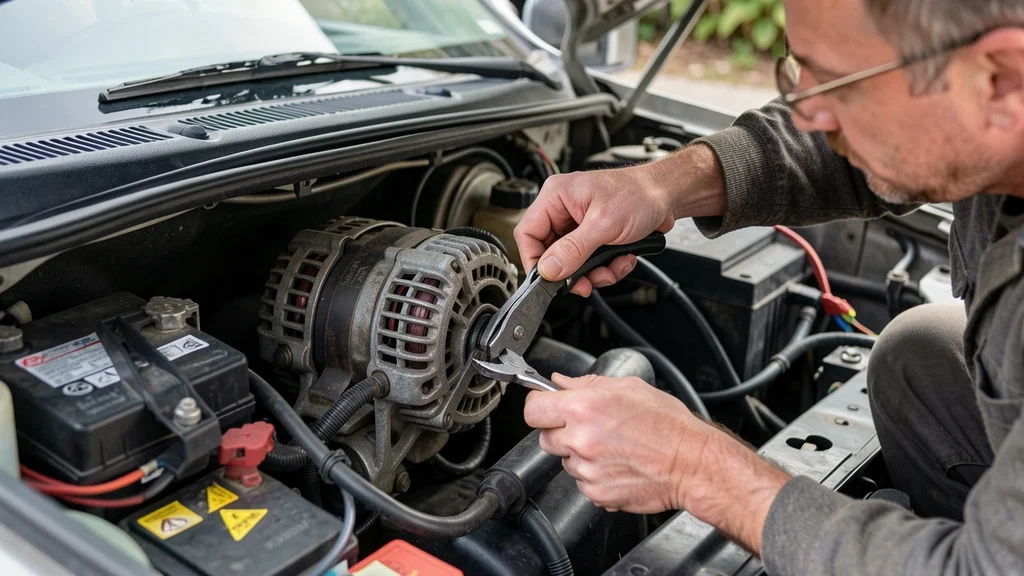
If your car’s electrical system is acting up, how can you tell when your alternator goes bad before you’re stranded with a dead battery. The alternator charges the battery and powers electronics while the engine runs, so recognizing early warning signs can save you from costly repairs. This guide covers the most common symptoms, how to diagnose them, and what to do next.
Your alternator is failing if the battery light glows on the dashboard, headlights dim at idle, or you hear a whining noise from the engine. A dead battery that won’t hold a jump-start charge is another clear sign.
Early Warning Signs of a Failing Alternator
The alternator is the heart of your car’s electrical system. When it starts to fail, it sends subtle signals long before it completely dies. These early warnings often get mistaken for battery issues, but knowing the difference can save you time and money.
One of the first signs is dim or flickering headlights, especially when the engine idles. The alternator may not produce enough power to keep the lights bright. Another common sign is the battery warning light on your dashboard, which looks like a rectangle with a plus and minus sign or the word “BAT.” If this light stays on while driving, it’s a red flag.
You might also notice your car’s electronics behaving strangely. The radio may cut in and out, power windows move slower than usual, or the air conditioning weakens. These symptoms occur because the alternator can’t supply consistent power to all systems.
- Dim or flickering headlights, especially at idle
- Battery warning light illuminated on the dashboard
- Electronics (radio, power windows) malfunctioning
- Weak or inconsistent air conditioning performance
- Engine stalling or difficulty starting
Tip: If you notice these signs, check your battery terminals for corrosion and ensure they’re tight. A loose connection can mimic alternator failure.
How to Diagnose Alternator Problems
Diagnosing alternator issues requires a systematic approach. Start with the easiest checks before moving to more advanced testing. A simple visual inspection can reveal loose connections, damaged wires, or a worn-out serpentine belt.
If the belt is cracked or slipping, it can’t spin the alternator properly, leading to charging issues.
The next step is to test the battery and alternator voltage. With the engine off, use a multimeter to check the battery voltage. A healthy battery should read between 12.5 and 12.8 volts.
Then, start the engine and rev it to around 2,000 RPM. The voltage should increase to between 13.5 and 14.8 volts. If it doesn’t, the alternator may be failing.
Another method is the “headlight test.” Turn on the headlights and rev the engine. If the lights brighten significantly when you rev, the alternator is likely weak. If they stay dim or flicker, it’s a sign of alternator trouble.
However, this test isn’t foolproof, so always follow up with a multimeter check.
- Visual inspection of the alternator and serpentine belt
- Check battery terminals for corrosion or loose connections
- Test battery voltage with the engine off (12.5-12.8 volts)
- Test alternator output with the engine running (13.5-14.8 volts)
- Perform the headlight test for a quick check
| Test Method | Expected Reading | Indication |
|---|---|---|
| Battery voltage (engine off) | 12.5-12.8 volts | Healthy battery |
| Alternator output (engine on) | 13.5-14.8 volts | Healthy alternator |
| Alternator output (engine on) | Below 13 volts | Failing alternator |
A multimeter is an essential tool for diagnosing electrical issues. If you don’t have one, most auto parts stores will test your alternator and battery for free.
Common Causes of Alternator Failure
Alternators don’t last forever, and several factors can shorten their lifespan. Understanding these causes can help you prevent premature failure and extend the life of your alternator. The average alternator lasts between 7 to 10 years or 100,000 to 150,000 miles, but harsh conditions can reduce this significantly.
One of the most common causes is a worn-out serpentine belt. Over time, the belt can crack, stretch, or slip, reducing its ability to spin the alternator efficiently. Another frequent culprit is electrical overload.
Modern vehicles have an increasing number of electrical components, from infotainment systems to advanced safety features. If you’ve added aftermarket accessories like high-powered stereos or extra lighting, the alternator may struggle to keep up.
Corrosion and poor connections are also major contributors. Corrosion on battery terminals or alternator connections can disrupt the flow of electricity, causing the alternator to work harder. Additionally, exposure to extreme heat or moisture can damage the alternator’s internal components, such as the diode trio or voltage regulator.
- Worn or damaged serpentine belt
- Electrical overload from aftermarket accessories
- Corrosion on battery terminals or alternator connections
- Internal component failure (diodes, voltage regulator)
- Exposure to extreme heat or moisture
- Age and wear (typically 7-10 years or 100,000-150,000 miles)
Warning: Driving with a failing alternator can damage your battery and leave you stranded. If you notice any warning signs, get your vehicle checked immediately.
Alternator vs Battery Problems How to Tell the Difference
Many drivers confuse alternator issues with battery problems because both can cause similar symptoms, such as a car that won’t start or dim lights. However, there are key differences that can help you pinpoint the issue. The battery stores electrical energy, while the alternator generates it to power the car and recharge the battery.
If your car won’t start but the headlights and radio work fine, the issue is likely the starter or battery. If the car starts but dies shortly after, or the headlights dim while driving, the alternator is the probable culprit. Another way to tell is by jump-starting the car.
If it starts but dies again once the jumper cables are removed, the alternator is likely failing.
A dead battery will often show signs of corrosion on the terminals or a bloated case. In contrast, a failing alternator may produce a whining or grinding noise from the engine bay, especially if the internal bearings are worn out. Additionally, a bad alternator can cause the battery to drain completely, even if the battery itself is in good condition.
| Symptom | Battery Issue | Alternator Issue |
|---|---|---|
| Car won’t start | Lights and radio work but engine won’t turn over | Car starts but dies shortly after |
| Dim headlights | Dim lights even when engine is off | Dim lights while driving, brighten when revving |
| Noises | No noise (unless battery is bloated) | Whining or grinding noise from engine bay |
| Jump-start result | Stays running after jump | Dies again after removing jumper cables |
If you’re still unsure, a professional mechanic can perform a load test on both the battery and alternator to confirm which component is at fault.
What to Do When Your Alternator Fails
If you’ve confirmed that your alternator is failing, the next step is to address the issue as soon as possible. Driving with a bad alternator can lead to a dead battery, leaving you stranded. It can also cause damage to other electrical components in your vehicle, such as the battery or fuse box.
The first thing to do is to get your car to a safe location. If the alternator has completely failed, your battery will only last a short time. Turn off all unnecessary electrical components, such as the radio, air conditioning, and headlights, to conserve power.
If you’re on the road, pull over safely and call for assistance if needed.
Once you’re in a safe location, you have a few options. If you’re comfortable with car repairs, you can replace the alternator yourself. Alternators are typically located near the top of the engine and are accessible with basic tools.
However, the process can vary depending on your vehicle’s make and model, so consult a repair manual or online guide for specific instructions.
- Turn off all non-essential electrical components
- Pull over safely if you’re driving
- Call for roadside assistance if needed
- Replace the alternator yourself if you have the tools and experience
- Take your car to a professional mechanic for diagnosis and repair
Important: Replacing an alternator typically costs between $400 to $1,000, including parts and labor. The exact cost depends on your vehicle’s make and model.
Preventing Alternator Failure
While alternators are designed to last for many years, there are steps you can take to extend their lifespan and prevent premature failure. Regular maintenance and being mindful of your vehicle’s electrical load can go a long way in keeping your alternator in good working condition.
One of the simplest preventive measures is to keep your battery terminals clean and free of corrosion. Corrosion can disrupt the flow of electricity and force the alternator to work harder. Regularly inspect the serpentine belt for signs of wear, such as cracks or fraying, and replace it if necessary.
A well-maintained belt ensures that the alternator spins efficiently.
Another way to prevent alternator failure is to avoid overloading your vehicle’s electrical system. Be mindful of the accessories you add to your car, such as high-powered stereos, extra lighting, or other aftermarket components. These can put a strain on the alternator, especially if it’s already aging.
If you do add accessories, consider upgrading to a higher-output alternator to handle the additional load.
- Clean battery terminals regularly to prevent corrosion
- Inspect the serpentine belt for wear and replace it as needed
- Avoid overloading the electrical system with aftermarket accessories
- Have your alternator and battery tested during routine maintenance
- Drive your car regularly to keep the battery charged
- Avoid short trips that don’t allow the battery to fully recharge
According to the National Institute for Automotive Service Excellence (ASE), regular electrical system checks can prevent up to 30% of alternator failures. Many auto parts stores and repair shops offer free battery and alternator testing, so take advantage of these services during routine maintenance.
Cost of Alternator Repair or Replacement
The cost of repairing or replacing an alternator can vary widely depending on several factors, including your vehicle’s make and model, the type of alternator needed, and whether you choose to do the work yourself or hire a professional. Understanding these costs can help you budget for the repair and avoid unexpected expenses.
The alternator itself typically costs between $200 to $500 for most vehicles. However, luxury or high-performance cars may require more expensive alternators, sometimes exceeding $800. If you’re replacing the alternator yourself, you’ll also need to factor in the cost of any additional parts, such as a new serpentine belt or battery, if they’re worn out or damaged.
Labor costs can add significantly to the total expense. Most repair shops charge between $100 to $300 for alternator replacement labor, depending on the complexity of the job. Some vehicles have alternators that are difficult to access, requiring more time and effort to replace.
In these cases, labor costs can be higher.
| Component | Average Cost | Notes |
|---|---|---|
| Alternator (part only) | $200 – $800 | Varies by vehicle make and model |
| Labor | $100 – $300 | Higher for difficult-to-access alternators |
| Serpentine belt | $20 – $70 | Often replaced during alternator service |
| Battery | $100 – $250 | May need replacement if damaged by alternator failure |
If your vehicle is still under warranty, check whether the alternator is covered. Some warranties include electrical components, which could save you money on the repair. Additionally, if you’re comfortable with DIY repairs, you can save on labor costs by replacing the alternator yourself.
However, be sure to follow a reliable guide and use the correct tools to avoid damaging other components.
Frequently Asked Questions
Can I drive with a bad alternator?
No, you should not drive with a bad alternator. Once the alternator fails, your car’s battery will only last a short time, typically a few miles at most. Driving with a failing alternator can leave you stranded and may cause damage to other electrical components in your vehicle.
How long can a car run with a bad alternator?
A car can run for a very short time with a bad alternator, usually between 5 to 30 minutes, depending on the battery’s charge and the electrical load. Once the battery is depleted, the car will stall and won’t restart without a jump-start or replacement alternator.
What does a bad alternator sound like?
A failing alternator often produces a whining or grinding noise from the engine bay. This noise is usually caused by worn-out bearings inside the alternator. If you hear this sound, it’s a clear sign that the alternator needs to be inspected or replaced.
Will a bad alternator drain my battery?
Yes, a bad alternator will drain your battery. The alternator’s job is to recharge the battery while the engine runs. If it fails, the battery won’t receive a charge and will eventually drain completely, even if the car is not in use.
Can a bad alternator cause my car to stall?
Yes, a bad alternator can cause your car to stall. If the alternator isn’t producing enough power to keep the battery charged, the engine may shut off unexpectedly. This is especially likely to happen when you’re idling or using electrical accessories like headlights or air conditioning.
Final Thoughts
A failing alternator can leave you stranded and cause damage to other electrical components in your vehicle. Watch for warning signs like dim headlights, a battery warning light, or strange noises from the engine bay. Regular maintenance, such as cleaning battery terminals and inspecting the serpentine belt, can help prevent premature failure.
If you suspect your alternator is going bad, address the issue promptly to avoid costly repairs.
Leave a Reply