
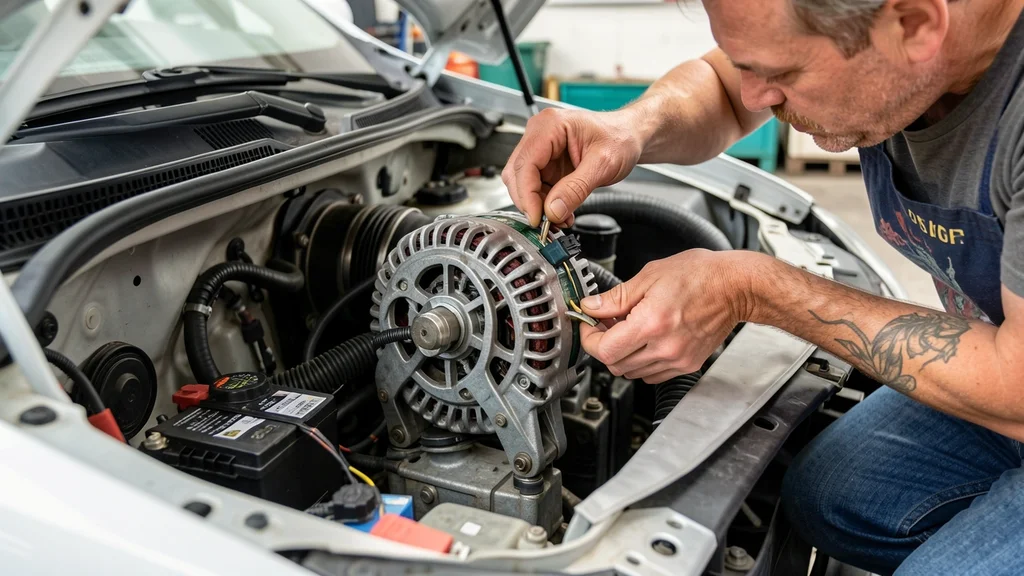
If your car’s electrical system is acting up, how can you tell your alternator is bad is likely the first question on your mind. A failing alternator can leave you stranded with a dead battery or cause erratic behavior in your vehicle’s electronics. Recognizing the early warning signs—not just the obvious ones like a dead battery—can save you time, money, and frustration.
This guide covers the most common symptoms, how to diagnose them, and what steps to take next.
The most common signs of a bad alternator include dim or flickering headlights, a dead battery, warning lights on the dashboard, strange noises, and electrical issues like power windows or radio malfunctions. A quick voltage test can confirm the issue.
Warning Lights on the Dashboard
The alternator warning light—often labeled “ALT” or “GEN”—is your car’s way of saying something’s wrong with the charging system. Modern vehicles rely heavily on their electrical systems, so ignoring this light can lead to a complete breakdown.
Sometimes, the check engine light may also illuminate if the alternator is failing. This happens because the vehicle’s computer detects irregular voltage levels. However, not all cars have a dedicated alternator light, so you’ll need to watch for other symptoms too.
- ALT or GEN Light: Directly indicates an alternator issue.
- Check Engine Light: May appear if the voltage drops or fluctuates.
- Battery Light: Can also signal alternator trouble, as the battery isn’t being charged properly.
Warning: If the alternator warning light comes on while driving, pull over safely and turn off unnecessary electrical loads like the radio or AC. Continuing to drive may drain the battery completely.
| Warning Light | What It Means | Action Required |
|---|---|---|
| ALT or GEN Light | Alternator malfunction detected | Check alternator voltage immediately |
| Check Engine Light | Voltage irregularities affecting engine performance | Scan for error codes, inspect charging system |
| Battery Light | Battery not charging properly (often due to alternator) | Test alternator output and battery health |
Dashboard lights are your first line of defense. Never ignore them, as they often appear before more severe symptoms develop.
Dim or Flickering Headlights
One of the most noticeable symptoms of a failing alternator is dim or flickering headlights. The alternator powers your car’s electrical system while the engine runs, so if it’s not functioning properly, your headlights won’t receive consistent power.
You might notice this more at night or when idling. If your headlights brighten when you rev the engine, it’s a strong sign the alternator isn’t producing enough power at lower RPMs. This can also affect interior lights and dashboard brightness.
- Nighttime Driving: Dim headlights are most visible in low-light conditions.
- Idling: Flickering may occur when the engine is at idle speed.
- Revving the Engine: Headlights brighten temporarily when RPM increases.
- Other Lights: Interior dome lights or dashboard lights may also dim or flicker.
Tip: If you suspect the alternator, test it at night with the engine running. Turn on the headlights and rev the engine. If the lights brighten significantly, the alternator is likely failing.
This symptom often worsens over time. What starts as a slight dimming can eventually lead to headlights that barely work, making night driving dangerous.
Dead Battery or Frequent Jump Starts
A dead battery is the most common sign people associate with alternator problems. However, the alternator itself doesn’t always cause the battery to die—it’s the lack of charging that leads to a drained battery. If your battery keeps dying despite being relatively new, the alternator is likely the culprit.
Jump-starting the car may work temporarily, but if the alternator isn’t charging the battery, the vehicle will die again once the battery drains. This creates a cycle of frustration and can leave you stranded if you’re not prepared.
| Symptom | Likely Cause | Solution |
|---|---|---|
| Battery dies overnight | Parasitic drain or weak alternator | Test alternator output and check for drains |
| Battery dies while driving | Alternator failure (not charging battery) | Replace alternator immediately |
| Frequent jump starts needed | Alternator not maintaining battery charge | Test charging system, replace alternator if needed |
According to AAA, alternator-related issues account for nearly 20% of all roadside assistance calls involving electrical problems. If you’re jump-starting your car more than once a week, it’s time to have the alternator checked.
Strange Noises from the Engine Bay
A failing alternator can produce unusual noises, often due to worn bearings or a misaligned pulley. These noises usually sound like a whining, grinding, or squealing noise coming from the engine bay. The sound may increase with engine RPM and is often most noticeable when the engine is idling.
If you hear a high-pitched squeal, it could also indicate a loose or worn serpentine belt. However, if the noise persists after checking the belt, the alternator bearings are likely the issue. Ignoring these sounds can lead to complete alternator failure, which may damage other components.
- Whining Noise: Often caused by worn alternator bearings.
- Grinding Noise: May indicate internal alternator damage.
- Squealing Noise: Could be a loose or worn serpentine belt.
- Clicking Noise: Might signal a failing voltage regulator inside the alternator.
Important: If you hear unusual noises from the engine bay, have your vehicle inspected by a professional. Driving with a failing alternator can cause the belt to snap, leading to engine overheating and other serious issues.
The alternator is connected to the engine via a belt, so any noise related to the charging system should be investigated immediately. A snapped belt can leave you without power steering, AC, or even cause the engine to overheat if it drives the water pump.
Electrical System Malfunctions
A failing alternator can cause a variety of electrical issues in your car. Since the alternator powers the electrical system while the engine runs, a weak alternator may not provide enough power to keep all systems operating correctly. This can lead to erratic behavior in accessories like the radio, power windows, or even the vehicle’s computer system.
You might notice that your power windows move slower than usual or that the radio cuts in and out. In some cases, the vehicle’s computer may reset or display error messages due to voltage fluctuations. These symptoms can be intermittent, making them harder to diagnose.
- Power Windows: Move slowly or get stuck mid-operation.
- Radio: Cuts in and out or resets presets.
- Dashboard: Gauges fluctuate or reset while driving.
- Infotainment System: May reboot or freeze.
- Power Seats: Operate sluggishly or not at all.
Modern vehicles rely heavily on their electrical systems for everything from fuel injection to stability control. A failing alternator can disrupt these systems, leading to poor engine performance or even stalling. According to Consumer Reports, electrical issues are among the top reasons for unexpected breakdowns in vehicles over five years old.
Weak or Inconsistent Accessories
If your car’s accessories—like the air conditioning, heated seats, or headlights—seem weaker than usual, it could be a sign of a failing alternator. The alternator provides the power needed to run these systems, and if it’s not working properly, you may notice a drop in performance.
For example, the air conditioning may blow warm air when idling but cool down when you rev the engine. Similarly, heated seats or the rear defroster may take longer to warm up. These inconsistencies are often overlooked but can be early indicators of alternator trouble.
| Accessory | Symptom | Likely Cause |
|---|---|---|
| Air Conditioning | Blows warm air at idle, cool at high RPM | Alternator not producing enough power at low RPM |
| Heated Seats | Take longer to warm up or don’t work | Insufficient electrical power |
| Headlights | Dim or flicker at idle | Alternator output fluctuating |
| Power Steering | Feels heavier than usual | Electric power steering system underpowered |
If multiple accessories are underperforming, it’s a strong sign the alternator isn’t keeping up with the electrical demand. This is especially true in newer vehicles with more electrical components than older models.
How to Test Your Alternator at Home
You don’t need to be a mechanic to test your alternator. With a few simple tools, you can diagnose the problem at home. The most common method is using a multimeter to check the voltage at the battery while the engine is running.
Here’s how to do it safely and accurately.
A fully charged battery should read around 12.6 volts with the engine off. When the engine is running, the voltage should increase to between 13.8 and 14.4 volts. If the voltage stays the same or drops, the alternator isn’t charging the battery properly.
Tools You’ll Need
- Digital multimeter (available at auto parts stores for under $20)
- Safety glasses (to protect your eyes)
- Gloves (optional, for safety)
Step-by-Step Testing Process
- Park the Car: Ensure the vehicle is in park (or neutral for manual transmissions) with the engine off. Set the parking brake for safety.
- Connect the Multimeter: Set the multimeter to DC voltage (20V range). Connect the red probe to the positive (+) battery terminal and the black probe to the negative (-) terminal.
- Check Battery Voltage: With the engine off, the voltage should read around 12.6V. If it’s below 12.2V, the battery may be weak or discharged.
- Start the Engine: Have a helper start the engine while you monitor the multimeter. The voltage should immediately jump to between 13.8V and 14.4V.
- Rev the Engine: Ask your helper to rev the engine to around 2,000 RPM. The voltage should increase slightly but stay within the 13.8V-14.4V range.
- Turn on Accessories: Turn on the headlights, AC, and radio. The voltage should remain steady. If it drops below 13.5V, the alternator may be failing.
Tip: If you don’t have a multimeter, many auto parts stores will test your alternator for free. They can also check the battery and starter to rule out other issues.
If the voltage readings are outside the expected ranges, the alternator is likely the problem. However, a low reading could also indicate a bad battery, loose connections, or a failing voltage regulator. Testing the alternator off the vehicle (bench testing) is the most accurate method, but the above steps will give you a good indication of its health.
Common Mistakes When Diagnosing a Bad Alternator
Misdiagnosing a bad alternator can lead to unnecessary repairs or even leave you stranded. Many symptoms of a failing alternator overlap with other issues, such as a dead battery or a faulty starter. Avoid these common mistakes to ensure an accurate diagnosis.
One of the biggest mistakes is assuming the battery is the problem just because the car won’t start. While a dead battery can prevent the engine from turning over, a failing alternator can also cause starting issues if the battery is drained. Testing both components is essential.
- Assuming It’s the Battery: A dead battery and a bad alternator can cause similar symptoms. Test both to be sure.
- Ignoring Warning Lights: Dashboard lights often appear before other symptoms. Don’t ignore them.
- Not Testing Under Load: An alternator may work fine at idle but fail under electrical load (e.g., with headlights and AC on). Always test with accessories running.
- Overlooking Belt Issues: A loose or worn serpentine belt can cause alternator problems. Inspect the belt for cracks, fraying, or slack.
- Forgetting to Check Connections: Corroded or loose battery terminals can mimic alternator failure. Clean and tighten all connections before testing.
| Mistake | Why It’s a Problem | Solution |
|---|---|---|
| Assuming battery is dead | Alternator may be the real issue | Test alternator output and battery health |
| Ignoring warning lights | Early signs of alternator failure | Address warnings immediately |
| Not testing under load | Alternator may fail under demand | Test with accessories on |
Another common mistake is not checking the alternator’s connections. Corrosion or loose wires can prevent the alternator from charging the battery properly. Always inspect the wiring and terminals for damage or wear.
Frequently Asked Questions
Can a bad alternator cause a car to stall?
Yes, a failing alternator can cause a car to stall, especially in modern vehicles with electronic fuel injection. The alternator provides power to the spark plugs, fuel injectors, and engine control unit (ECU). If the alternator fails, these components may not receive enough power to keep the engine running, leading to stalling.
How long can you drive with a bad alternator?
You can typically drive for 30 minutes to an hour with a bad alternator, depending on the battery’s charge and the electrical demand of your vehicle. However, this is risky and not recommended. Once the battery drains, the car will shut off, leaving you stranded.
The longer you drive, the greater the risk of damaging other electrical components.
What happens if I ignore a bad alternator?
Ignoring a bad alternator can lead to a completely dead battery, leaving your car unable to start. Over time, the lack of proper charging can damage the battery, reducing its lifespan. Additionally, voltage fluctuations can harm sensitive electronics like the ECU, radio, or navigation system.
In extreme cases, the car may stall while driving, creating a dangerous situation.
Can a bad alternator damage a new battery?
Yes, a bad alternator can damage a new battery. If the alternator overcharges the battery, it can cause the battery to overheat, leading to internal damage or even a rupture. Conversely, if the alternator undercharges the battery, the battery may become deeply discharged, reducing its lifespan.
Always replace a failing alternator to protect your battery investment.
Is it safe to jump-start a car with a bad alternator?
Jump-starting a car with a bad alternator can work temporarily, but it’s not a long-term solution. The jump start will provide enough power to start the engine, but if the alternator isn’t charging the battery, the vehicle will die again once the battery drains. If you must jump-start the car, drive directly to a repair shop to have the alternator replaced.
Final Thoughts
Recognizing the signs of a bad alternator early can save you from unexpected breakdowns and costly repairs. From warning lights and dim headlights to dead batteries and strange noises, these symptoms are your car’s way of telling you something’s wrong. Testing the alternator at home with a multimeter is a simple way to confirm the issue, but if you’re unsure, a professional diagnosis is always the safest option.
Addressing alternator problems promptly ensures your vehicle remains reliable and keeps you safely on the road.
Leave a Reply