
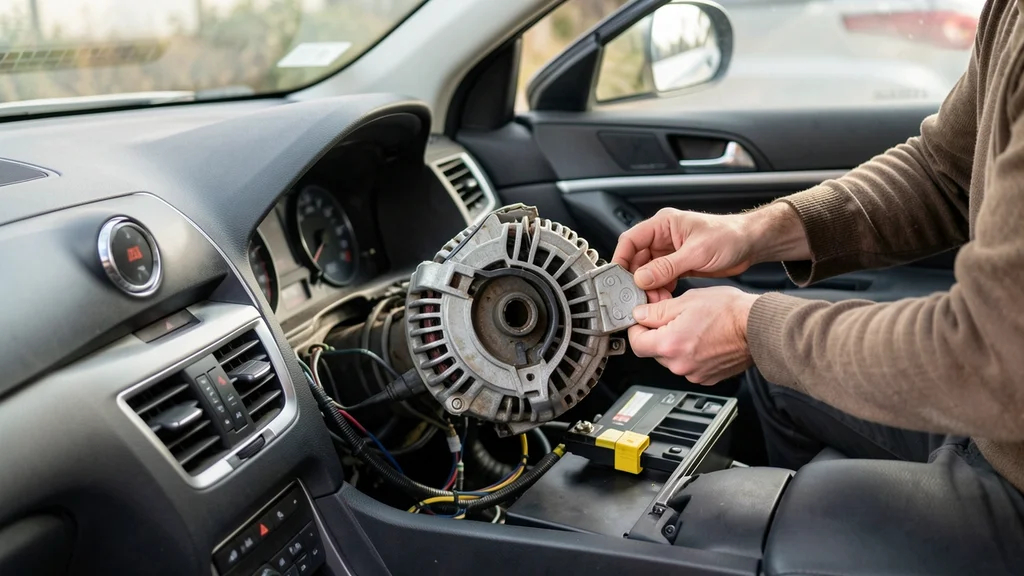
If your car’s battery light flickers or the engine stutters, how far can you drive on bad alternator issues depends on your battery’s remaining charge and electrical demands. A failing alternator means your vehicle runs solely on battery power, which typically lasts 30 minutes to an hour—sometimes less if headlights, AC, or other systems drain it faster. This post covers the risks, warning signs, and what to do if you suspect alternator failure.
You can typically drive 25 to 50 miles on a bad alternator if the battery is fully charged, but this drops to 5-10 miles with heavy electrical loads. Driving further risks stranding you or causing permanent damage to the battery or electrical system.
Signs Your Alternator Is Failing
Early detection can save you from a dead battery. The most common symptom is a lit battery warning light on your dashboard, which often looks like a rectangle with a plus and minus sign. This light usually means the alternator isn’t charging the battery properly.
Other warning signs include dim or flickering headlights, especially when idling or at low speeds. You might also notice weak or slow accessories, like power windows that move sluggishly or a stereo that cuts in and out. In severe cases, your car may stall or refuse to start after turning off the engine.
- Dashboard Warning Light: The battery or alternator symbol illuminates
- Dim or Flickering Lights: Headlights or interior lights fluctuate in brightness
- Weak Electrical Accessories: Slow power windows, weak stereo performance
- Strange Noises: Whining or grinding sounds from the alternator
- Frequent Battery Issues: Needing jump-starts often when the battery is relatively new
- Engine Stalling: The car cuts out while driving, especially at low speeds
- Burning Smell: A burnt rubber or electrical odor near the alternator
Warning: If you notice a burning smell or see smoke, pull over immediately. This could indicate a serious electrical issue that might lead to a fire.
How Far Can You Actually Drive
The exact distance you can drive on a bad alternator depends on several factors. A fully charged battery in a standard car can power the vehicle for about 30 minutes to an hour of driving without the alternator. However, this range varies based on battery health, age, and the electrical load your car is under.
Modern vehicles have numerous electrical components that drain the battery quickly. Headlights, air conditioning, heated seats, and infotainment systems all pull power. If you’re driving at night with lights on or in heavy traffic with frequent stops, your battery will deplete much faster.
| Factor | Estimated Driving Time |
|---|---|
| Fully charged battery, minimal electrical load | 45-60 minutes |
| Fully charged battery, moderate electrical load (headlights, radio) | 25-40 minutes |
| Partially charged battery, minimal load | 15-30 minutes |
| Old/weak battery, heavy electrical load (AC, lights, heated seats) | 5-15 minutes |
According to AAA, a typical car battery can provide about 1-2 hours of power for essential systems if the alternator fails completely. However, this is under ideal conditions with minimal electrical usage. In real-world scenarios, especially with modern vehicles packed with electronics, you’re likely looking at 30 minutes or less of safe driving.
What Happens When You Drive With a Bad Alternator
Driving with a failing alternator puts immense strain on your battery. Once the battery is depleted, your car will lose power to critical systems. The first to go are usually non-essential electrical components like your radio or interior lights.
As the battery drains further, you may lose power steering and braking assistance, making the car harder to control.
Eventually, the engine will stall. Modern fuel-injected engines rely on electrical systems to operate. Without power from the alternator or battery, the fuel pump can’t deliver gas to the engine, and the spark plugs won’t fire.
This can happen suddenly, even while driving at highway speeds, creating a dangerous situation.
- Initial Stage: Battery warning light appears, minor electrical issues (dim lights, weak accessories)
- Mid Stage: Increased electrical failures, possible rough idling, loss of non-essential systems
- Critical Stage: Loss of power steering and braking assist, engine may stall at stops
- Final Stage: Complete engine shutdown, car becomes inoperable
Important: Some hybrid and electric vehicles have different systems, but the principle remains: without a functioning charging system, the battery will eventually deplete, leaving you stranded.
How to Maximize Your Driving Distance
If you must drive with a bad alternator, there are steps you can take to extend your range. The goal is to reduce the electrical load on your battery as much as possible. This buys you time to reach a repair shop or a safe location.
Start by turning off all non-essential electrical systems. This includes your radio, air conditioning, heated seats, and interior lights. If driving during the day, you can also turn off your headlights, though this isn’t recommended for safety reasons.
Use your hazard lights sparingly if needed.
- Turn Off Non-Essentials:
- Radio and infotainment system
- Air conditioning and heater
- Heated seats and steering wheel
- Interior dome lights
- Fog lights and auxiliary lights
- Reduce Electrical Load:
- Avoid using power windows (roll them down manually if possible)
- Minimize use of turn signals (use hand signals when safe)
- Disconnect phone chargers and other devices
- Turn off automatic headlights if your car has them
- Drive Efficiently:
- Maintain a steady speed to reduce battery drain
- Avoid frequent stops and starts
- Shift to neutral at stoplights to reduce engine load
- Use engine braking to minimize brake system electrical demand
| Action | Estimated Extra Distance Gained |
|---|---|
| Turning off AC and radio | 5-10 minutes |
| Disabling all non-essential lights | 3-5 minutes |
| Avoiding power windows and locks | 2-3 minutes |
| Driving at steady highway speeds | 10-15 minutes |
Immediate Steps to Take When Your Alternator Fails
If you suspect your alternator is failing, take action immediately. The first step is to safely pull over to the side of the road if you notice warning signs. Continuing to drive risks sudden loss of power, which can be dangerous, especially at high speeds or in heavy traffic.
Once stopped, turn off your engine and all electrical systems. This prevents further drain on your battery. If you’re in a safe location, you can try to restart your car, but be aware that each attempt uses more battery power.
If the car starts, drive directly to the nearest repair shop or safe location without turning off the engine.
- Pull Over Safely: As soon as you notice warning signs, move to the shoulder or a parking lot. Use your hazard lights if needed to signal to other drivers.
- Turn Off the Engine: Shut down all electrical systems to conserve battery power. Avoid restarting the car unless absolutely necessary.
- Call for Assistance: Contact a tow truck or roadside assistance service. Many insurance policies include this coverage.
- Attempt a Jump Start (If Available): If you have jumper cables and a willing helper, you can try to jump-start your car. However, if the alternator is bad, the battery will quickly drain again once the jumper cables are removed.
- Drive to a Repair Shop: If you must drive, go directly to the nearest auto repair shop. Avoid turning off the engine until you reach your destination.
Tip: If you’re far from help, consider calling a mobile mechanic who can diagnose and potentially replace the alternator on the spot.
Can You Damage Your Car by Driving With a Bad Alternator
Yes, driving with a bad alternator can cause significant damage to your vehicle. The most immediate risk is to your battery. Running the car solely on battery power will deeply discharge it, which can shorten its lifespan or even ruin it completely.
Deep discharges cause sulfate buildup on battery plates, reducing its ability to hold a charge in the future.
Beyond the battery, other electrical components can be affected. Voltage regulators, fuses, and wiring may experience power surges or irregular currents, leading to premature failure. In some cases, a failing alternator can overcharge the battery when it’s still partially functional, which can also damage the battery and other electrical systems.
- Battery Damage:
- Deep discharge reduces battery lifespan
- Sulfation buildup on battery plates
- Potential for complete battery failure
- Electrical System Strain:
- Voltage fluctuations can damage sensitive electronics
- Fuses may blow due to irregular power flow
- Wiring can overheat from excessive current
- Engine Components:
- Fuel pump may fail without consistent power
- Ignition system components can be stressed
- Power steering and braking systems may fail
| Component | Risk Level | Potential Damage |
|---|---|---|
| Battery | High | Complete failure, reduced lifespan |
| Voltage Regulator | Medium | Overheating, premature failure |
| Fuses and Wiring | Medium | Blown fuses, overheated wires |
| Fuel Pump | High | Failure to deliver fuel, engine stalling |
| Power Steering | Medium | Loss of assist, difficult steering |
How to Test Your Alternator
If you’re experiencing electrical issues, testing your alternator can help confirm whether it’s the source of the problem. There are a few methods you can use, ranging from simple at-home tests to professional diagnostics.
The easiest way is to use a multimeter to check the voltage at your battery while the engine is running. With the engine off, a healthy battery should read between 12.2 and 12.6 volts. Start the engine and rev it to about 2,000 RPM.
The voltage should rise to between 13.8 and 14.4 volts. If it doesn’t, your alternator may be failing.
- Visual Inspection:
- Check for loose or corroded connections at the alternator
- Look for signs of physical damage or fluid leaks
- Inspect the drive belt for wear or slippage
- Battery Voltage Test:
- With engine off: 12.2-12.6V (healthy battery)
- With engine running: 13.8-14.4V (good alternator)
- Below 13.8V or above 14.4V indicates alternator issues
- Load Test:
- Turn on headlights and AC while testing voltage
- Voltage should remain stable above 13.8V
- Significant drop indicates alternator can’t handle load
- Professional Test:
- Auto parts stores often test alternators for free
- Mechanics can perform a complete charging system test
- Specialized equipment can detect intermittent issues
Important: If your alternator is overcharging (voltage above 14.4V), it can damage your battery and other electrical components. This is often caused by a faulty voltage regulator.
Alternator Replacement Cost and Considerations
If your alternator is indeed failing, replacement is often the best solution. The cost of replacing an alternator varies depending on your vehicle’s make and model, as well as whether you choose to do it yourself or have a professional handle the job.
For most vehicles, a new alternator costs between $100 and $300 for the part itself. Labor costs can add another $100 to $200, bringing the total to $200-$500. Luxury or imported vehicles may cost significantly more, sometimes up to $800 or more for parts and labor.
| Vehicle Type | Alternator Cost (Part Only) | Labor Cost | Total Estimated Cost |
|---|---|---|---|
| Domestic (e.g., Ford, Chevy, Dodge) | $100-$200 | $80-$150 | $180-$350 |
| Import (e.g., Toyota, Honda, Nissan) | $150-$250 | $100-$180 | $250-$430 |
| Luxury (e.g., BMW, Mercedes, Audi) | $250-$500 | $150-$250 | $400-$750 |
| Hybrid/Electric | $300-$800 | $200-$300 | $500-$1,100 |
According to RepairPal, the average cost for alternator replacement across all vehicles is between $458 and $650, including parts and labor. This can vary based on your location and the specific repair shop you choose. Some factors that affect cost include:
- Vehicle Make and Model: European and luxury vehicles often have more expensive parts
- Alternator Brand: OEM parts cost more than aftermarket alternatives
- Labor Rates: Dealerships typically charge more than independent shops
- Accessibility: Some vehicles require more labor to access the alternator
- Warranty: New alternators often come with 1-3 year warranties
Tip: If you’re replacing the alternator yourself, consider replacing the serpentine belt and tensioner at the same time, as they often wear out around the same time.
Frequently Asked Questions
Can I drive my car with a bad alternator if the battery is fully charged?
You can drive for a short distance, typically 25-50 miles, but it’s risky. The battery will drain quickly, especially with electrical loads like headlights or AC. It’s better to have the alternator checked immediately rather than risk being stranded.
How do I know if it’s the alternator or the battery causing my electrical issues?
A simple test is to jump-start your car. If it starts but then dies shortly after removing the jumper cables, it’s likely the alternator. If it doesn’t start at all, the battery might be the issue.
However, both can fail simultaneously, so a professional test is recommended.
What happens if I ignore a bad alternator?
Ignoring a bad alternator will eventually leave you stranded as the battery drains completely. Additionally, you risk damaging other electrical components from voltage fluctuations, and you may cause permanent damage to your battery from deep discharging.
Can a bad alternator cause my car to stall while driving?
Yes, a failing alternator can cause your car to stall, especially at low speeds or when electrical demand is high. This happens because the engine relies on electrical systems for fuel delivery and ignition, which fail when the battery is depleted.
How long does it take to replace an alternator?
For most vehicles, alternator replacement takes about 1-2 hours at a professional shop. Simple replacements on easily accessible alternators might take less time, while some vehicles with tight engine compartments or special configurations might require 2-3 hours of labor.
Final Thoughts
Driving with a bad alternator is a gamble that often ends with you stranded on the roadside. While you might squeeze out 25-50 miles under ideal conditions, the risks to your battery and other electrical systems make it a poor choice. The smart move is to address alternator issues immediately—test it, confirm the problem, and replace it if necessary.
Remember, the how far can you drive on bad alternator question has a short answer: not far enough to be worth the risk.
Leave a Reply