
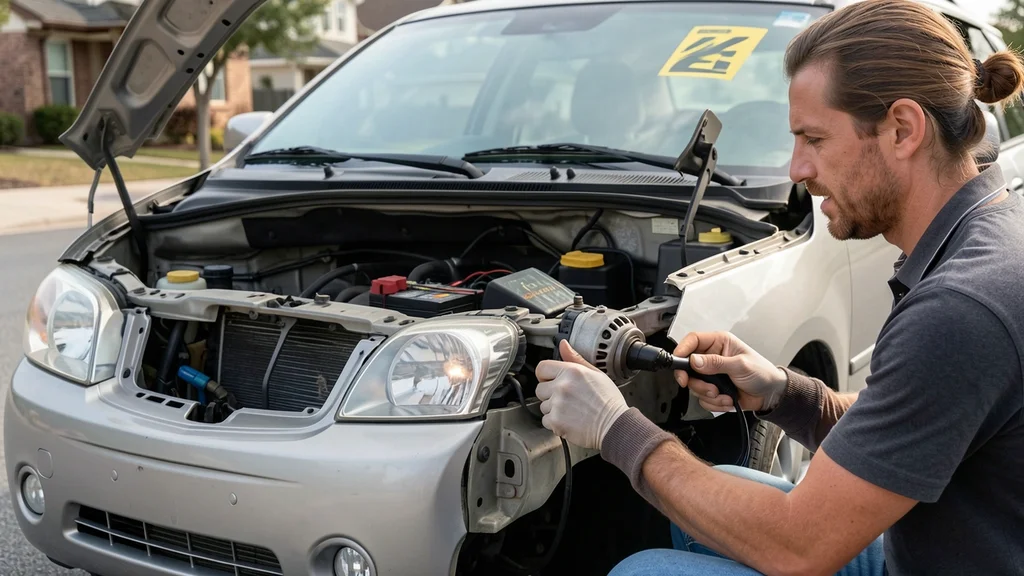
If your car’s battery light comes on or you notice dim headlights, you may be dealing with a failing alternator. Knowing how far can you drive with bad alternator can help you avoid being stranded. This post covers the risks, warning signs, and what to do if your alternator fails while driving.
You can typically drive 25 to 50 miles with a bad alternator before the battery dies completely. The exact distance depends on battery health, electrical load, and driving conditions. Once the battery is drained, the engine will stall and refuse to restart.
Signs Your Alternator Is Failing
Your car often gives clear warning signs before the alternator completely fails. Ignoring these can leave you stranded.
Watch for dim or flickering headlights, a battery warning light on the dashboard, or weak accessories like power windows moving slowly. Strange smells from the alternator area can also signal trouble.
- Battery warning light on the dashboard is the most common sign
- Dim or flickering headlights, especially at idle
- Weak or slow accessories (power windows, radio, A/C)
- Strange noises (whining or grinding) from the alternator
- Frequent battery dying even after jumps or replacements
- Burning smell from the engine bay
- Voltage gauge reading below 13.5V when engine is running
Warning: If you see smoke or smell burning from the alternator, pull over immediately. Continuing to drive risks electrical fire.
How Long Your Car Runs Without a Working Alternator
The distance you can drive depends on several factors. A healthy battery with minimal electrical load might last 50 miles, while an old battery with heavy electrical use could die in under 10 miles.
The alternator charges the battery while the engine runs. Without it, the battery alone powers all electrical systems. Once it’s drained, the engine will stall and won’t restart without a jump or replacement.
| Factor | Effect on Driving Distance |
|---|---|
| Battery Health | New battery: 40-50 miles. Old/weak battery: 10-20 miles |
| Electrical Load | High (A/C, headlights, radio): 15-25 miles. Low (minimal use): 30-50 miles |
| Driving Conditions | Highway (steady RPM): longer. City (stop/go): shorter |
| Alternator Failure Type | Complete failure: immediate drain. Partial failure: gradual drain |
| Battery Capacity | Higher cold-cranking amps (CCA) = longer runtime |
As a general rule, if your battery warning light comes on, you have about 30 minutes of driving time before the battery is completely drained. This can vary significantly based on the factors above.
What Happens When Alternator Fails While Driving
When the alternator stops working, the battery takes over all electrical demands. At first, you might not notice much change, but as the battery drains, systems start failing.
Eventually, the engine will stall because modern cars rely on computers and electrical systems to keep running. Once stalled, the car typically won’t restart without a jump start or battery replacement.
- First signs: Battery light illuminates, headlights dim slightly
- 5-10 minutes: Accessories weaken (power windows slow, radio cuts out)
- 10-20 minutes: Headlights become very dim, dashboard lights flicker
- 20-30 minutes: Engine begins to sputter or lose power
- 30+ minutes: Engine stalls completely and won’t restart
Important: Some modern vehicles may shut down non-essential systems automatically to preserve battery for critical functions.
How to Prolong Driving Time With a Bad Alternator
If you suspect your alternator is failing but need to keep driving temporarily, reducing electrical load can buy you precious miles.
Turn off all non-essential systems like air conditioning, radio, and interior lights. Avoid using power windows or other accessories. Drive at steady speeds on highways rather than stop-and-go city traffic.
- Turn off: Air conditioning, radio, phone chargers, seat heaters
- Avoid using: Power windows, power locks, sunroof
- Minimize: Headlight use (only when necessary)
- Drive at: Steady speeds (highway RPMs help maintain charge slightly)
- Avoid: Idling for long periods
- Unplug: Any aftermarket electronics (GPS, dash cams)
- Check: Battery terminals for corrosion (clean if needed)
Tip: If you must drive with a bad alternator, head straight to a repair shop. Every mile risks leaving you stranded.
What to Do When Your Alternator Fails
If your alternator fails while driving, the first priority is to get to a safe location. Pull over as soon as possible, especially if you’re experiencing severe symptoms like dim lights or sputtering engine.
Once stopped, you have a few options. If you have roadside assistance, call for help. Otherwise, you might attempt a temporary fix to get to a repair shop.
- Find a safe spot: Pull over to the shoulder or a parking lot immediately if the car is sputtering or lights are very dim
- Assess the situation: Check for smoke, strange smells, or other dangerous signs
- Call for help: Contact roadside assistance or a tow truck if available
- Attempt a jump start: If the battery is completely dead, you might get enough charge to drive a short distance
- Drive carefully to a repair shop: If the car starts, go directly to the nearest mechanic with minimal electrical use
| Option | Pros | Cons |
|---|---|---|
| Call Roadside Assistance | Safest option, professional help | May have wait time, potential cost |
| Jump Start and Drive | Immediate solution, can reach repair shop | Risk of stalling again, battery may not last |
| Tow Truck | Guaranteed to reach destination, no risk of stalling | Most expensive option |
| Replace Alternator On-Spot | Permanent fix, no need for towing | Requires tools and knowledge, time-consuming |
According to AAA, alternator failures account for about 5% of all roadside assistance calls. Having a plan before it happens can save you time and stress.
Can You Drive With a Bad Alternator at Night
Driving at night with a bad alternator is particularly risky. Headlights are a major electrical drain, and their importance for safety makes this situation dangerous.
If you must drive at night with a failing alternator, use your headlights sparingly. Consider driving with parking lights only if visibility allows, and keep the trip as short as possible.
- Higher risk: Headlights use 50-100 watts each, significantly draining the battery
- Reduced visibility: Dim headlights make it harder to see and be seen by others
- Shorter range: Night driving with lights may reduce your range by 30-50%
- Safety concern: Driving without proper lighting is illegal in most areas
- Alternative: Use fog lights if available (they often draw less power)
Warning: Driving without headlights at night is not only dangerous but also illegal in most jurisdictions. Always prioritize safety over reaching your destination.
How to Test Your Alternator
If you suspect alternator issues, testing it can confirm the problem. You can do a basic test yourself with a multimeter, or have a professional mechanic perform a complete diagnostic.
A healthy alternator should produce between 13.8 and 14.4 volts when the engine is running. Anything below 13 volts indicates a problem.
- Visual inspection: Check for loose or corroded connections, damaged wiring, or physical damage to the alternator
- Battery test: First, test your battery to ensure it’s healthy (should be 12.6V with engine off)
- Voltage test with engine off: Should read between 12.2-12.8V (battery voltage)
- Voltage test with engine running: Should read between 13.8-14.4V (alternator charging)
- Load test: Turn on headlights and other accessories – voltage should stay above 13V
- Listen for noises: Whining or grinding noises indicate bearing failure
- Professional test: Auto parts stores often test alternators for free
| Test | Good Alternator | Bad Alternator |
|---|---|---|
| Voltage (Engine Off) | 12.2-12.8V | Below 12V |
| Voltage (Engine On) | 13.8-14.4V | Below 13V or above 15V |
| Voltage with Load | Stays above 13V | Drops below 12.5V |
| Noise | Normal engine noise | Whining or grinding |
The National Institute for Automotive Service Excellence (ASE) reports that alternator failures often coincide with extreme temperatures, with cold weather being particularly hard on electrical systems.
Alternator Replacement Cost and Time
If you confirm your alternator is bad, you’ll need to decide between replacing it yourself or having a professional do it. Costs vary based on your vehicle and whether you choose new, rebuilt, or remanufactured parts.
The replacement process typically takes 1-2 hours for a professional mechanic. If you’re doing it yourself, expect to spend 2-4 hours depending on your experience and the vehicle’s design.
| Part Type | Cost Range | Warranty | Notes |
|---|---|---|---|
| New OEM | $300-$600 | 2-3 years | Best quality, longest lifespan |
| New Aftermarket | $200-$400 | 1-2 years | Good quality, often as good as OEM |
| Remanufactured | $150-$300 | 1-3 years | Tested and rebuilt, good value |
| Used | $50-$150 | 30-90 days | Risky, no guarantee of lifespan |
Labor costs typically range from $70 to $150 at a repair shop. If you’re DIY-inclined, you can save on labor but will need basic tools like wrenches, sockets, and possibly a serpentine belt diagram for your specific vehicle.
- Tools needed: Socket set, wrenches, screwdriver, serpentine belt diagram
- Safety first: Disconnect battery before starting to prevent electrical shorts
- Check belt: Often the serpentine belt needs replacement when doing the alternator
- Test after: Always test voltage output after installation to confirm proper function
- Recycle: Most auto parts stores accept old alternators for recycling
Frequently Asked Questions
How long can a car run with a bad alternator?
A car can typically run 20-60 minutes with a bad alternator before the battery is completely drained. This translates to about 25-50 miles of driving under normal conditions. The exact time depends on battery health and electrical load.
Can a bad alternator destroy a new battery?
Yes, a bad alternator can damage a new battery. If the alternator overcharges (produces too much voltage), it can boil the battery dry and destroy it. If it undercharges, the battery will be constantly drained and may become sulfated.
What happens if I keep driving with a bad alternator?
Continuing to drive with a bad alternator will eventually drain your battery completely. Once the battery is dead, your car will stall and won’t restart. In some cases, you might damage other electrical components from voltage fluctuations.
Can I jump start a car with a bad alternator?
Yes, you can jump start a car with a bad alternator, but it will only run until the battery is drained again. If the alternator isn’t charging, the battery won’t recharge while driving, and the car will eventually stall.
How much does it cost to fix an alternator?
The total cost to replace an alternator typically ranges from $400 to $800, including parts and labor. The exact cost depends on your vehicle make and model, and whether you choose new, remanufactured, or used parts.
Final Thoughts
Knowing how far can you drive with bad alternator helps you make smart decisions when faced with this common car problem. Typically, you have about 25-50 miles before the battery dies completely. The key is to recognize the warning signs early and take immediate action.
Whether you choose to drive carefully to a repair shop or call for assistance, addressing alternator issues promptly will save you from being stranded and prevent potential damage to your vehicle’s electrical system.
Leave a Reply