
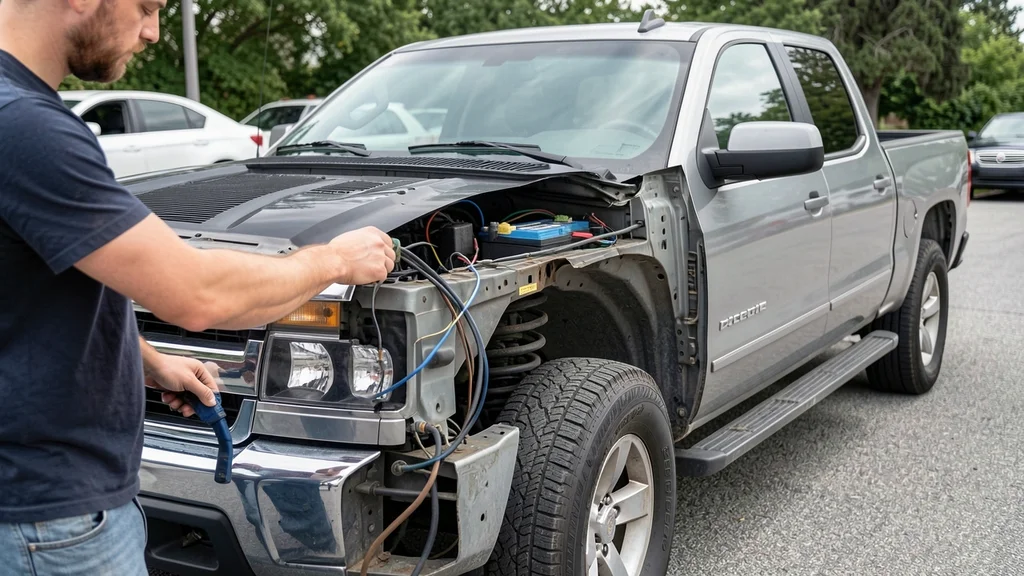
If your Chevy Silverado is showing signs of electrical trouble, you might wonder how long can you drive with bad alternator Chevy Silverado. The answer depends on several factors, including battery health, electrical load, and driving conditions. Driving with a failing alternator can leave you stranded, as the battery will eventually drain without being recharged.
This guide covers the risks, warning signs, and what to do if you’re facing this issue.
You can drive with a bad alternator in your Chevy Silverado for about 30 minutes to 2 hours depending on battery charge and electrical demand. Once the battery dies, the engine will stall and you’ll lose power steering and brakes.
Signs Your Chevy Silverado Alternator Is Failing
Recognizing the early warning signs of a failing alternator can save you from being stranded. The alternator is responsible for charging the battery and powering the electrical system while the engine runs. When it starts to fail, your Silverado will give you several clues.
One of the first signs is the battery warning light on your dashboard. This light looks like a battery and will illuminate when the alternator isn’t charging the battery properly. You might also notice dim or flickering headlights, especially at night or when idling.
This happens because the alternator can’t maintain a consistent electrical supply.
- Battery Warning Light: The most common indicator, often the first sign of trouble.
- Dim or Flickering Lights: Headlights, dashboard lights, or interior lights may dim or flicker.
- Weak or Dead Battery: If your battery keeps dying even after jumps, the alternator may not be charging it.
- Electrical Issues: Malfunctioning power windows, seats, or radio can signal alternator problems.
- Strange Noises: A whining or grinding noise from the engine bay can indicate a failing alternator bearing.
- Stalling or Difficulty Starting: The engine may stall or be hard to start if the battery isn’t being charged.
- Smell of Burning Rubber: A failing alternator can overheat, producing a distinct burning smell.
Warning: Ignoring alternator warning signs can lead to a dead battery, leaving you stranded. Address the issue immediately to avoid costly repairs or dangerous situations on the road.
How Long Can You Drive With a Bad Alternator
The exact distance you can drive with a bad alternator depends on several factors. The primary factor is the charge level of your battery when the alternator fails. A fully charged battery can power your Silverado’s electrical systems for a short period, but it will drain quickly without the alternator recharging it.
Modern vehicles rely heavily on electronics, so the battery drain will be faster than in older models. If you’re driving at night with headlights, using the radio, or running the air conditioning, the battery will deplete even faster. In ideal conditions with minimal electrical load, you might get up to 2 hours of driving.
However, in most real-world scenarios, you’ll have between 30 minutes to an hour before the battery dies completely.
| Factor | Impact on Driving Time |
|---|---|
| Battery Charge Level | Full charge = more time; low charge = less time |
| Electrical Load | High load (lights, AC, radio) = faster drain |
| Driving Conditions | City driving with stops = more strain |
| Battery Health | Old/weak battery = less reserve capacity |
| Alternator Condition | Partially failed = some charging; completely failed = no charging |
Remember that once the battery is depleted, your Silverado will lose all electrical power. This means the engine will stall, and you’ll lose power steering and power brakes, making the vehicle difficult and dangerous to control.
What Happens When the Alternator Fails Completely
When your Chevy Silverado’s alternator fails completely, the battery takes over all electrical demands. At first, you might not notice much difference, especially if the battery was recently charged. However, as the battery drains, you’ll start to experience various electrical issues.
Eventually, the battery will no longer have enough power to run the ignition system and fuel injectors. When this happens, your engine will stall and refuse to restart. Additionally, you’ll lose power to critical safety systems like power steering and power brakes, making the vehicle hazardous to operate.
Modern vehicles also rely on electronic throttle control, which requires electrical power to function.
- Engine Stalling: Without electrical power, the fuel injectors and ignition system won’t function, causing the engine to stall.
- Loss of Power Steering: The power steering pump will stop working, making the steering wheel extremely difficult to turn.
- Loss of Power Brakes: The brake booster relies on engine vacuum, which is lost when the engine stalls, making braking much harder.
- Electrical System Shutdown: All electrical components, including lights, radio, and dashboard displays, will turn off.
- Inability to Restart: Once stalled, the vehicle won’t restart without a jump or alternator replacement.
- Potential Damage: Continuing to drive with a failed alternator can damage the battery and other electrical components.
Important: If your Silverado stalls due to alternator failure, safely pull over immediately. Attempting to continue driving can damage your vehicle and put you at risk of an accident.
How to Test Your Chevy Silverado Alternator
If you suspect your alternator is failing, testing it can confirm your suspicions before it leaves you stranded. There are a few methods to test your alternator, ranging from simple at-home tests to professional diagnostics.
The easiest method is to use a multimeter to check the voltage at the battery while the engine is running. With the engine off, a fully charged battery should read around 12.6 volts. With the engine running, the voltage should increase to between 13.8 and 14.4 volts.
If the voltage doesn’t increase or stays below 13.5 volts, your alternator may be failing.
- Visual Inspection:
- Check for loose or corroded connections at the alternator.
- Look for damage to the alternator belt or tensioner.
- Inspect for any signs of fluid leaks or physical damage to the alternator.
- Battery Voltage Test (Engine Off):
- Set your multimeter to DC voltage.
- Connect the red lead to the positive battery terminal and the black lead to the negative terminal.
- A fully charged battery should read between 12.4 and 12.6 volts.
- Charging System Test (Engine Running):
- Start the engine and let it idle.
- With the multimeter still connected, the voltage should rise to between 13.8 and 14.4 volts.
- If the voltage stays the same or drops, the alternator isn’t charging the battery.
- Load Test:
- Turn on all electrical accessories (headlights, AC, radio).
- Check the voltage again. It should stay above 13.5 volts.
- If the voltage drops significantly, the alternator may not be able to handle the electrical load.
- Professional Test:
- Auto parts stores often offer free alternator testing.
- A professional mechanic can perform a more thorough diagnosis using specialized equipment.
| Test Method | What to Look For | Tools Needed |
|---|---|---|
| Visual Inspection | Loose connections, damaged belt, physical damage | Flashlight |
| Battery Voltage Test | 12.4-12.6 volts with engine off | Multimeter |
| Charging System Test | 13.8-14.4 volts with engine running | Multimeter |
| Load Test | Voltage stays above 13.5 with accessories on | Multimeter |
| Professional Test | Comprehensive alternator diagnosis | Specialized equipment |
Regular testing can help you catch alternator problems early, preventing unexpected breakdowns. If you’re not comfortable performing these tests yourself, most auto parts stores and repair shops offer free alternator testing.
Common Causes of Alternator Failure in Chevy Silverados
Understanding the common causes of alternator failure can help you prevent issues before they occur. Alternators in Chevy Silverados are generally reliable, but certain conditions and habits can lead to premature failure.
One of the most common causes is a worn or loose serpentine belt. The serpentine belt drives the alternator, and if it’s worn, cracked, or not tight enough, the alternator won’t spin at the correct speed to generate sufficient power. Regular inspection and replacement of the serpentine belt can prevent this issue.
- Worn Serpentine Belt: A worn or loose belt can’t properly drive the alternator, leading to undercharging.
- Faulty Voltage Regulator: The voltage regulator controls the alternator’s output. If it fails, the alternator may overcharge or undercharge the battery.
- Bad Diodes: Alternators contain diodes that convert AC power to DC power. If these diodes fail, the alternator won’t charge the battery properly.
- Bearing Failure: Alternators have bearings that can wear out over time, causing noise and eventually leading to alternator failure.
- Corrosion or Poor Connections: Corroded battery terminals or alternator connections can prevent proper charging.
- Overloading the Electrical System: Adding aftermarket accessories without upgrading the charging system can overload the alternator.
- Age and Mileage: Alternators typically last between 100,000 to 150,000 miles, but extreme conditions can shorten their lifespan.
- Fluid Contamination: Coolant or oil leaks can contaminate the alternator, leading to internal damage.
Tip: To extend your alternator’s life, have your charging system checked during regular maintenance. Replace the serpentine belt every 60,000-100,000 miles or as recommended in your owner’s manual.
Steps to Take If Your Alternator Fails While Driving
If your alternator fails while you’re driving, it’s important to act quickly to avoid being stranded. The first thing you’ll likely notice is the battery warning light on your dashboard. As soon as you see this, you should take steps to reduce the electrical load on your battery and get to a safe location.
Turn off all non-essential electrical accessories, such as the radio, air conditioning, and interior lights. This will help conserve the battery’s charge. If it’s safe to do so, drive directly to a repair shop or a location where you can get help.
Avoid stopping the engine, as you may not be able to restart it.
- Stay Calm and Assess:
- Note the warning lights or symptoms you’re experiencing.
- Determine if it’s safe to continue driving to a repair location.
- Reduce Electrical Load:
- Turn off the radio, air conditioning, and any other non-essential electrical accessories.
- Avoid using power windows or seats.
- Turn off headlights if driving during the day (use hazard lights if needed for visibility).
- Drive Directly to Safety:
- Head to the nearest repair shop or safe location.
- Avoid unnecessary stops that would require restarting the engine.
- If possible, drive during daylight to avoid needing headlights.
- If the Engine Stalls:
- Safely pull over to the side of the road.
- Turn on your hazard lights.
- Call for roadside assistance or a tow truck.
- Attempt a Jump Start (If Stalled):
- If you have jumper cables and a helper, you can attempt to jump-start the vehicle.
- Remember that jump-starting will only provide temporary power and won’t fix the underlying alternator issue.
- Drive directly to a repair shop after a successful jump start.
Warning: Never attempt to “charge” your battery by revving the engine with a failed alternator. This won’t work and can damage your electrical system. The only solution is to replace the alternator.
Chevy Silverado Alternator Replacement Cost
If you’ve confirmed that your alternator is failing, you’ll need to consider the cost of replacement. The cost can vary depending on several factors, including the model year of your Silverado, the type of alternator, and whether you choose to do the replacement yourself or have it done professionally.
For most Chevy Silverado models, you can expect to pay between $300 to $800 for a professional alternator replacement. This includes both parts and labor. The alternator itself typically costs between $150 to $400, depending on whether you choose an OEM (Original Equipment Manufacturer) part, an aftermarket part, or a remanufactured unit.
Labor costs can range from $150 to $400, depending on the repair shop’s hourly rate and how long the job takes.
| Cost Factor | Estimated Cost | Notes |
|---|---|---|
| OEM Alternator | $250 – $400 | Genuine GM part, highest quality |
| Aftermarket Alternator | $150 – $300 | Brand new, good quality |
| Remanufactured Alternator | $100 – $200 | Refurbished, often with warranty |
| Labor Cost | $150 – $400 | Varies by shop and location |
| Total Professional Replacement | $300 – $800 | Parts + labor at a repair shop |
If you’re mechanically inclined, you can save money by replacing the alternator yourself. The process typically involves disconnecting the battery, removing the serpentine belt, unbolting the old alternator, and installing the new one. According to RepairPal, the average DIYer can complete this job in about 2-3 hours.
However, be aware that some Silverado models may require additional steps, such as removing other components to access the alternator.
How to Extend the Life of Your Chevy Silverado Alternator
While alternators are designed to last for many miles, there are steps you can take to maximize their lifespan. Proper maintenance and driving habits can help prevent premature alternator failure in your Chevy Silverado.
Regularly inspecting your serpentine belt is one of the simplest ways to extend your alternator’s life. A worn or loose belt can cause the alternator to work harder, leading to premature failure. Most manufacturers recommend replacing the serpentine belt every 60,000 to 100,000 miles, but you should also inspect it periodically for signs of wear or damage.
- Regular Belt Inspection:
- Check the serpentine belt for cracks, fraying, or glazing every 10,000-15,000 miles.
- Ensure the belt is properly tensioned. A loose belt can slip and cause the alternator to undercharge.
- Replace the belt if you notice any signs of wear or if it’s past the recommended replacement interval.
- Keep Connections Clean:
- Regularly inspect and clean battery terminals and alternator connections.
- Corrosion on these connections can prevent proper charging and put extra strain on the alternator.
- Use a battery terminal cleaner or a mixture of baking soda and water to clean corroded terminals.
- Avoid Overloading the Electrical System:
- Be mindful of the electrical accessories you use, especially when the engine is off.
- Adding aftermarket accessories like high-powered stereos or off-road lights can overload your alternator.
- If you add electrical accessories, consider upgrading your alternator or adding a secondary battery.
- Regular Charging System Checks:
- Have your charging system tested during regular maintenance.
- Most auto parts stores offer free charging system tests.
- Catching alternator problems early can prevent more extensive damage.
- Avoid Short Trips:
- Frequent short trips can prevent your battery from fully charging, putting extra strain on the alternator.
- If you mostly drive short distances, consider using a battery maintainer to keep your battery charged.
- Check for Fluid Leaks:
- Regularly inspect for coolant or oil leaks that could contaminate the alternator.
- Address any leaks promptly to prevent damage to the alternator or other components.
Important: According to a study by AAA, electrical system failures, including alternator issues, are among the top reasons for roadside assistance calls. Regular maintenance can significantly reduce your risk of experiencing this common breakdown.
Frequently Asked Questions
Can I drive my Chevy Silverado with a bad alternator?
You can drive for a short time, typically 30 minutes to 2 hours, depending on your battery’s charge and electrical demand. However, it’s not recommended as you risk stalling and losing power steering and brakes. It’s much safer to address the issue immediately rather than risking a breakdown in an unsafe location.
How do I know if it’s my battery or alternator?
The best way to tell is to test the voltage with a multimeter. With the engine off, a good battery should read 12.4-12.6 volts. With the engine running, the voltage should increase to 13.8-14.4 volts if the alternator is working.
If the voltage doesn’t increase, the alternator is likely bad. Also, if your vehicle starts but then dies shortly after, it’s usually the alternator.
What happens if I ignore a bad alternator?
Ignoring a bad alternator will eventually lead to a dead battery, leaving you stranded. Additionally, the electrical components of your vehicle may be damaged due to inconsistent voltage. In the worst case, you could experience a complete electrical system failure while driving, which is dangerous as you’ll lose power steering and brakes.
Can a bad alternator damage my Chevy Silverado’s battery?
Yes, a failing alternator can damage your battery in several ways. If the alternator overcharges, it can cause the battery to overheat and fail prematurely. If it undercharges, the battery will repeatedly drain without being properly recharged, leading to sulfation and reduced battery life.
In some cases, a bad alternator can even cause the battery to explode due to excessive hydrogen gas buildup.
How long does it take to replace a Chevy Silverado alternator?
For a professional mechanic, replacing a Chevy Silverado alternator typically takes about 1 to 2 hours. The exact time can vary depending on the model year and engine configuration of your Silverado. Some models may require removing additional components to access the alternator, which can increase the time needed.
If you’re doing the job yourself, expect it to take 2-4 hours, depending on your mechanical experience.
Final Thoughts
Driving with a bad alternator in your Chevy Silverado is a risky gamble that can leave you stranded and potentially cause further damage to your vehicle’s electrical system. While you might be able to drive for 30 minutes to 2 hours depending on your battery’s charge and electrical load, it’s always best to address alternator issues immediately. Regular maintenance, including belt inspections and charging system checks, can help prevent alternator failure and extend its lifespan.
If you notice any warning signs, have your alternator tested and replaced if necessary to ensure your Silverado remains reliable and safe to drive.
Leave a Reply