
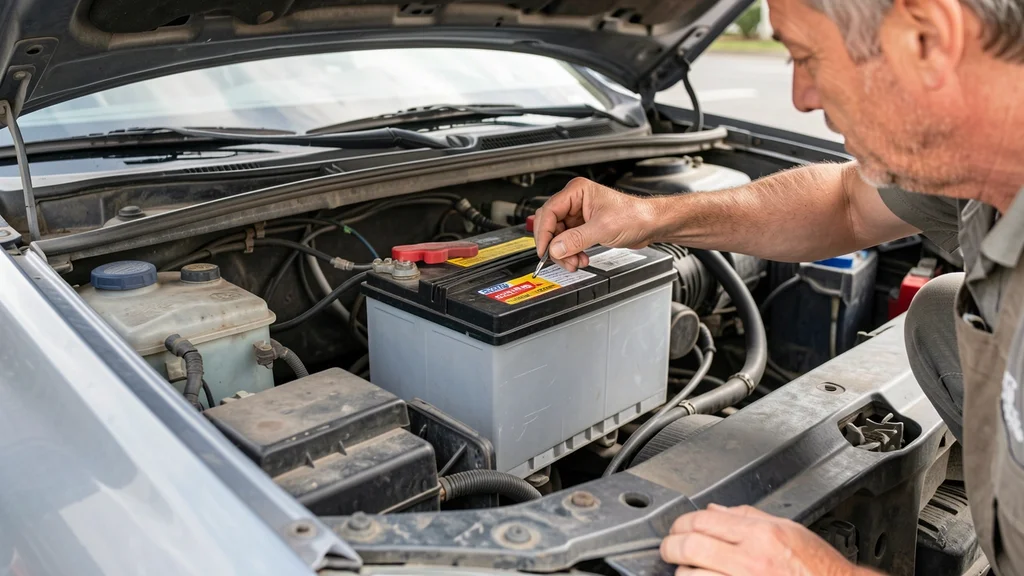
When your car struggles to start or the lights flicker, the culprit is often either a failing battery or a faulty alternator. Knowing how you can tell bad car battery from alternator saves you time, money, and frustration by pinpointing the issue quickly. This guide walks you through the clear signs, simple tests, and diagnostic steps to distinguish between the two problems with confidence.
A dead battery causes starting issues but leaves lights and electronics weak or off while a bad alternator lets the car run briefly then die with dim lights and warning symbols on the dash.
Key Differences Between a Bad Battery and Bad Alternator
The battery stores electrical energy to start your engine and power accessories when the car is off. The alternator recharges the battery and supplies power to the electrical system while the engine runs.
When the battery fails, your car won’t start or will start weakly, but the alternator warning light won’t illuminate. With a bad alternator, the battery drains quickly, the car may start but stall, and you’ll see the battery or alternator warning light on the dashboard.
| Symptom | Bad Battery | Bad Alternator |
|---|---|---|
| Car starts? | No or very weak | Yes, but dies quickly |
| Lights behavior | Dim or off | Flickering or dimming |
| Warning light | None | Battery/alternator light on |
| Electronics | Weak or dead | Work but fade quickly |
| Jump start result | Starts, dies when removed | Starts, dies when removed |
This table highlights the most common symptoms to help you identify which component is causing your electrical issues. Notice that some symptoms overlap, which is why testing is crucial.
Signs of a Bad Car Battery
A failing battery often gives clear warning signs before it leaves you stranded. These symptoms typically appear gradually over time, giving you a chance to address the issue before it becomes critical.
Pay attention to how your car behaves when starting, especially in cold weather or after the vehicle has been sitting unused for several hours. The battery’s age is also a good indicator – most car batteries last between 3-5 years.
- Slow engine crank: The engine turns over sluggishly when you try to start the car
- Clicking sound: You hear rapid clicking when turning the key but the engine doesn’t start
- No response: Absolutely nothing happens when you turn the key
- Dim headlights: Interior and exterior lights appear weaker than usual
- Electrical issues: Power windows, locks, or radio don’t work properly
- Frequent jump starts: You need to jump start the car more than once a week
- Swollen battery case: The battery case appears bloated or distorted
- Corroded terminals: White or greenish crust on the battery terminals
Tip: Clean your battery terminals regularly to prevent corrosion, which can mimic a dead battery by preventing proper electrical contact.
According to AAA, battery-related issues account for about 25% of all roadside assistance calls. Regular maintenance and early detection of these symptoms can help you avoid being part of that statistic.
Signs of a Bad Alternator
The alternator is your car’s electrical power plant, keeping the battery charged and all electrical systems running while the engine is on. When it fails, your car’s electrical system starts to drain the battery, leading to a cascade of problems.
Alternator issues often manifest while driving, unlike battery problems which are usually most apparent when trying to start the car. The alternator warning light (often labeled “BATT”, “ALT”, or a battery icon) is your first clue that something’s wrong.
- Warning light on dashboard: The battery or alternator light illuminates while driving
- Dim or flickering lights: Headlights or interior lights brighten and dim as you drive
- Dead battery after driving: Car starts fine but battery is dead the next morning
- Whining or grinding noise: Unusual sounds from the engine compartment
- Electrical accessories fail: Radio, power windows, or other electronics stop working
- Car stalls or dies: Engine cuts out while driving, especially at low speeds
- Burning smell: The alternator belt may be slipping, causing friction and overheating
Warning: If your alternator fails completely while driving, your car will eventually stop running as the battery drains. Pull over safely as soon as you notice warning signs.
According to a study by the National Highway Traffic Safety Administration, electrical system failures, including alternator issues, contribute to thousands of accidents each year. Addressing alternator problems promptly is crucial for your safety.
Simple Tests to Diagnose the Problem
You don’t need to be a professional mechanic to perform some basic tests that can help you determine whether you’re dealing with a bad battery or alternator. These simple checks can often give you a clear answer without any special tools.
Always start with the simplest tests before moving to more advanced diagnostics. Remember to take proper safety precautions when working with your car’s electrical system.
Headlight Test
- Start your car and let it idle
- Turn on the headlights
- Rev the engine to about 2000 RPM
- Watch the headlights
If the headlights get brighter when you rev the engine, your alternator is likely bad. If they stay the same brightness, your alternator is probably fine. If the headlights are very dim even when revving, your battery might be the issue.
Jump Start Test
- Attempt to jump start your car
- If it starts, let it run for a few minutes
- Remove the jumper cables
- Turn off the engine and try to restart
If the car starts but dies immediately after removing the jumper cables, your alternator is likely bad. If it starts and continues to run, your battery was probably the issue.
Battery Terminal Inspection
- Pop the hood and locate your battery
- Check for visible corrosion on the terminals
- Look for any swelling or distortion of the battery case
- Ensure the terminals are tight and secure
- Check for any loose or damaged cables
| Test | Bad Battery Result | Bad Alternator Result |
|---|---|---|
| Headlight Test | Dim lights that don’t brighten | Lights brighten when revving |
| Jump Start Test | Starts and stays running | Starts but dies when cables removed |
| Voltage Test | Low voltage (below 12V) | Voltage drops when accessories on |
Using a Multimeter for Accurate Diagnosis
A multimeter is an invaluable tool for diagnosing electrical issues in your car. It provides precise measurements that can help you determine the health of your battery and alternator with certainty.
You can purchase a basic digital multimeter for under $20 at most auto parts stores or online. The investment is well worth it for the accurate diagnostics it provides. Always follow safety precautions when working with your car’s electrical system.
Testing Your Battery
- Set your multimeter to DC voltage (20V range)
- Connect the probes: Red to positive (+) terminal, black to negative (-) terminal
- Read the voltage with the car off: A fully charged battery should read 12.6V or higher
- Test with car running: Voltage should be between 13.7V and 14.7V
- Test with accessories on: Turn on headlights, AC, etc. Voltage should stay above 13V
| Battery Voltage | Battery State |
|---|---|
| 12.6V or higher | Fully charged |
| 12.4V – 12.6V | Good charge |
| 12.0V – 12.4V | Partially discharged |
| Below 12.0V | Discharged or bad |
Testing Your Alternator
- Start your car and let it idle
- Connect the multimeter to the battery terminals as before
- Read the voltage: Should be between 13.7V and 14.7V
- Turn on electrical accessories (headlights, AC, radio)
- Check the voltage again: Should stay above 13V
- Rev the engine to about 2000 RPM and check voltage again
If the voltage drops below 13V with accessories on or doesn’t increase when you rev the engine, your alternator is likely bad. If the voltage is consistently above 14.7V, your alternator might be overcharging, which can damage your battery.
Important: Never disconnect the battery while the engine is running to test the alternator. This can damage your car’s electrical system and is dangerous.
Common Mistakes When Diagnosing Battery vs Alternator Issues
Even experienced car owners can make mistakes when trying to determine whether they’re dealing with a bad battery or alternator. Being aware of these common pitfalls can help you avoid misdiagnosing the problem and wasting time or money on unnecessary repairs.
One of the most common mistakes is assuming that if a car starts after a jump, the battery must be bad. This isn’t always the case, as a failing alternator can also cause starting issues.
- Ignoring the age of components: Batteries typically last 3-5 years, while alternators can last 7-10 years. If your battery is old, it’s more likely the culprit.
- Not checking connections: Loose or corroded connections can mimic the symptoms of a bad battery or alternator.
- Overlooking warning lights: The battery or alternator warning light on your dashboard is a clear indicator that should never be ignored.
- Assuming a jump start fixes the problem: Just because your car starts after a jump doesn’t mean the issue is resolved. You need to determine why it needed a jump in the first place.
- Not testing under load: A battery might test fine when the car is off but fail when trying to start the engine or power accessories.
- Forgetting to check the alternator belt: A loose or worn alternator belt can prevent the alternator from charging the battery properly.
- Using incorrect testing procedures: Following proper testing procedures is crucial for accurate diagnosis.
According to a survey by AAA, about 16% of drivers have replaced a battery unnecessarily because they misdiagnosed the problem. Taking the time to properly test both components can save you from making this common mistake.
When to Replace vs Repair
Once you’ve determined whether your battery or alternator is the issue, you need to decide whether to replace or repair the component. In most cases, replacement is the better option, but there are some situations where repair might be possible.
The cost of replacement varies depending on your vehicle make and model, but generally, a new battery costs between $100-$200, while a new alternator ranges from $200-$500 including labor. Consider the age of your vehicle and the overall condition when making your decision.
Battery Replacement Considerations
- Age: If your battery is more than 3-5 years old, replacement is usually the best option
- Physical damage: Cracked case, leaking acid, or swollen battery require immediate replacement
- Multiple failures: If your battery has failed multiple times, it’s time for a new one
- Maintenance: Some batteries are maintenance-free, while others require periodic fluid checks
- Warranty: Check if your battery is still under warranty, which might cover replacement
Alternator Replacement Considerations
- Age and mileage: If your alternator is old or has high mileage, replacement is usually better than repair
- Internal damage: If the alternator has internal electrical issues, repair might not be possible
- Bearing wear: Worn bearings can sometimes be replaced, but this requires specialized tools
- Cost comparison: Compare the cost of repair vs replacement for your specific vehicle
- Availability: Some alternators are more easily repaired than others depending on the model
| Component | Repair Possible? | Average Replacement Cost | Lifespan |
|---|---|---|---|
| Battery | No | $100-$200 | 3-5 years |
| Alternator | Sometimes | $200-$500 | 7-10 years |
Tip: When replacing your battery, consider upgrading to a higher cold-cranking amp (CCA) rating if you live in a cold climate or have high electrical demands.
Preventative Maintenance Tips
Regular maintenance can extend the life of your battery and alternator, saving you money and preventing unexpected breakdowns. Following these preventative tips can help you avoid the hassle of electrical system failures.
According to the Car Care Council, proper maintenance can extend the life of your battery by up to 50%. Taking care of your electrical system is an investment in your vehicle’s reliability and longevity.
- Regular battery inspections: Check your battery terminals for corrosion every 6 months and clean them as needed
- Drive regularly: Short trips don’t allow your battery to fully recharge. Try to drive your car for at least 20 minutes weekly.
- Turn off accessories: Don’t leave lights, radio, or other electrical accessories on when the engine is off
- Check fluid levels: For batteries that require maintenance, check the fluid level regularly and top up with distilled water if needed
- Test your battery: Have your battery tested at least once a year, especially before winter
- Inspect belts: Check your alternator belt for wear and proper tension regularly
- Keep it clean: Clean your battery and terminals to prevent corrosion buildup
- Avoid extreme temperatures: Park in a garage when possible to protect your battery from extreme heat or cold
| Maintenance Task | Frequency | Benefit |
|---|---|---|
| Battery terminal cleaning | Every 6 months | Prevents corrosion, ensures good connection |
| Battery testing | Annually | Identifies weak batteries before failure |
| Alternator belt inspection | Every 12 months | Prevents alternator failure |
| Electrical system check | Every 2 years | Identifies potential issues early |
Frequently Asked Questions
Can a bad alternator destroy a new battery?
Yes, a bad alternator can destroy a new battery by either undercharging or overcharging it. If the alternator isn’t working properly, the battery won’t get the charge it needs and will eventually drain completely. Conversely, if the alternator is overcharging, it can cause the battery to overheat and fail prematurely.
How long can a car run with a bad alternator?
The length of time a car can run with a bad alternator depends on the battery’s charge and the electrical load. With a fully charged battery, you might be able to drive for 30 minutes to an hour with minimal electrical usage. However, with headlights, AC, and other accessories on, the battery may drain in as little as 15-20 minutes.
Why does my car start but then die immediately?
If your car starts but then dies immediately, it’s often a sign of a bad alternator. The battery has enough charge to start the engine, but the alternator isn’t providing the power needed to keep the engine running and charge the battery. This is one of the most common symptoms of alternator failure.
Can I drive with a bad battery if the alternator is good?
Yes, you can typically drive with a bad battery if the alternator is working properly, as long as the engine is running. The alternator will take over providing power to the electrical system and keep the car running. However, once you turn off the engine, you likely won’t be able to start it again without a jump.
How do I know if it’s the battery or starter?
If you turn the key and hear a clicking sound but the engine doesn’t turn over, it could be either the battery or starter. Try jump starting the car – if it starts, the battery was likely the issue. If it doesn’t start even with a jump, the starter might be bad.
Also, check if the interior lights come on when you turn the key – if they’re very dim or off, the battery is likely the problem.
Final Thoughts
Knowing how you can tell bad car battery from alternator empowers you to diagnose electrical issues quickly and accurately. By paying attention to the symptoms, performing simple tests, and following proper diagnostic procedures, you can save time and money on unnecessary repairs. Regular maintenance and early detection of problems will keep your car’s electrical system in top shape and prevent unexpected breakdowns.
Leave a Reply